How to Sell a Car With a Lost License Plate in Los Angeles
Can you sell a car with a missing or stolen license plate in Los Angeles? Learn when replacement plates are necessary, how to verify ownership, handle DMV paperwork, and arrange a lawful sale or towing without unnecessary expenses.
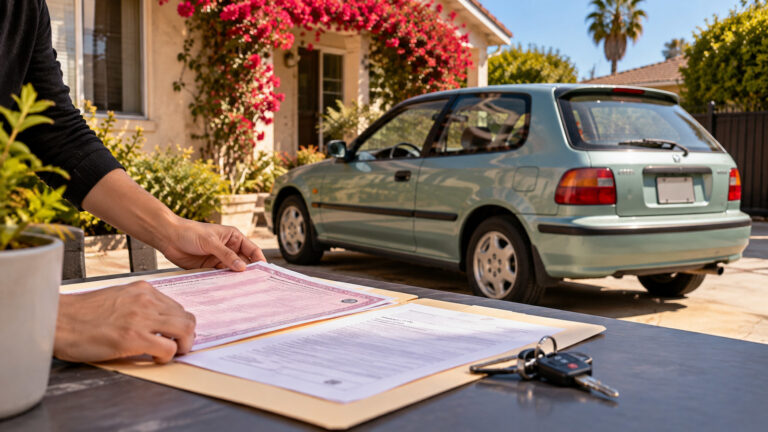
You finally find someone willing to buy your car in Los Angeles, pull out the pink slip, gather the keys, and then notice something you had almost forgotten about: one of the license plates is gone. Maybe the front plate fell off months ago. Perhaps the rear plate was stolen while the car was parked overnight. Or the vehicle has been sitting in a driveway for so long that nobody even remembers when the plates disappeared. Now the buyer is ready to pay, but you are suddenly wondering whether the sale has to stop until you visit the DMV and replace them. In most cases, it does not. The physical plates are not what prove that you own the car. California’s ownership record is tied to the vehicle itself, including its VIN, title, registration history, and registered owner. So if the title is valid, the VIN matches, and you have the legal right to sell the vehicle, missing plates do not automatically make the car unsellable.
The more important question is what happens after the sale. For example, a non-running junk car with no plates may simply be loaded onto a flatbed and taken away. A roadworthy car that the buyer expects to drive from Van Nuys to Long Beach that afternoon creates a completely different problem because now registration, plate replacement, insurance, and lawful road use matter immediately. That is why the first step should not automatically be:
“How do I replace the plates?”
It should be:
“Do I actually need replacement plates for the kind of sale I am making?”
Before answering that, however, you need to know why the plates are missing in the first place.
A Lost Plate and a Stolen Plate Create Two Different Problems
Suppose the front plate fell off after the bracket broke. That is inconvenient, but the main problem is replacing something that was physically lost. Now suppose both plates disappeared overnight while the car was parked outside your house. That is different because someone else may now be using your plate number. For example, the stolen plate could be attached to another vehicle that drives through toll lanes, receives parking citations, or becomes involved in some other incident. The vehicle creating those charges is not yours, but the plate number can still point back toward your registration record until the situation is documented.
So if you believe the plate was stolen rather than simply lost, report it to the appropriate police or sheriff’s agency and keep the incident or report number. California’s replacement-plate procedures also distinguish between one missing plate and both plates missing. If the vehicle normally carries two plates and only one is missing, the remaining plate is generally surrendered when substitute plates are issued. If both plates are gone, or the vehicle normally
has only one plate and that plate is missing, law-enforcement notification becomes particularly important.
This is why it is better to establish what happened before the buyer takes the car. Tell the buyer which plate is missing, whether theft was suspected, and whether a report was made. Keep photographs and your sale paperwork. A police report will not automatically erase every future toll or citation, but it gives you evidence if somebody later tries to connect another vehicle’s activity with your missing plate. Once that is documented, the next thing the buyer will naturally want to know is whether the car itself really belongs to you.
When the Plates Are Gone, the VIN Becomes Even More Important
A buyer normally gets several easy visual cues when evaluating a vehicle. They see the plates, registration, VIN, and title and expect those things to line up. When the plates are missing, one of those visual links disappears. That is why you should make the remaining ownership evidence easy to verify. Start with the California title. Make sure your name is on it correctly. Check whether another owner is listed and whether their signature is required. Look for a lender. Then compare the VIN on the title with the VIN visible through the driver’s side of the windshield and, where applicable, the manufacturer’s label inside the driver’s door opening. Those numbers should identify the same vehicle regardless of whether the plates are still attached.
Old registration cards, renewal notices, and insurance records can help too because they may show the former plate number and connect that registration with the VIN. They do not replace the title. For example, imagine you are selling an old sedan with no plates, but you have the original California title, registration showing the plate number, insurance records, and a matching windshield VIN. That looks very different from someone offering a plateless car with no title, no registration, and no explanation of how they obtained it.
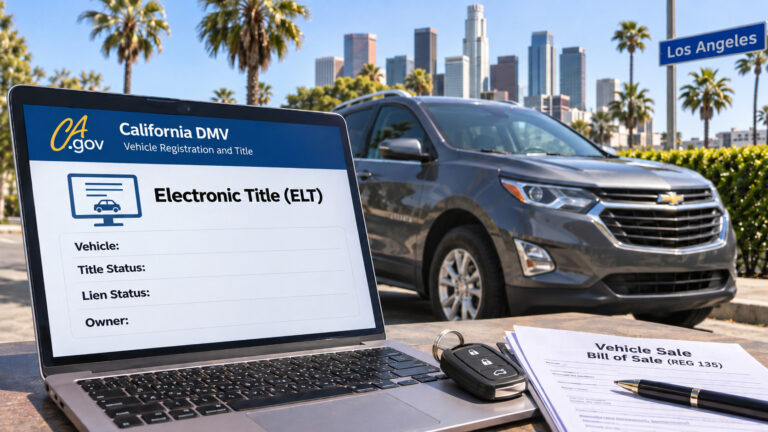
This is why missing plates are usually manageable while missing ownership is not. Complete the bill of sale using the actual VIN, year, make, model, price, date, and correct buyer and seller information. You can also note that the front plate, rear plate, or both plates were missing when possession changed hands. That gives both sides a record of what the buyer actually received. And if the title is missing too, the transaction becomes more complicated, but it still does not automatically mean you should start by buying replacement plates.
Missing Plates and a Missing Title Are Two Separate Problems
Suppose the plates disappeared while the car was sitting and you also cannot find the pink slip. At first, that can make the vehicle feel almost undocumented. But the two problems still need to be kept separate. The missing plates concern registration identification and road use. The missing title concerns proof and transfer of ownership. California’s REG 227, Application for Replacement or Transfer of Title, can be used in qualifying cases where the California title is lost,
stolen, or damaged. Sometimes replacement and ownership transfer can be handled in the same process instead of making the seller obtain a new paper title and then start again.
But REG 227 does not erase a lender’s lien, another owner’s interest, or an unusual ownership history. So if the vehicle has missing plates and a missing title, tell the buyer both things from the beginning. Cash Cash Cars explains the title side separately in its guide to selling a car without a title in Los Angeles. The important point is that spending money on metal plates does not solve an ownership problem. Once the ownership is clear, then you can decide whether replacing the plates is actually worth doing before the sale.
Replacing the Plates Can Help a Normal Private Sale but May Add Nothing to a Junk-Car Sale
Imagine you are selling a five-year-old car that runs well, has current registration, and would normally attract private buyers who want to test-drive it and take it home the same day. Replacing the missing plate before listing may make the transaction much easier. The buyer sees a complete vehicle. You remove one DMV task from the negotiation. And there is less uncertainty about whether they can lawfully drive it away after the transfer.
Now change the car. It is a 17-year-old SUV with a failed transmission. Both plates disappeared while it sat behind the house. A buyer is going to load it onto a flatbed and take it away for repair, parts, or dismantling. What exactly do you gain by spending money and time replacing the plates first?
This is the distinction that matters. California offers replacement or substitute plates through its DMV procedures, including REG 156 for applicable transactions. The required documents and current fees depend on the plate type and situation, so an old estimate of the replacement cost should not be treated as a guaranteed current price. But the bigger question is not whether you can replace them. It is whether doing so improves the sale enough to justify the trouble. If the buyer already understands that the plates are missing and plans to transport the car legally, they may be willing to deal with the replacement during their ownership process. If they intend to drive the car immediately, the answer may be completely different. And that brings us to the most practical problem in the whole transaction.
Selling the Car and Driving the Car Away Are Not the Same Thing
Suppose the buyer pays you, signs the bill of sale, and receives the title. They now believe the car is theirs. That does not mean they can automatically jump in and drive it through Los Angeles with no plates. A completed sale proves ownership changed. It does not create blanket permission to operate an unplated or improperly registered vehicle on public roads. This matters because buyers often confuse these two things. For example:
“I have insurance now, so I’m fine.”
Insurance solves the insurance requirement. It does not automatically solve the plate or registration issue. California has a one-day Vehicle Moving Permit, REG 172, for certain qualifying vehicle movements. It can be used in specified situations involving things such as storage, inspection, repair, or dismantling-related movement. It is not a general one-day permit allowing any newly purchased car with missing plates to be driven anywhere for any purpose.
So before the buyer pays, agree on how the car will physically leave. If it qualifies for a lawful permit and the vehicle is safe to drive, that may work. If the registration situation is unclear, the vehicle is non-running, or the buyer cannot obtain the appropriate authorization, a flatbed may be simpler. The fact that the engine starts does not mean the tires, brakes, fluids, or other systems are ready for freeway driving. And if the car is non-running, the missing plates become much less important than whether the truck can physically collect it.
A Flatbed Can Make the Plate Problem Almost Irrelevant
Imagine your SUV has been sitting in North Hollywood since the transmission failed two years ago. Both plates are gone. You are not trying to make the SUV look roadworthy. You simply want the vehicle off the property. For that kind of sale, ownership proof and access matter much more than whether replacement plates have been installed. A flatbed can collect a vehicle without requiring the car itself to be driven under missing plates.
But towing still needs planning. Tell the buyer whether the car rolls. Does the steering move? Are the tires inflated? Is one wheel missing? Is the car inside a garage where the truck cannot enter? Is there enough room to winch it out? These things can determine what equipment the operator needs.
And this is exactly why junk-car sales with missing plates are often easier than people expect. The buyer is not purchasing the vehicle because it is ready to drive today. They are purchasing the vehicle based on its condition, title, parts, repair potential, or material value. That said, selling to a private buyer who intends to repair it is still different from selling a vehicle for lawful dismantling.
A Junk Car Can Be Worth Something Even Without Plates
A missing license plate does not remove the value from the engine, transmission, catalytic converter, body panels, wheels, electronics, or recyclable material. For example, a complete non-running SUV with no plates can still be worth much more than a stripped compact car that has perfect DMV paperwork. This is why the condition of the vehicle usually matters much more to a junk-car buyer than the missing metal plates themselves.
A licensed dismantler also follows a different acquisition and reporting process from a normal private buyer. California uses REG 42 in connection with dismantler reporting, and the
acquisition paperwork still needs to address the ownership evidence and plate situation properly. So the missing plates are not simply ignored. They are handled as part of the dismantling paperwork rather than repaired merely to make the car look complete before it is removed.
If you are deciding whether replacement plates are worth buying, compare the likely cost and delay against what the car is worth as it sits. Cash Cash Cars explains the broader value issue in how much you can sell your junk car for. And if the vehicle has been sitting long enough for the plates to disappear, there is a good chance registration has become another issue too.
Old Tags, PNO, and Missing Plates Can Look Like One Problem When They Are Really Three
Suppose you stopped driving the car three years ago. The plates are now missing. The registration is no longer current. At first, you may assume the missing plates caused the registration problem. They may have nothing to do with each other. Perhaps you properly placed the vehicle on Planned Non-Operation. In that case, the DMV may have a legitimate non- operational record even though the physical plates are gone. Or maybe you never filed PNO and simply stopped renewing the vehicle. Now back fees and penalties may have accumulated. This is why you should check the actual DMV status rather than looking at an empty bumper and guessing what happened.
A properly maintained PNO vehicle can often change owners without first being restored to full road registration. The buyer can deal with the requirements for returning it to normal service later. That does not mean the buyer can immediately drive it away. PNO still means the vehicle is not being kept for ordinary use on public roads. Cash Cash Cars covers this distinction in detail in how to sell a car on PNO or with suspended registration in Los Angeles. Again, the recurring theme is the same:
ownership transfer and road use are different questions.
And smog is another separate question again.
Missing Plates Do Not Create a Smog Exemption
Imagine your car has no plates, expired registration, and a Check Engine light. You find a private buyer who is happy to take it as-is. It can be tempting to think:
“They already know it has problems, so smog is their responsibility.”
California’s ordinary private-sale rules do not necessarily work that way. For qualifying vehicles subject to Smog Check, the seller generally remains responsible for providing the required certification unless an exemption applies. A missing plate does not create one. Neither does a
broken engine. Neither does expired registration. And PNO itself does not automatically eliminate the smog requirement for an ordinary change of ownership.
So if the car needs $2,000 in emissions work but may only be worth $2,500 after repairs, the correct question is not whether the car can be made ready for a private sale. It is whether spending that money leaves you better off. A transaction involving lawful dismantling is different from selling the car to somebody who intends to put it back into normal road use. This is why the buyer and intended use can matter more than the missing plate. The same logic applies to vehicles with expired tags. Cash Cash Cars’ guide to selling a car with expired tags explains why the DMV balance and vehicle condition usually matter more than what the old registration sticker looks like.
File the Release of Liability Even if You Have to Dig Through Old Records to Find the Plate Number
After the sale, file California’s Notice of Transfer and Release of Liability, or NRL, within five calendar days. Do not treat this as optional simply because the physical plates are missing. The NRL creates a record showing who received the vehicle and when you reported that ownership had changed. It does not complete the buyer’s title transfer. It does not erase old tickets. But it gives you an important record showing when the vehicle left your possession.
The problem is that California’s online NRL process asks for the license plate number. If the physical plate has been missing for months, you may no longer remember it. Do not guess. Look at an old registration card. Check an insurance document. Look at renewal notices, toll-account records, service paperwork, or purchase documents. One of those may contain the old plate number. If you genuinely cannot find it, contact the DMV and ask how to obtain the vehicle registration information rather than inventing a number. The VIN and plate number are not interchangeable. The paper REG 138 also asks for vehicle identification information, so switching from online to paper does not necessarily eliminate the need to establish the correct plate record.
And when you complete the NRL, get the buyer’s information right too. Do not accept:
“Just put Mike.”
Get the full legal name and complete address before the buyer leaves. A precise buyer record can become much more important later than the missing plate itself. This is especially true if tickets or toll charges appear after the sale.
Old Toll Charges and New Plate Misuse Need to Be Separated
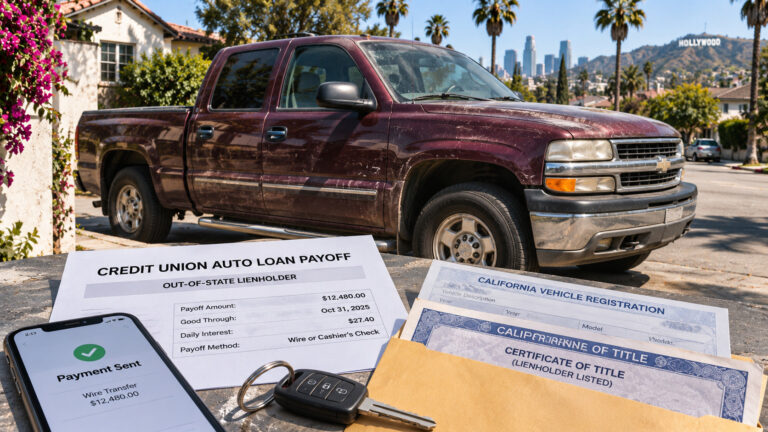
Suppose there are already unpaid tolls attached to the old plate number. If you incurred those tolls while driving the car, selling the vehicle does not automatically erase the debt. Now
suppose the plate was stolen six months ago and somebody has been driving another car through toll lanes using your number. That is a completely different problem. Dispute those charges with the issuing agency. Provide the police report if you made one. Show your registration, photographs, and anything else demonstrating what vehicle actually carried the plate. A police report is evidence. It does not automatically cancel every citation without review by the agency.
The same principle applies to parking violations. Find out when they occurred and which agency issued them. Do not assume every outstanding ticket prevents a title transfer, and do not promise the buyer that every ticket simply becomes theirs. California has procedures for treating certain parking and toll violations when ownership changes. The actual outcome depends on the type of violation and transaction.
After the sale, remove the old vehicle and plate from FasTrak or other toll accounts you control. That is especially important with a missing plate because the physical plate may still be circulating somewhere even though the car is no longer yours. The combination of a police report, NRL, and clear sale documents gives you the strongest practical record if somebody uses the old number later.
Personalized plates need even more care because the number itself may have value to you.
A Lost Personalized Plate Can Create a Bigger Problem Than a Missing Standard Plate
Ordinary sequential California plates generally stay associated with the vehicle through a normal transfer. Personalized and special-interest plates can involve different rights and choices. For example, you may want to keep your personalized plate configuration for your next car rather than transfer it with the vehicle you are selling. That needs to be handled correctly through the DMV. California uses REG 17 for relevant special-interest plate retention, release, replacement, and reassignment transactions.
The situation becomes particularly important when both personalized plates were lost or stolen because California does not simply treat every lost personalized configuration like an ordinary replacement request. So do not promise the buyer that you can “just get the same custom plates again” or assume the configuration will automatically stay yours without checking the DMV procedure.
The same principle applies when the car carries plates from another state. Now California’s replacement process may not even be the right starting point.
Out-of-State Plates Mean the Title State Still Matters
Suppose the car is physically in Los Angeles but still titled and plated in Arizona. One Arizona plate is missing. You want to sell the car to a California buyer. California’s replacement-title or
replacement-plate forms do not automatically substitute for whatever Arizona requires. The seller normally needs to deal with the ownership documents issued by the state where the vehicle is titled.
The buyer may later apply for California title and registration, which can involve VIN verification, California application paperwork, and applicable smog requirements. California may then issue new plates, which can make the missing old plate less important to the buyer’s eventual registration. But the seller may still have obligations to the former state, such as reporting the sale, canceling registration, or reporting a missing plate. Selling the car in Los Angeles does not automatically close every record in another state’s system. So if the plates are from outside California, tell the buyer that from the beginning and check the issuing state’s requirements instead of assuming the normal California replacement route applies.
And if the buyer is arriving today, the entire problem can still be kept relatively simple if you deal with the important parts in the right order.
If the Buyer Is Coming Today, Solve the Handoff Problem Instead of Trying to Make the Car Perfect
Discovering the missing plates on the morning of pickup is frustrating. It does not automatically mean the sale has to collapse. Tell the buyer immediately. Find the title and any available registration records. Check exactly which plates are missing. If theft is suspected, make the appropriate report. Photograph the vehicle and VIN. Complete the bill of sale and note the plate situation. Then decide how the car is leaving. If the buyer can lawfully obtain the appropriate permit and the vehicle is roadworthy, that may solve the transportation problem. If not, have it transported. Agree beforehand who is paying any replacement-plate or transport expense so nobody starts renegotiating the price after the title is already signed.
What you should avoid is a vague handoff. Do not let the buyer leave saying:
“I’ll figure the DMV stuff out.”
Get their name. Get their address. Confirm the transfer date. Find the old plate number for the NRL. And make sure they understand that owning the car does not automatically mean they can drive it without satisfying the applicable registration and operating requirements.
If you are selling an unwanted, damaged, or non-running vehicle to Cash Cash Cars, explain the missing plates when you request a cash offer. Mention the title status, registration condition, whether the car runs, and whether special towing access is needed. That gives the buyer the real situation before pickup instead of turning a missing plate into a surprise at the truck.
The Plate Is Usually Not the Thing That Decides Whether the Car Can Be Sold
A missing license plate can look like a major DMV problem because it is the most visible thing missing from the vehicle. But in most cases, the metal plate is not what determines whether you can sell the car. Ownership does. The VIN does. Any lender does. The registration status can matter. Smog can matter. And the way the vehicle will leave the property can matter.
A stolen plate deserves prompt reporting because somebody else may be using the number. A roadworthy car intended for immediate driving may benefit from having the plate situation resolved before the sale. A non-running or junk vehicle being transported on a flatbed may gain almost nothing from replacement plates. And whatever type of sale you make, the NRL matters afterward because you want a clear record showing when the vehicle left you. So do not spend money simply because something is missing. First ask what that missing item actually affects.
The objective is not to make an unwanted car look complete again. It is to transfer it properly, move it legally, and make sure the missing plates do not keep creating problems after the car is gone.
If the vehicle is old, damaged, non-running, or simply no longer worth keeping, Cash Cash Cars can review the condition, title, registration status, and pickup situation before you decide whether replacing the plates is worth doing. You can request an offer or call 818-822-1863.