How to Sell a Car When the Owner Is Unable to Handle the Sale in Los Angeles
Selling a car for someone unable to handle the sale? Learn how power of attorney, conservatorship, DMV paperwork, and ownership rules work in Los Angeles.
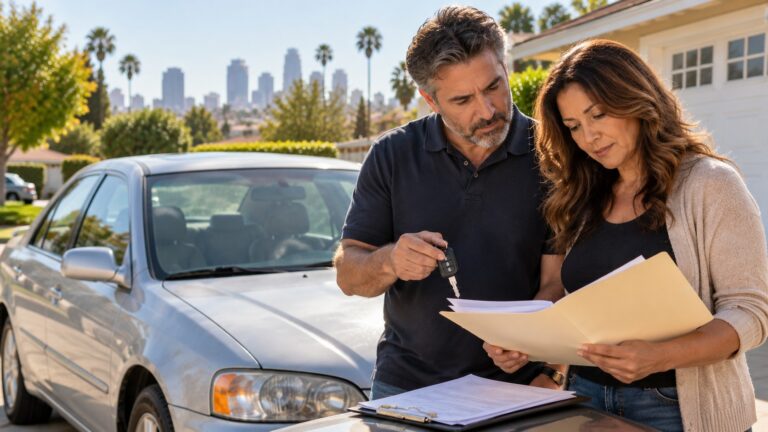
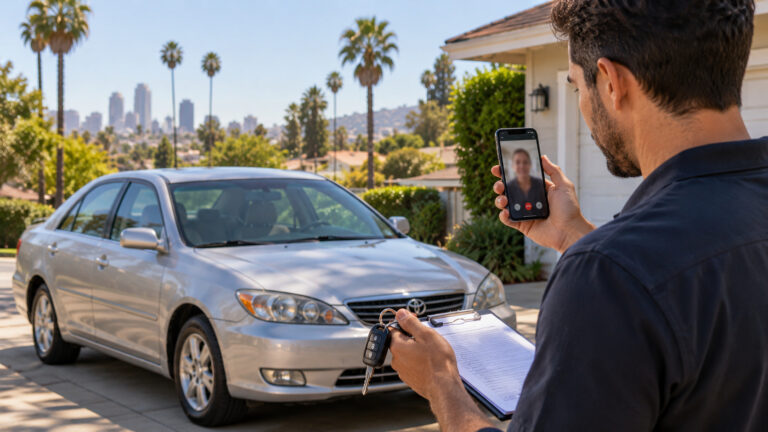
Sometimes the owner wants the car sold but cannot personally handle any part of the transaction. For example, your father may be recovering from surgery in a Los Angeles hospital while his unused SUV sits outside his house. An elderly relative may have dementia and a car nobody has driven for a year. Someone may be incarcerated while their vehicle accumulates storage fees at a tow yard. In another family, a minor may technically own a vehicle that an adult now needs to manage.
The practical problem looks the same in each case: somebody else needs to sell the car. Legally, these situations differ greatly. The most important question is not whether the owner can physically meet the buyer. It is whether the owner can still understand and authorize the sale. A person who is hospitalized or physically disabled may be unable to leave a bed and still be perfectly capable of deciding what happens to their vehicle. Someone with severe cognitive impairment may be physically present and yet no longer have the legal capacity to give another person permission to sell it. That distinction decides whether the solution is a power of attorney, an existing durable authority, or a court appointment.
Being the Owner’s Child or Spouse Does Not Give You Their Signature
Families understandably approach these sales informally. For example, a daughter may say, “Dad told me to sell the car, so I will just handle it.” She may have the keys, know where the title is, and be the person managing every other part of his recovery. That still does not mean she should sign his name. If Dad understands what he is authorizing, he may be able to appoint her through California DMV Form REG 260 or another valid power of attorney with the necessary vehicle or property authority. She can then communicate with buyers, negotiate, arrange inspection and pickup, and sign permitted documents in a way that makes clear she is acting for him rather than pretending to be him. For example, the signature might identify the owner and then show that the daughter is signing as attorney-in-fact. The important point is transparency. The buyer and DMV should be able to see whose vehicle is being sold and why someone else is signing.
REG 260 does not ordinarily need notarization merely because it is being used for a standard California vehicle transaction, although another document, institution, lender, or facility can have its own requirements. And the POA does not automatically allow the representative to sign every statement associated with the sale. Odometer disclosure has its own rules, so the family should identify the complete paperwork package rather than assuming the words “power of attorney” solve everything. This becomes even more important when the owner’s problem is physical rather than mental.
Physical Disability Does Not Automatically Require a Conservatorship
Suppose the owner is paralyzed, has a severe tremor, or cannot physically write a conventional signature. They still understand the sale, the price, and who is acting for them. The family does not automatically need to go to court and establish a conservatorship merely because the owner cannot hold a pen normally. California recognizes certain alternative signature methods depending on the document, including legally permitted signatures by mark. What the representative should not do is quietly write the owner’s name themselves and assume the physical disability makes that acceptable.
So the first distinction remains simple: Can the owner still understand and authorize the transaction? If yes, the family can look for a valid way for that capable owner to execute the necessary authority. If no, creating a new POA may no longer be possible. That is where the situation changes.
A New Power of Attorney Cannot Be Created After Capacity Is Already Lost
Imagine an elderly Los Angeles resident with advanced dementia. Her daughter knows the unused car is costing money and believes selling it is clearly in her mother’s interest. The daughter’s reasoning may be perfectly sensible. But if the owner can no longer understand the financial transaction, she cannot simply sign a new power of attorney because the family needs one. At this point, the first thing to look for is an authority created before incapacity.
A valid durable power of attorney may continue operating after the principal loses capacity, depending on its terms and applicable law. The agent should check that the document actually covers property or vehicle transactions and remains effective. A healthcare power of attorney is not the same thing. Being authorized to make medical decisions for somebody does not automatically give you authority to sell their assets. And a diagnosis itself does not always answer the capacity question. Someone with early dementia may still understand a particular transaction. If capacity is uncertain, the appropriate legal advice should come before the family tries to manufacture authority that may not exist. If there is no effective durable POA and the owner genuinely cannot authorize a new one, the family may need a conservator of the estate.
A Conservator Manages Property, Not Simply the Person
California distinguishes between authority over personal care and authority over financial property. That matters because the person arranging medical care for an incapacitated relative may not be the person with authority to sell the car. A conservator of the estate can receive court authority over finances and property. Once appointed, the conservator’s Letters of Conservatorship show that authority, but the exact powers and any applicable limits still need to be checked.
For example, the source draft notes that California Probate Code Section 2545 permits certain sales of tangible personal property without separate court approval subject to statutory conditions and an aggregate annual limit under that provision. Other transactions can require more authority. The point is not that every conservator can automatically sell every vehicle. It is that the court appointment, the vehicle’s value, and the governing authority need to be read together. The money also belongs to the conservatee’s estate, not to the family member who arranged the sale.
This becomes urgent when the car itself is costing money while authority is being established. Storage, registration, insurance, repair-shop charges, or tow-yard fees can continue. The family can gather documents, obtain photos, find out what the car is worth, and learn what charges are accumulating. What they should not do is dispose of the vehicle first and hope the authority can be fixed later. Sometimes the urgency itself may justify asking an attorney about temporary authority or another court order. But even a temporary appointment should not be treated as automatic permission to sell property unless the authority actually supports the transaction. Incarceration creates almost the opposite problem.
An Incarcerated Owner May Still Be Fully Capable of Authorizing the Sale
Being in jail or prison does not remove a person’s ownership rights or mental capacity. The difficulty is usually practical: how do you get the paperwork signed, get the title or keys released, and remove the car while the owner cannot appear? An incarcerated owner may be able to execute REG 260 or another valid power of attorney. The correctional facility’s procedures then become part of the transaction. Some facilities provide approved signing or notarial arrangements, while others have specific rules for receiving and returning documents or releasing personal property. This is why the family should contact the facility before mailing random forms and hoping they come back signed. If the title and keys are being held among the inmate’s property, another authorization may be required just to release those items.
And if the vehicle was impounded during the arrest, the POA solves only the owner’s authority problem. It does not cancel tow-yard fees, storage, law-enforcement holds, or other release requirements. For example, the family may finally receive a valid POA while the car has already accumulated a substantial tow-yard balance. At that point, the representative needs the current release amount, any applicable agency clearance, and information about whether a lien-sale process has started. Only after the vehicle is legally available for release does arranging the buyer’s pickup make sense. For a vehicle already accumulating charges, Cash Cash Cars can review a car located at a tow yard once the ownership authority and release conditions are understood.
A Minor’s Vehicle Creates Another Version of the Same Authority Problem
A parent naturally assumes they can manage anything their child owns. Vehicle ownership can require more care. If a car is titled in a minor’s name, perhaps because it was inherited or gifted, guardianship of the person and guardianship of the estate are not necessarily the same thing. A guardian responsible for the child’s care does not automatically have unlimited authority over every asset belonging to the child. Depending on the circumstances, a guardian of the estate or another legally permitted procedure may be necessary, and whatever happens to the sale proceeds must preserve the minor’s financial interests.
So although hospitalization, incapacity, incarceration, and minority sound like completely different topics, they all lead back to the same rule: before somebody else sells the car, establish where their authority actually comes from. Once that is settled, the transaction finally begins to look like a normal car sale.
Authority Over One Owner Does Not Give You Authority Over Every Owner
The next place to look is the title. Imagine your POA authorizes you to act for your father, but the pink slip says Father AND Mother. Your POA for Dad does not automatically release Mom’s ownership interest. California’s normal rules for multiple owners still matter, including the words or designations connecting the names. The same principle applies when the title has been lost. REG 227 may help with an eligible replacement or transfer, but it does not erase another owner’s rights or a lender’s lien. So do not schedule pickup simply because you now have authority to act for one person. First make sure the title itself tells the same ownership story you think you are dealing with.
Then look for the lender. If a lien remains, the representative may need to show the lender the POA or court appointment before the lender will even discuss the payoff. If the car is sitting at a mechanic shop or tow yard, there may be a second financial claim connected with repair, towing, or storage. That is how a family can solve the difficult legal-authority problem and still discover that the vehicle cannot yet move.
A Car That Sat Through the Owner’s Illness May Be Worth Less Than Everyone Remembers
Suppose the SUV has been sitting for eight months while the owner was hospitalized. The family remembers it as a running vehicle. Today the battery is dead, two tires are flat, registration has expired, and the check-engine light is on. The current condition, not the family’s memory, determines what a buyer will pay. This is why someone should establish whether the car starts, rolls, steers, has keys, and can physically be reached by a truck. If it cannot run, the representative should compare an as-is offer with the cost of repairing it before deciding that repairs are necessary.
Smog can also change which buyer makes sense. A qualifying California private sale may require the seller to provide the normal passing certification, while an eligible transaction with an appropriately licensed buyer may follow a different route. A professional buyer cannot bypass ownership authority or a lender, but the right type of buyer can sometimes prevent the representative from spending money fixing a vehicle that was only going to be sold anyway. Cash Cash Cars purchases non-running vehicles and vehicles with serious repair needs throughout Greater Los Angeles. When selling for another person, the authority should be explained at the first contact so the paperwork question is considered together with the vehicle condition. That is especially useful because the person handling this sale is often already managing much bigger problems than the car.
Convenience Can Matter More When You Are Already Managing Someone Else’s Crisis
A clean, valuable, running vehicle may still justify a conventional private sale. The representative may get more money by advertising it, answering inquiries, arranging test drives, negotiating, and waiting for the right buyer. But imagine doing that while also coordinating hospital care, conservatorship paperwork, correctional-facility communication, or an elderly parent’s finances. The theoretical extra selling price begins competing with time, risk, and another set of strangers you have to manage.
A professional vehicle buyer can reduce those moving parts, particularly when the car is old, damaged, unwanted, or non-running. The representative can disclose the condition, provide the authority documents, settle the final offer, and coordinate pickup. That convenience can come with a lower price than a perfect private sale. The comparison should therefore be practical rather than emotional: what will the owner actually receive after repairs, smog, towing, advertising, time, and transaction risk are counted?
Whichever buyer is chosen, one rule should remain fixed. The representative is acting for somebody else. That changes how the money should be handled.
The Sale Proceeds Belong to the Owner, Not the Person Doing the Work
This sounds obvious until the representative has paid several expenses personally and the buyer asks where to send the money. The safest approach is to document the transaction and keep the owner’s money separate from the representative’s own funds unless another lawful arrangement clearly applies. The same logic explains why the representative should never sign the owner’s name without authority, use a POA that expired or terminated, or release the car before payment and ownership paperwork are settled.
A non-durable POA can lose effectiveness upon incapacity. Any POA ends when the principal dies. At that point, estate or succession rules replace the former agency authority. So the correct authority should still be valid on the day of the sale, not merely something that existed years ago. Once payment, title, lien status, and pickup are complete, file California’s Notice of Transfer and Release of Liability within five calendar days and keep the confirmation with the POA, court papers, bill of sale, title copies, and payment records.
Those documents should make the transaction understandable even to somebody who was not present. They should show who owned the car, why you had authority to sell it, who bought it, what they paid, and when it left the owner’s control. That is what turns “selling somebody else’s car” from an informal family favor into a properly documented transaction.