How to Sell a Car in Los Angeles While Living in Another State or Country
Living outside California but still have a car in Los Angeles? Learn how to sell it remotely, handle DMV paperwork, receive payment, and arrange pickup.
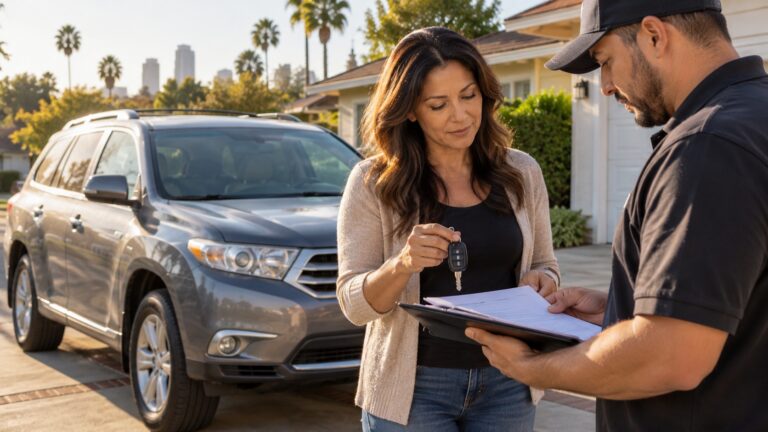
Leaving Los Angeles does not always mean taking your car with you. For example, you accept a job in another state, relocate overseas, or leave quickly and decide that a family member can watch the car until you work out what to do. Several months later, the vehicle is still sitting in an apartment garage, driveway, repair shop, or storage facility while you are hundreds or thousands of miles away. Now you want to sell it, but flying back to California just to sign a title and hand over keys feels unnecessary. In many cases, it is.
California generally does not require the registered owner to stand beside the car when it is sold. You can agree on the price remotely, complete the correct ownership documents, arrange payment, and coordinate pickup without returning to Los Angeles. The difficult part is not the distance itself. It is making the title, mileage disclosure, buyer, payment, physical access, and pickup all work in the right order. So before booking a flight, first establish exactly what you left behind.
The Car You Remember May Not Be the Car Sitting in Los Angeles Today
Suppose you last drove the car 11 months ago. At that time it ran perfectly. That is not enough information for a buyer today. Batteries die. Tires lose air. Cars develop leaks. Somebody may have moved it, damaged it, or left a window partly open. Registration may have expired while you were away, and storage charges may have started accumulating without you realizing it. Ask whoever has lawful access to take recent photographs of the exterior, interior, dashboard, odometer, tires, and the surrounding parking area. Find out whether the car starts, whether the keys are available, whether the garage requires a gate code, and whether a tow truck can physically reach it.
Then look at the ownership documents. Your new address in Arizona, New York, Canada, or another country does not change who owns the vehicle. If the car has a California title in your name, California’s normal ownership-release rules still matter. If the vehicle is physically in Los Angeles but titled by another state, that other state’s title requirements need to be considered. Check the VIN, plate number, owner names, and lender information before promising anything to a buyer. This is the difference between a remote sale and a blind sale. You can live far away. You should not be guessing.
Private Selling Becomes Harder When Nobody Local Can Play the Seller
A desirable, clean, running car can still justify a private sale from a distance, especially if someone trustworthy in Los Angeles can meet buyers and provide access. But imagine trying to manage that process from London or Toronto with nobody local helping. A buyer wants to test-drive the vehicle. Another wants an independent inspection. Someone else wants to negotiate after seeing a dent you forgot about. The property manager only opens the garage during business hours, while you are asleep in another time zone. That higher private-sale price starts requiring a lot of coordination.
A licensed dealer or local professional buyer can reduce the number of separate moving parts because the VIN, photos, mileage, title situation, condition, payment, and pickup can often be discussed as one transaction. For an older or non-running vehicle, this can become particularly useful because you may otherwise pay for repairs or transport before even knowing what the car is worth. If you contact Cash Cash Cars from outside California, explain that immediately. The important questions are what remote identity and signature process is possible, what original documents will be needed, who controls access to the car, and whether the vehicle needs towing. Consignment can be another option for a valuable car, but again the dealer’s license, fees, insurance, storage terms, and authority should be clear.
Shipping the car to your new home simply to make the sale easier is usually solving the wrong problem. Moving it across the country does not eliminate a lien or fix defective ownership paperwork. So if the car can be sold where it already sits, the next question is whether the title can travel even though you do not.
The Pink Slip Can Travel Without You, but Do Not Send It Blindly
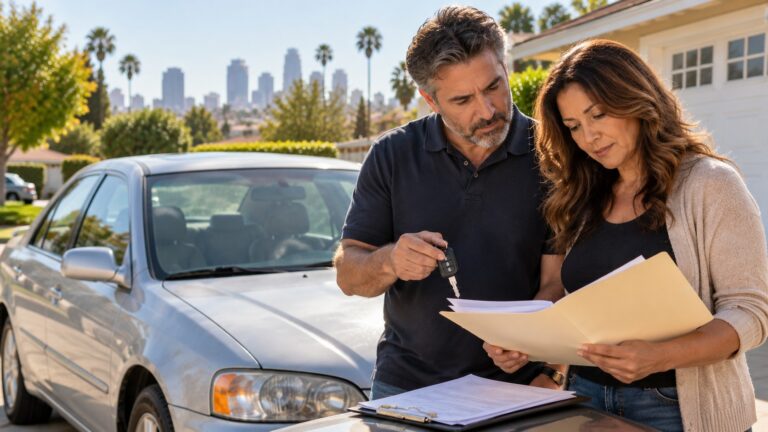
If you have the original California title with you, you can usually sign the seller’s release from wherever you live and send the original document to the appropriate person handling the transfer. A scan can be useful for reviewing the information beforehand. It may not replace the original when DMV requires the physical title. This is where a tracked courier becomes much more valuable than ordinary mail. You do not want the endorsed title floating between countries without knowing who has it, and you should not send a fully signed title to an unverified stranger simply because the buyer says the truck is coming tomorrow. The payment and document-release sequence should be agreed before the title moves.
If another person in Los Angeles genuinely needs to sign permitted ownership documents for you, California’s REG 260 Power of Attorney can provide vehicle-specific authority in qualifying situations. The representative signs as your attorney-in-fact rather than pretending to be you. One useful feature for a remote owner is that the DMV can accept a photocopy or fax copy of REG 260 in the appropriate setting, so an overseas owner does not necessarily need to courier that particular form. But this is where the power of attorney runs into one important limit. It does not automatically solve the odometer disclosure.
Mileage Can Create More Mailing Than the Title Itself
Federal and California odometer rules can require an actual mileage disclosure for many vehicles from model year 2011 forward until the applicable 20-model-year threshold is reached. That means the old shortcut of assuming every vehicle more than ten years old is automatically exempt can be wrong. If the California title already contains a compliant odometer section, the process may be relatively straightforward. Someone in Los Angeles should confirm the actual dashboard reading at the appropriate time, and you complete the disclosure based on what the vehicle genuinely shows. Do not write down the mileage you remember from the day you moved away. If the odometer is inaccurate or the actual mileage is unknown, the paperwork should reflect that rather than presenting a guess as fact.
The situation becomes more cumbersome when REG 262 is required. That form is printed on security paper, and an emailed PDF is not a substitute for the original. Where odometer disclosure is required, the seller and buyer generally need to sign the proper physical form, and an ordinary REG 260 representative cannot simply make the owner’s mileage declaration. So imagine you live overseas and have already arranged pickup for Friday. On Thursday, somebody realizes the original REG 262 needs your signature. Now the sale is waiting on international courier delivery. This is why the complete paperwork package should be identified before the vehicle is scheduled for collection. And if the title itself is missing, you need to solve that at the same time.
A Missing Title Is Manageable, but a Missing Title Plus a Lien Is a Different Problem
If the California title was lost before you moved, REG 227 may allow an eligible replacement or transfer process without first waiting for a completely separate replacement-title transaction. But a missing title does not erase the ownership record underneath it. The registered owner still needs to be the correct seller, any other required owner still matters, odometer disclosure may still require REG 262, and a lender still has to release its interest.
For a remote sale, the lender deserves particular attention because you may not have the option of walking into a local branch with the buyer. Ask for a written payoff that remains valid through the expected closing date and find out whether the lender uses a paper title or California’s electronic lien system. Suppose the payoff is $12,000 and the buyer offers $9,000. Living overseas does not change the $3,000 shortage. The lender still needs an arrangement that satisfies its lien before clean ownership can pass. Some professional buyers can coordinate lender payoff directly, which can simplify the process considerably. A private transaction may need a more carefully structured lender-approved exchange because neither party wants to release money or the vehicle while the title remains uncertain. Once the lien is resolved, another California requirement may appear even though you no longer live in the state. Smog.
Your New Address Does Not Remove California Smog From a California Sale
Suppose the vehicle is still in Los Angeles and you want to sell it privately. If it is a qualifying gasoline-powered vehicle subject to California’s change-of-ownership smog requirement, someone still needs to arrange the test even though you live elsewhere. You do not personally have to stand at the testing station. But the car needs lawful access and somebody has to get it there. This becomes inconvenient if the battery is dead, the vehicle has failed smog already, or repairs cost more than the car is worth. A sale to a qualifying licensed dealer can change the situation because the same pre-sale private-seller certification may not apply in the same way. That can make a professional buyer more practical for a remote owner with a broken or emissions-troubled vehicle.
Expired registration works similarly. It does not automatically invalidate the title or prevent every sale, but renewal fees, penalties, citations, and other holds can affect the transaction. Planned Nonoperation can matter for a vehicle that has been sitting, but it does not mean the car can simply be driven around because you are preparing to sell it. Before paying old registration or repair costs from another state, find out whether those expenses are actually necessary for the buyer and transaction you intend to use. Then solve the physical side. Because a perfectly signed title is not much help if nobody can open the garage.
The Buyer Still Has to Reach a Real Car in a Real Place
Remote sellers sometimes focus so heavily on documents that the physical pickup becomes an afterthought. Imagine the car is parked in an apartment building. Who controls the gate? Does the property manager need advance notice? Can a flatbed enter? If the car is in commercial storage, does the facility require its own release form or identification from the collecting driver? If it is at a mechanic shop, is there an unpaid diagnostic or storage bill? If it is at an impound yard, what proof of authority and payment does that facility require before releasing the car? Your emailed permission can help establish what you want. It does not override another property owner’s access rules or a lawful mechanic or tow-yard claim.
The vehicle itself also determines what type of truck can retrieve it. A car that rolls and steers from an open driveway is simple. A vehicle with locked wheels or missing tires on the third level of a low-clearance garage can require a completely different setup. This is why you should give the buyer the location and access details together with the mechanical description. Cash Cash Cars can review a non-running vehicle remotely, but the pickup plan needs to reflect what is actually sitting at the location. Once access is arranged, the remote owner’s biggest financial risk appears: the car and title leaving before the money is truly yours.
A Payment Screenshot Is Not a Remote Closing
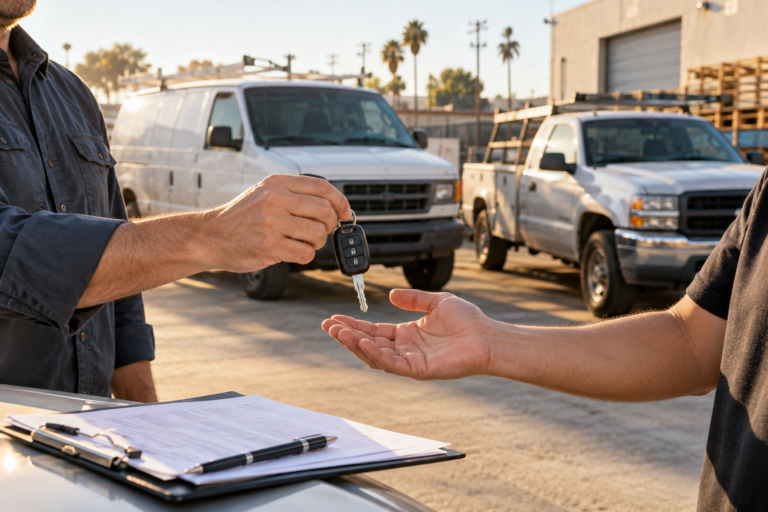
When you cannot stand beside the buyer, the exchange needs to be more deliberate. Agree beforehand on who pays, how payment is verified, when the ownership documents are released, who gives the keys to the driver, and what happens if pickup fails. A bank wire may work well in a straightforward transaction, but a screenshot saying “transfer sent” is not the same as your own bank confirming the funds. Cashier’s checks can also be forged, and an initial bank credit does not always mean a payment can never be reversed.
For a private sale, a legitimate vehicle escrow or payment service may be useful, particularly if a lender payoff is also involved, but verify the service independently because fake escrow sites create another remote-sale risk. If you live outside the United States, also understand how your bank receives international or domestic wires, whether currency conversion applies, and what identity information may be required. The point is not to make a car sale feel like an international business merger. It is simply to make sure the title, vehicle, and money do not all leave your control based on somebody else’s promise.
If the title has multiple owners, all required signatures still matter even when those owners live in different places. Distance does not change whether an AND, OR, AND/OR, slash, or other ownership designation requires another person’s release. And once the money and car finally move, the last part can actually be handled from anywhere.
Close the California Connections From Wherever You Now Live
After the sale, file California’s Notice of Transfer and Release of Liability within five calendar days and save the confirmation. You can do this from another state or country. Use the correct buyer information, plate and VIN details, mileage, and sale date. The NRL does not itself transfer the title, but it creates an important record showing when you reported that the car left your ownership. Keep copies of the signed title or transfer forms, payment confirmation, bill of sale, buyer details, and pickup receipt. A transport receipt or dated handoff acknowledgment can help show when the physical vehicle actually left the property.
Then remove the car and plate from FasTrak or Metro ExpressLanes accounts, deal with any transponder, close the parking or storage account, and coordinate insurance cancellation only after the transaction is complete. These tasks feel small compared with mailing a title across an ocean. They are exactly the tasks that can keep charging you after the car is supposedly gone.
A Los Angeles car can therefore be sold without a return trip. The easiest remote sale may involve nothing more than a correctly signed California title, verified payment, and one scheduled pickup. A missing title, lender, smog failure, or tow yard can make it more complicated, but your current address is not itself the legal obstacle. If the vehicle remains in Greater Los Angeles and you do not want to fly back simply to arrange repairs, viewings, and pickup, Cash Cash Cars can review its location, condition, title, lien status, and access situation before discussing the remote sale. The goal is not simply to prove that you can sell a car from another country. It is to make the transaction feel complete even though you were never standing beside the car.