How to Sell a Car in 24 Hours Before an Emergency Move Out of Los Angeles
Leaving Los Angeles unexpectedly? Learn how to sell a car in 24 hours while handling title, lien, payment, pickup, smog, and DMV steps.
An emergency move leaves little time to decide what stays and what goes. For example, you lose a job, get an urgent family call, or suddenly need to relocate out of California. Clothes go into suitcases, furniture into storage, and boxes into a moving truck.
Then there is the second car sitting in the driveway. Maybe it still runs. Maybe it needs repairs. Maybe the registration expired months ago. Or maybe the car does not move at all.
At first, shipping it may sound like the easiest answer. Then you check the transport cost and realize that moving a low-value or unwanted vehicle across the country can take a large share of what the car is worth. So you think about selling it privately, only to remember that your flight leaves tomorrow and private buyers rarely organize around somebody else’s moving deadline.
That is where the situation changes. You are no longer trying to squeeze every possible dollar out of the car over the next six weeks. You are trying to complete a legitimate transaction before leaving Los Angeles, which means finding a real buyer, confirming the price, handling the title, getting paid, and having the vehicle removed before you hand over your apartment keys or leave for LAX.
And before you start comparing offers, there is one question that can stop the entire 24-hour plan before it even starts.
First, Find Out Whether You Can Actually Transfer the Car Today
When people are rushing, they naturally start by asking: “Who will buy my car today?” But the better first question is: “Can I legally sign this car over today?”
For example, imagine you find a buyer willing to pick up the car at 4 p.m. The tow truck is already on its way. Then you finally pull out the title and notice your former spouse, parent, or another co-owner is listed with you. Now the problem is no longer finding a buyer. It is getting the right signature before you leave California.
A same-day sale is much easier when the vehicle is titled in your name, you have the original California title, there is no active lender, every required owner is available, and your identification matches the ownership record.
So before calling anyone, look at the pink slip. If the owners’ names are connected by AND, all required owners generally need to sign. If the title says OR, one registered owner can generally release the vehicle. That tiny word can decide whether your 24-hour sale takes one signature or two. And this is not the time to guess.
For example, if your co-owner is already on a flight to New York, signing their name yourself because “they said it was okay” does not solve the ownership problem. It creates a new one. So read the title before promising the car to anybody. Discovering a missing signature while the tow truck is already outside is one of the easiest ways to lose the few hours you have left. And once you go looking for the title, another common moving-day problem sometimes appears. You cannot find it.
A Missing Title May Be a Paperwork Problem, but a Lien Is Something Bigger
Moving is exactly when important documents disappear. Maybe the pink slip is inside a filing cabinet that has already been loaded into the moving truck. Maybe your old roommate packed it. Maybe you remember seeing it two apartments ago and have no idea where it ended up.
At first, that can sound like the end of any same-day sale, but not necessarily.
California DMV Form REG 227, Application for Replacement or Transfer of Title, can sometimes be used in a replacement-and-transfer situation so you do not have to wait for a separate replacement title before completing the ownership transfer. That can save time. But REG 227 only solves the problem it was designed to solve. It does not make a lender disappear. It does not replace an out-of-state transferable title. It does not eliminate another owner’s required signature. And it does not fix an ownership record that does not match the person trying to sell the car.
So there is an important distinction here. A missing title may be a paperwork problem, while a lien or ownership problem is more serious.
That is why, if you call Cash Cash Cars about a same-day pickup and the pink slip is missing, mention it during the first conversation. A buyer familiar with cars sold without a title can identify much earlier whether the California paperwork route looks workable.
You should not save the missing title as a surprise for pickup. When your flight is tomorrow, surprises are expensive. And while you can sometimes work around a lost title, an active auto loan creates a much harder timing problem.
An Active Loan Can Make the Buyer Ready Before the Title Is Ready
Suppose you still owe money on the car. You may think the buyer pays the lender, you take the difference, and the sale is finished. However, that only sometimes works. First, you need to know how much the lender is actually owed and how quickly the lender can release its interest. That’s why you should start with a current payoff quote.
For example, if the buyer offers $14,000 and the lender is owed $9,000, you may have roughly $5,000 in equity before any other transaction costs.
Now reverse the numbers. The buyer offers $9,000, but the lender is owed $12,000. You will need to bring $3,000 into the transaction before the lender can release clear ownership.
That’s how the first problem becomes financial, while the second is timing. If the lender holds a paper title, it may be able to provide the necessary endorsed title or lien release after payoff. But if the lien is recorded electronically through California’s Electronic Lien and Title system, the lender generally has to release its interest electronically. That is where a 24-hour move can collide with a process that does not care about your airline ticket.
Even after the loan is paid, the lender and DMV may still need time to process the release. REG 227 cannot be used to jump over an active electronic lien. So if you are leaving tomorrow and the lender tells you the title cannot be cleared today, the problem is no longer whether somebody wants to buy the car. The problem is whether clear ownership can legally transfer before you leave.
This is why the loan should also be disclosed during the first call. A professional buyer may be able to coordinate payoff with the lender, but only if everyone knows about it early enough. Once title, ownership, and lien questions are under control, the next thought usually appears naturally, “Maybe I should just list it privately tonight and get more money.” That sounds reasonable until you look at the clock.
A Private Sale Works Differently When You Have Six Hours Instead of Six Weeks
Under normal circumstances, selling privately may bring more money. But an emergency move is not a normal circumstance. For example, you list the car tonight at what looks like a fair price. Within an hour, somebody asks whether it is still available. Another person offers half the asking price. Then someone else wants to trade a motorcycle, and a fourth buyer sounds serious but says they cannot inspect the vehicle until tomorrow evening, which happens to be several hours after your flight. Then somebody says they are definitely coming and never shows up.
None of this is unusual in a private sale. Normally, you can wait but during an emergency move, waiting is exactly what you do not have.
A private sale can involve cleaning, photography, listings, repetitive messages, test drives, bank meetings, financing, inspections, smog certification, negotiations, and sometimes several failed appointments before one buyer actually pays. But if people know you are leaving tomorrow, your deadline can become their negotiating tool.
Someone who liked the car at $7,500 in the morning may suddenly offer $6,000 at 8 p.m. because they know your alternatives are disappearing by the hour. That’s why it gets even harder if you are trying to sell a non-running car, a damaged vehicle, or something with expired registration, because the buyer has to decide whether they want the car and figure out how to move it.
A professional vehicle buyer works around a different transaction. The quote, paperwork, payment, and towing can often be coordinated together. That does not mean the professional offer will always beat the best private-party price you might receive after several weeks. But that is not the comparison you are actually making. The real comparison is that your completed transaction before you leave stands closer to a theoretical higher price after you are already gone. And this is where people often compare the wrong numbers.
Compare What You Actually Keep, Not the Biggest Number You See Online
Suppose your car is advertised online for $8,500. Cash buyers are offering around $7,200. At first glance, you may think you are giving up $1,300, but $8,500 isn’t necessarily what ends up in your pocket.
For example, to reach the private-sale number you may still need a smog check, detailing, repairs, transportation, several days of your time, and a buyer who actually closes. If you have already left California, somebody may also need to store the car, meet buyers, and handle paperwork for you. And when you factor in shipping, moving the car to your new state may cost $1,500 or $2,000. You still need insurance, somewhere to keep it after arrival, and possibly more repairs once it gets there.
Of course, storage has its own math. A few months of parking fees, insurance, depreciation, battery deterioration, tire problems, and new mechanical issues can slowly eat into the value you thought you were preserving.
Just like this, donation may support a cause you care about, but a tax deduction is not the same thing as receiving cash. Its actual value depends on your tax situation and documentation. That’s why repairing the car before you leave only makes sense if the work can actually be completed in time and adds more value than it costs.
After all, spending $2,000 tonight does not guarantee the selling price rises by $2,000 tomorrow. So the better calculation is not simply to go for the highest possible selling price. Rather, it is to know what this option actually leaves you after everything required to complete it.And once you look at the transaction that way, a firm same-day offer can start looking very different.
In the end, if you are still tempted to leave the vehicle behind and “deal with it later,” that option deserves the same calculation too.
Leaving Los Angeles Does Not Mean the Car Stops Being Your Problem
Imagine your flight is in eight hours. The car is still sitting outside your apartment. At some point, it is easy to think that you will leave it here and figure everything out from another state. But that can turn a bad day into an expensive month, because a vehicle left on a Los Angeles street can collect parking citations and eventually be removed. If it looks damaged, inoperable, or abandoned, enforcement can become even more of a concern.
Now imagine leaving it in your apartment garage. After the move, you may no longer have the lease, parking permission, or property access required to keep the car there. The property manager may eventually use California’s private-property towing process if the applicable conditions are met.
Airport parking is not a solution either. It simply combines daily parking charges with the possibility of towing and storage later. And once the vehicle enters a tow yard, every day starts costing money.
That’s how you may be dealing with the original tow charge, daily storage, gate or release fees, citations, administrative charges, lien processing, and any registration problems that already existed. So a vehicle worth $2,000 can end up worth less than the bill for getting it back. If the vehicle is later sold through a lien process, do not assume that automatically erases every remaining obligation.
That’s why when you compare selling today with abandoning the car, you are not comparing a cash offer vs. a free option. You are comparing a cash offer vs. an open-ended problem that can stay connected to you after you leave.
Overall, completing a proper transfer before departure is almost always cleaner. But even when the buyer is ready, California rules do not suddenly disappear just because you have a moving deadline.
Your Flight Tomorrow Does Not Cancel California Smog Rules
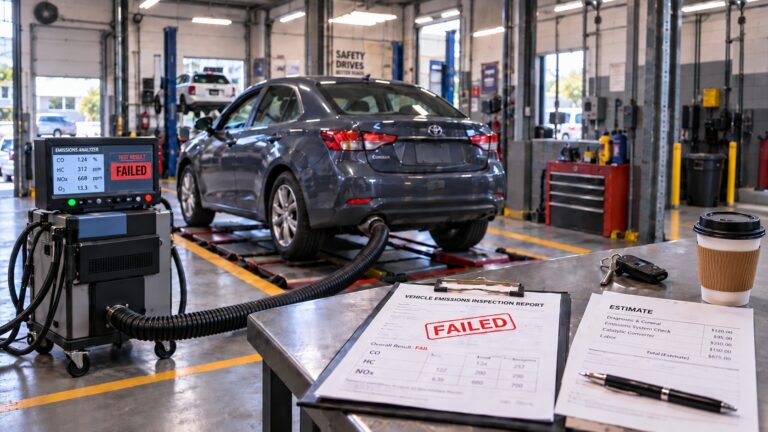
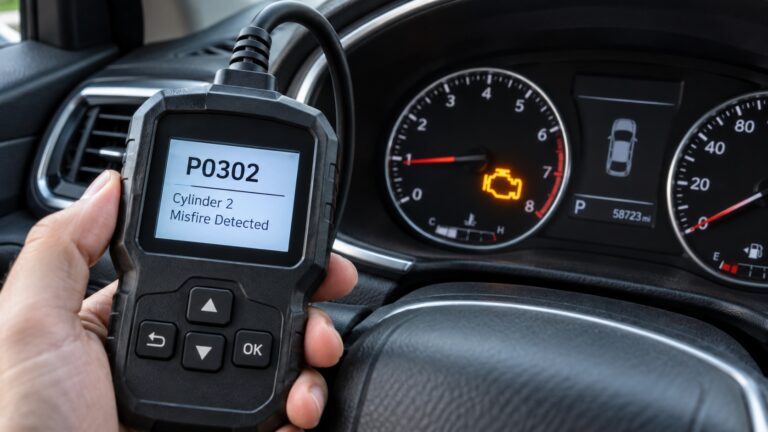
This is one of those situations where urgency feels like it should create an exception, but it does not. In an ordinary private-party sale, the seller generally must provide the required qualifying smog certificate unless the vehicle or transaction is exempt. Writing “as is” on the bill of sale does not automatically shift that responsibility to the buyer. This becomes especially important when the car has already failed smog. For example, you are moving tomorrow, and the check-engine light has been on for months. The car still drives, but you already know it will not pass.
Now, a private buyer may not simply be buying your car. They may also be buying a registration problem. If they later cannot register the vehicle, you may end up dealing with demands for repairs, reimbursement, or cancellation after you are hundreds of miles away.
Hybrids are not automatically exempt either. Battery-electric vehicles are different because they do not use the conventional tailpipe emissions test, but gasoline and hybrid vehicles can still be subject to California’s smog requirements unless an exemption applies.
This is where the type of buyer becomes important. A properly documented sale to a licensed California dealer or automobile dismantler can follow a different commercial route than an ordinary private transfer. So if the vehicle has failed smog or cannot even be driven to a testing station, the answer may not be spending your final day repairing it. The answer may be choosing the right buyer.
Cash Cash Cars has a separate guide explaining how to sell a car that failed smog in California, but the important point during an emergency move is simply to tell the buyer about the smog issue before they quote the car. That leads directly to the next problem, which is that a same-day sale only stays fast when the quote is based on the actual vehicle.
The Better Your First Description, the Less Drama You Get at Pickup
When you only have one day, the quote should not be a guessing game. For example, if you tell a buyer that your 2012 Honda runs okay, and the buyer’s truck arrives to find the catalytic converter missing, the rear wheel locked, and the car three floors underground, the original quote may no longer mean much.
That is not automatically bait-and-switch. The buyer received the wrong description, so when you call, you must give them enough information to price both the car and the pickup. Explain the year, make, model, mileage, VIN or plate number, and whether the vehicle starts and moves. Alongside this, be ready to tell them whether it rolls, steers, and brakes. Also mention whether you have the keys or whether the car is stuck in Park. Tell them if wheels, tires, catalytic converters, batteries, or other major components are missing. Describe any collision, flood, fire, or mechanical damage. Explain the title, registration, and lien status. And then you should also describe where the car is physically located.
Out of all this information, the last point matters more than most people expect. For example, a non-running vehicle on a wide driveway is one pickup but the same vehicle wedged into an underground garage with a seven-foot clearance is another issue. A standard flatbed may not fit, so the driver may need a winch, wheel lift, dollies, loading skates, or different equipment entirely. So, if the property has a gate code, a low garage, a narrow alley, locked steering, missing keys, or another access issue, say it before the quote is finalized.
One way to avoid mess is to send photos when requested. The more accurately you describe the vehicle, the harder it becomes for somebody to use an already-disclosed dent or mechanical problem as an excuse for a last-minute reduction. And once the buyer has the full picture, you can ask the question that really matters, which is whether this is the final number they are going to pay for your car.
A High Same-Day Quote Means Very Little Until You Know What Can Change It
Emergency sellers are particularly vulnerable to one tactic. The buyer gives you an attractive number over the phone due to which you stop calling other companies. Then, his truck arrives two hours before you need to leave. But the price suddenly drops. At that point, the operator knows you have very few alternatives left.
This is why a quote should include more than the headline price. You need to know whether towing is included, whether any mileage or administrative charges apply, whether a locked wheel or garage extraction changes the price, how payment will be made, and which legal business name will appear on the paperwork.
Even a legitimate buyer can revise an offer if the car differs materially from what was described. For example, telling the buyer all four wheels are present when one is actually missing can obviously affect both value and towing.
That is different from arriving and deducting hundreds of dollars because of a dent that was already photographed and discussed. The useful number is not the highest number somebody says on the phone. It is the amount that survives until the truck is standing beside the car. And before you let that truck take anything, there is another question worth answering: who exactly is buying your vehicle?
A Tow Truck at Your Door Does Not Prove You Have a Legitimate Buyer
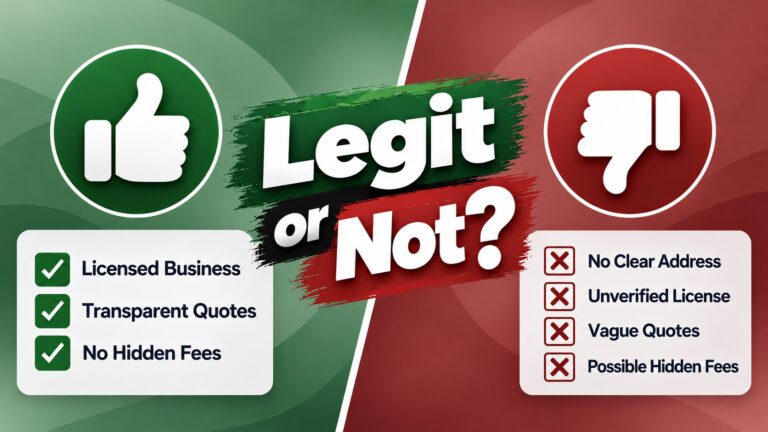
When you are rushing, a professional-looking truck can create false confidence. However, transporting vehicles and legally buying or dismantling them are not necessarily the same business activity. California’s DMV provides an Occupational License lookup for businesses such as dealers and automobile dismantlers. If somebody presents themselves as a professional commercial buyer, verify the legal business name and the relevant licensing when appropriate. The name on the paperwork should also match who you think is buying the vehicle.
This matters because emergency sellers are easy targets for open-title shortcuts. For example, someone says, “Just sign the seller section and leave my information blank. I will fill it in later.” This makes their lives easier but leaves you tied to a vehicle even after you are already living in another state.
So do not sign an open title. Be cautious with a commercial buyer who refuses to identify the actual purchasing business, pressures you to sign before payment, or gives you paperwork under a completely different company name. Moreover, even when the buyer is verified, you still have to make sure the truck can actually reach the car.
Do Not Let the Pickup Location Become the Final Thing That Ruins the Sale
You can have perfect paperwork, a confirmed price, and a legitimate buyer and still miss your flight because the truck cannot reach the vehicle.
For example, your non-running car is on level three of an apartment garage. The buyer sends a standard flatbed. The truck reaches the entrance and cannot clear the ceiling. Now everybody starts improvising while your moving deadline keeps getting closer.
Your duty is to solve access before dispatch. If the vehicle runs, moving it to an open loading area can make pickup much easier. If it does not, tell the buyer exactly which floor it is on, whether the steering is locked, whether it rolls, and how close it is to the exit. For gated properties, arrange access with security. At a hotel or workplace, tell management that a tow truck is coming.
If the vehicle is at a mechanic shop, the situation can get more complicated because the shop may have repair or storage charges that must be resolved before releasing the car. So do not send the truck first and negotiate with the mechanic afterward. First, find out what is owed, authorize the release, and confirm someone with access to the keys will be there.
An impound yard creates another level of difficulty. The facility may want identification, ownership documents, payment of its charges, an agency release, and written authorization before another company can remove the vehicle.
Again, your deadline does not change their procedure. This is why scheduling pickup one hour before leaving for LAX is gambling with the move. You need room for Los Angeles traffic, paperwork, loading, access issues, and whatever unexpected problem decides to appear that day. But even when the vehicle is physically ready to leave, one thing should still happen first.
Verify the Money Before You Give Up the Car
When everybody is rushing, payment shortcuts become tempting. Someone shows you a payment-app screenshot. A buyer says the bank transfer will clear in twenty minutes. Another person hands you a cashier’s check and says there is no time to verify it. Your car is already attached to the truck. This is exactly when you slow down.
If payment is cash, count it. If it is electronic, check your own banking application or verify it through your financial institution. Don’t rely on the buyer’s screen. Cashier’s checks can be counterfeit. Personal checks can bounce. Fake escrow sites exist. Overpayment stories are still scams even when you are late for a flight.
The order should remain simple. First, you confirm the car. Second, you confirm the final price. Third, you verify payment. Fourth, you sign over ownership and release the keys. This should never be the other way around. Because once both the vehicle and signed title leave, recovering anything from another state becomes much harder.
After the payment is settled and the truck leaves, you may finally feel like the problem would be almost over. Now, you should do the post-sale work of selling the car.
Build a Paper Trail Before You Build Distance Between Yourself and the Car
The vehicle may leave your driveway today, but questions can still arrive months later. For example, you receive a toll notice at your new address. Or a parking citation gets forwarded. Or somebody claims the buyer never completed the title transfer. That’s when you do not want to reconstruct the sale from memory while unpacking boxes three states away.
So before the vehicle leaves, photograph or copy the completed title, bill of sale, any REG 227 or REG 262 used, odometer information, the buyer’s legal name and address, the written quote, the payment receipt, and the pickup documentation.
The bill of sale should identify the vehicle, price, and date. When practical, recording the approximate time possession changed hands can also help establish exactly when the vehicle left your control. And while you are clearing paperwork, clear the car itself too. Because your personal information can move with the vehicle just as easily as the title does.
Your Old Car May Know More About You Than the Buyer Should
This is easy to forget during a rushed move. You empty the trunk and think the car is clean. But personal information hides everywhere. To clear this, you should look under the seats, inside the center console, door pockets, glove box, visor organizers, spare-tire area, and trunk compartments. This would be to remove toll transponders, garage remotes, house keys, medical paperwork, parking passes, work credentials, financial documents, and any registration copies you want to keep.
Then look at the electronics. The modern vehicles may store paired phones, contacts, call history, home and work addresses, navigation destinations, connected accounts, garage-door codes, and manufacturer-app access. Delete what you can, and remove the vehicle from the manufacturer’s app, if applicable, by performing the appropriate factory reset. Then remove the vehicle and plate from FasTrak or other toll accounts after the sale because these things feel small while you are packing your house, but later they matter much more once somebody else has the vehicle.
Then comes the DMV step that shouldn’t wait until after the flight.
File the Release of Liability Before You Leave Los Angeles
California requires sellers to submit a Notice of Transfer and Release of Liability within five calendar days after transferring the vehicle. Technically, that gives you several days but practically, if you are leaving the state tomorrow, there is little reason to wait. That’s why you should file it online after the sale while the buyer’s information and transaction details are still in front of you.
You will need information such as the plate number, VIN details, mileage, transfer date, and the buyer’s full legal name and address. Save the confirmation because the NRL does not transfer the title by itself. The buyer still has to complete the ownership transfer. The NRL creates a record showing you reported the vehicle transferred to that buyer on that date. That becomes valuable if tolls, parking tickets, towing bills, or another post-sale problem appears later. After filing it, you must contact your insurer and cancel or transfer coverage effective after the handoff. However, don’t cancel the policy while the vehicle is still physically and legally yours just because the buyer says they’ll come later.
Once that is done, keep the bill of sale, title copies, payment evidence, and NRL confirmation somewhere you can access after the move. At that point, the car is no longer just gone. You can prove when, how, and to whom it went.
Your Final-Day Sale Should Follow the Same Order as the Problems Appear
If you are truly down to the last day, the process gets easier when you stop treating it as a checklist and start thinking of it as one sequence.
- Start with ownership because nothing else matters if you cannot legally sign.
- Then look for a lien because a lender can stop the transaction even when the title is in your hand.
- If the title is missing, resolve whether REG 227 or another route applies before sending a truck.
- Once ownership is clear, tell the buyer the full truth about the car, including whether it runs, what is damaged, whether it has smog or registration issues, what parts are missing, and exactly where it is parked.
- Then get the quote in writing.
- Verify who the buyer is.
- Confirm what can change the price.
- Solve access to the vehicle.
- Remove your belongings and digital information.
- Verify payment before signing away ownership.
- Keep copies of everything.
- File the NRL.
- Then remove the car from your toll and insurance accounts.
That order matters because each step protects the next. You do not want to discover the lien after accepting money, the garage clearance after the truck arrives, or the buyer’s legal name after trying to file the release.
Down to Your Final Hours in Los Angeles?
If you are leaving Los Angeles unexpectedly, your car probably isn’t the last thing you want to deal with on your final day. You may already be dealing with movers, luggage, lease paperwork, a new job, family problems, airport timing, or a cross-country drive. That is why the best sale in this situation isn’t automatically the highest number somebody might pay if you stayed in California another month. It is the transaction that can actually close before you leave.
For example, if a private buyer might pay $1,000 more but cannot meet until next weekend, that offer does not solve tonight’s problem. If shipping consumes most of the car’s value, that does not solve it either. And abandoning the vehicle simply carries the problem into towing, storage, parking, and DMV issues after you are gone.
That’s why you need a buyer who can understand the ownership paperwork, the vehicle’s condition, the pickup location, and the deadline at the same time. Cash Cash Cars buys unwanted, damaged, and non-running vehicles throughout the Los Angeles area. When you call, explain the situation exactly as it is, including how soon you are leaving, whether you have the title, whether there is a lien, whether the vehicle runs, and where it is parked.
That gives us the information we need to determine whether the sale can realistically be completed before your move, instead of discovering the problem after the truck has already been dispatched.
If the moving truck is packed and your final hours in Los Angeles are disappearing, call Cash Cash Cars at 818-822-1863 or request a quote online and find out whether the vehicle can be handled before you leave.