Can You Sell a Car with Parking Tickets, Toll Debt, or Vehicle Holds in Los Angeles?
Unpaid parking tickets, toll violations, liens, and DMV holds affect car sales differently. Learn what must be cleared before selling your car in Los Angeles.
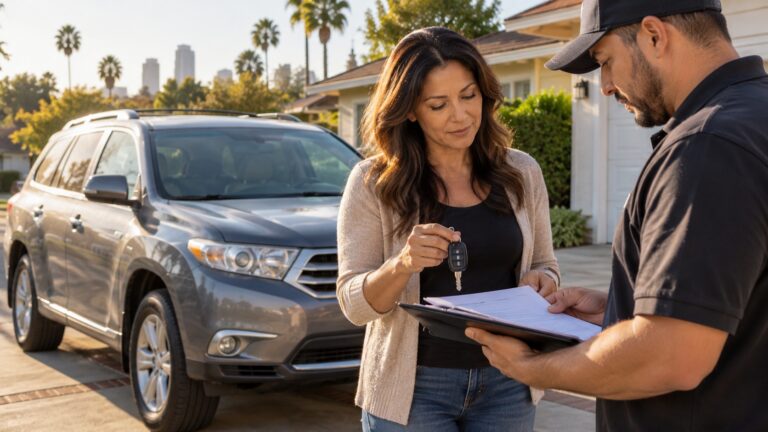
When an old car has been sitting for months, unpaid parking tickets, toll violations, expired registration, and DMV notices can start piling up faster than the car is losing value. For example, you stop driving the vehicle because it needs repairs, then registration renewal gets blocked, another parking citation appears, and eventually the amount you owe starts looking large enough that selling the car seems impossible.
That is usually when people make one of two assumptions. Either they think every ticket must be paid before the title can move, or they assume selling the car makes all of those debts disappear. Neither is quite right. In most ordinary California sales, unpaid parking and toll violations do not automatically stop ownership from being transferred to an unrelated buyer. They can block registration renewal, but the recorded violations are generally removed from the vehicle record when the ownership transfer is completed. The seller can still remain responsible for the underlying debt. A lender’s lien, court restriction, or vehicle sitting inside an impound lot is a different problem altogether.
So the first question should not be: “How much do I owe?” It should be: “What kind of hold or debt do I actually have, and does it stop registration renewal, ownership transfer, or physical release of the car?” That one distinction can save you from paying hundreds or even thousands of dollars simply because all DMV-related problems look the same on paper.
Parking Tickets Can Block Registration Without Blocking an Ordinary Sale
California allows certain unpaid parking and toll penalties to stop registration renewal. That means you may be unable to get new tags until the issuing agency reports the violations as cleared. But that does not mean your title suddenly becomes invalid.
For example, imagine you have an older car in North Hollywood with $800 in unpaid Los Angeles parking citations. The registration is blocked because of those tickets, and you assume the car cannot be sold until the full $800 is paid. If you are selling the vehicle to an unrelated private buyer, that assumption may be wrong. California DMV procedures generally remove parking and toll violations recorded before the sale from the vehicle record when a registered-owner transfer takes place. The buyer still has to complete the normal transfer process and pay the applicable registration and transfer costs, but the seller’s old parking citations do not normally remain attached to the car as though the buyer inherited them.
That sounds like the debt disappears. It does not. The city or toll agency may still pursue the person responsible for the violations. So the sale can solve one problem without solving another. The vehicle can leave your ownership while the old debt remains yours. This is why you should distinguish the ability to transfer the vehicle from the obligation to pay the citations. And just when that seems straightforward, family transfers create an important exception.
Selling to Your Brother Is Not Always Treated Like Selling to a Stranger
Suppose you decide not to sell the car to an outside buyer. Instead, you want to give it to your daughter, sell it cheaply to your brother, or transfer it into your own revocable trust. Now the parking and toll debt can matter much more. California DMV generally does not complete certain transfers to a spouse, domestic partner, parent, grandparent, child, grandchild, or sibling while unpaid parking or toll violations remain on the vehicle record. A transfer into the registered owner’s own revocable trust can also be treated differently from a normal sale to an unrelated buyer.
So imagine two identical cars with the same $800 in parking tickets. One is sold to an unrelated buyer in Van Nuys. The other is transferred to the owner’s son. The debt is the same. The vehicle is the same. But the DMV treatment can differ because of who is receiving the car. That is why a family transfer should never be treated as a shortcut around parking debt. If the buyer is a qualifying relative or the vehicle is moving into your own trust, check the violation status first and clear whatever the DMV requires before filing the transfer. This also shows why simply saying “there is a DMV hold” is not enough information. You need to know who placed it and what it actually prevents.
Before Paying Anything, Find Out Who Put the Hold There
A seller can waste a lot of money by treating every DMV problem as though it came from the same place. For example, the registration renewal is blocked and you assume the DMV itself wants payment. But the underlying issue may actually belong to the City of Los Angeles, Santa Monica, Pasadena, Beverly Hills, Metro ExpressLanes, The Toll Roads, another FasTrak operator, or some entirely different agency. The issuing agency matters more than where the vehicle is currently parked.
So if the car has Los Angeles parking citations, you would check the appropriate Los Angeles parking-violation system. If the problem is a toll, you need to identify the operator that issued it. A Metro ExpressLanes violation from the I-10 or I-110 is not automatically handled the same way as a toll issue from another California operator. The DMV’s vehicle record can help identify the registration status and some restrictions, but it should not be treated as a complete itemized statement of every ticket ever issued. Recently issued violations may not even have reached DMV yet.
So when you see a hold, ask three separate questions. Who placed it? Does it stop registration renewal or does it actually stop transfer of ownership? And what documentation is required to clear it? Once you know those answers, you can decide whether paying the charge is actually necessary to sell the vehicle. And tolls create another problem that can continue even after the sale if you forget one small detail.
Selling the Car Does Not Automatically Disconnect It From Your FasTrak Account
Imagine you sell your car in Van Nuys on Monday. The buyer takes the keys. You assume the vehicle is no longer your problem. On Tuesday, the new driver uses the I-110 ExpressLanes. The license plate is still attached to your FasTrak account. Now somebody else’s trip can become your toll charge.
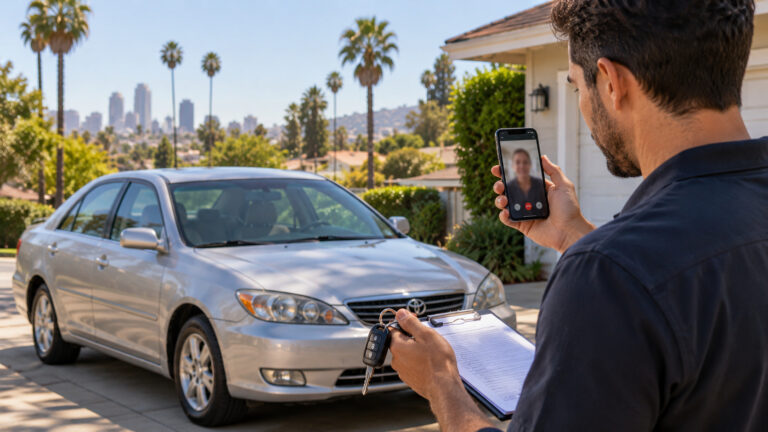
This is different from an old violation already sitting on the vehicle record. The old toll debt may remain your responsibility even after an ordinary transfer removes it from the vehicle record, while new tolls can continue reaching you if the sold vehicle is still connected to your account. That is why removing the transponder is not enough. You should also update or remove the vehicle and plate from the relevant toll account after the sale. If a post-sale toll notice still arrives, your dated bill of sale and DMV release-of-liability confirmation become important evidence showing when the car actually left your control.
At this point, parking and toll debt may sound relatively manageable. But there are other holds that are much more serious because they involve somebody else’s legal interest in the car.
A Registration Hold Is Not the Same Thing as a Lender’s Lien
Suppose your registration is blocked because of parking tickets. That can be inconvenient, but the title can still be transferable in an ordinary sale. Now suppose a lender appears on the title. That is a very different situation. A lender has a legal security interest in the car. You cannot simply sell around it. For example, if you owe $9,000 and a buyer offers $12,000, the transaction may be relatively straightforward once the lender receives the payoff and releases its interest.
Now reverse the numbers. You owe $12,000, but the car is worth only $8,000. The buyer’s $8,000 does not erase the remaining $4,000. Unless the lender agrees to another arrangement, that shortage still has to be resolved before clear title can normally move to the buyer. This is why a lender hold is fundamentally different from a parking-ticket hold. Parking violations may fall away from the vehicle record during an ordinary transfer. A lender’s lien does not disappear simply because somebody agreed to buy the car. And that same logic applies when the person holding the vehicle is a mechanic or tow yard.
A Mechanic or Tow Yard Can Stop the Car From Physically Leaving
Imagine the title is clear. There are no parking-ticket transfer problems. You find a buyer. The problem is that the car is sitting at a repair shop with $1,700 in unpaid repair and storage charges. You may legally own the vehicle, but the shop may also have lawful rights related to possession and payment. Signing a bill of sale does not automatically require the mechanic to hand the car to your buyer. The same issue can appear at a tow yard where storage charges continue growing every day.
So before accepting an offer, find out what the facility requires to release the vehicle. Ask for the current balance. Find out whether a lien-sale process has already started. Ask whether they need payment, written authorization, identification, or other release documents. A buyer can value the car. They cannot override a lawful possessory lien just because the sale price is attractive. This is where people sometimes confuse “I can sell the car” with “the buyer can pick up the car.” Those are not always the same thing. And if the vehicle has already been booted or impounded, the difference becomes even more obvious.
An Impounded Car Is a Release Problem Before It Becomes a Selling Problem
Suppose the vehicle is sitting in your driveway with $900 in parking tickets. You may still be able to sell it through an ordinary transfer without paying those tickets first. Now change one detail. The city has already booted or towed the car. The situation is completely different. Once an agency or tow operator physically controls the vehicle, the buyer cannot simply show up with a truck and take it away. In Los Angeles, a booted vehicle may require payment through the city’s release process. A towed vehicle can require a release order, proof of ownership, and payment of towing and storage charges before the Official Police Garage allows it to leave.
And the longer it stays there, the worse the economics become. For example, a $1,500 car can quickly become much less attractive if several hundred dollars in towing, storage, release, and administrative charges have accumulated before the buyer can even reach it. This is why an impounded vehicle should be treated as a release problem first and a sale problem second. A specialized buyer may still be willing to evaluate the car, but no legitimate dealer can simply ignore the yard’s release requirements. If your vehicle is already being held, Cash Cash Cars’ guide to selling a car at a tow yard can help explain the pickup side, but you still need the yard’s actual written release requirements before arranging anything. And once you finally get the car out, expired registration and smog can create the next layer of confusion.
Expired Registration Does Not Mean Every Fee Disappears When You Sell
This is where sellers often mix several different debts together. For example, an older car in Sherman Oaks has expired registration, several parking tickets, and a failed smog test. You may look at all of those problems and assume one of two things: either you must pay everything before selling, or the buyer takes everything over once the title changes. Neither is accurate. Parking citations recorded before an ordinary unrelated transfer may be removed from the vehicle record. But ordinary registration fees and late penalties are separate. Those amounts may still affect the transfer or the buyer’s later registration. The exact result can depend on the vehicle record, whether Planned Non-Operation was filed, and other DMV rules. This is why you should not assume that every charge labeled “DMV” will disappear when ownership changes.
Smog is another separate issue. California generally requires the seller in a qualifying private-party transaction to provide a valid smog certificate when the vehicle is subject to inspection. An expired registration does not automatically remove that obligation. Neither does Planned Non-Operation. So imagine your car has not been registered for a year and cannot pass smog because the check-engine light is on. A private sale can now require you to solve both the emissions problem and whatever registration issues remain. A licensed dealer can generally acquire the vehicle under a different commercial process without requiring the same seller-provided smog certificate used in an ordinary private sale. That can make a professional buyer more practical when the vehicle already has several problems stacked together. And that is where the selling method starts to matter as much as the debt itself.
A Private Buyer and a Licensed Buyer May See the Same Problem Car Very Differently
A private buyer usually wants the transaction to be simple. The car runs. The title is clear. Registration is understandable. The smog certificate is ready. They pay you and drive away.
Now imagine the vehicle has expired registration, a missing title, a lender payoff, a failed smog test, and several years of deferred repairs. A private buyer may still be interested, but the transaction becomes much harder to explain and complete.
A licensed dealer or specialized car buyer may be more familiar with those situations. They may regularly handle lien payoffs, missing-title paperwork, non-running vehicles, and towing. They may also be able to account for registration obligations or other costs directly in the purchase offer.
But there is an important limit. A licensed buyer cannot erase your old parking tickets. They cannot ignore a court restriction. They cannot remove a lender’s interest without satisfying it. And they cannot walk into an impound lot and take the vehicle without meeting the release requirements. So professional buyers simplify some problems. They do not make legal restrictions disappear. This is why Cash Cash Cars may make more practical sense when repairs, registration issues, towing, and the effort of private advertising are worth more than the extra money you might theoretically gain by waiting for an ordinary buyer. The company reviews junk cars, trucks, SUVs, and minivans across Greater Los Angeles, including vehicles that no longer run or are too expensive to repair. But before paying every old ticket just to prepare the car for sale, there may be another option worth checking.
Sometimes You Can Address the Debt Without Paying the Entire Amount at Once Suppose the parking debt itself is large enough to be a financial problem. That does not necessarily mean your only option is paying the full balance immediately. The issuing agency may offer citation review, installment plans, or assistance programs depending on your circumstances. For example, the City of Los Angeles offers payment-plan options for eligible motorists and community-assistance programs for some qualifying people. Those programs do not mean the original debt simply disappears. But they may change how quickly you need to pay it or how penalties are handled. Toll operators can have their own arrangements too.
This is where another mistake is easy to make. A payment-assistance program you read about for a Bay Area FasTrak operator may not apply to Metro ExpressLanes in Los Angeles. You have to contact the agency that actually issued your debt. So before paying added penalties or planning a family transfer, ask the issuing agency what current options exist and whether enrollment clears any DMV restriction involved. Once the sale itself becomes legally and practically possible, you still need to make sure the old tickets do not turn into new problems after the buyer drives away.
The Sale Is Not Finished Until the Vehicle Is Disconnected From You
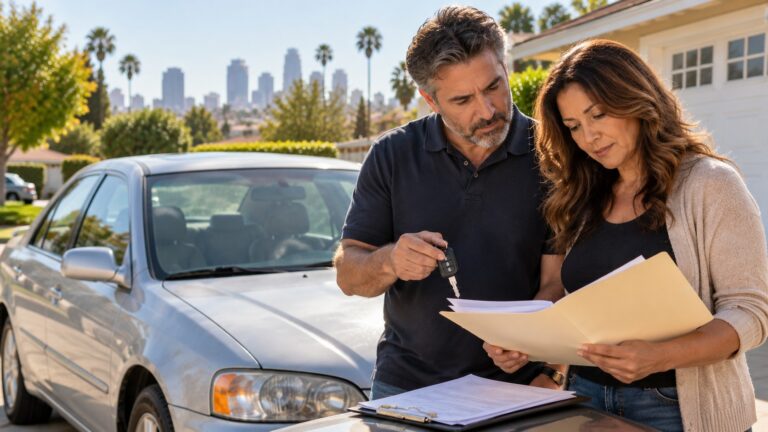
Suppose you finally solve the hold. The buyer pays. The vehicle leaves. You feel finished. There are still a few connections that can follow you if you do not close them properly. The title needs to be completed accurately. The buyer’s identity, VIN, sale price, and transfer date should be documented. If REG 227, REG 262, REG 135, or a lien release is involved, keep copies of those documents. Any agreement about registration fees, towing, or deductions should also be written down so nobody has to remember later who agreed to pay what.
Then clear the car itself. Remove parking permits, toll transponders, personal documents, garage remotes, saved addresses, phone connections, and other stored information. Delete the vehicle and plate from your toll accounts so the buyer’s future trips do not keep reaching you.
And then file the Notice of Transfer and Release of Liability. California requires sellers to notify the DMV within five calendar days after the transfer. That filing does not erase your old citations. It does not complete the buyer’s title transfer. What it does is create a record showing when you reported that the vehicle left your ownership. This matters because if another parking ticket, toll, or traffic issue appears after the sale, you have documentation showing the vehicle was no longer yours.
So the paper trail should tell a simple story. These were the old debts. This was the buyer. This was the sale date. This is what each side agreed to pay. This is when I told the DMV the vehicle was gone. When that story is clear, the old car is much less likely to keep following you.
A Problem Car Does Not Always Require Paying Every Problem Before You Sell It This is the part most Los Angeles sellers need to understand. If your car is sitting unused in North Hollywood, Van Nuys, Burbank, Pasadena, Santa Monica, Long Beach, or another part of Greater LA, the first step is not automatically to pay every ticket, toll, fee, and penalty attached to the vehicle. First identify what each problem actually is. If it is an ordinary parking or toll hold, it may affect registration renewal without preventing a normal transfer to an unrelated buyer. If the vehicle is going to a qualifying family member or your own trust, those same violations can become a transfer problem. If there is a lender, the lien must be dealt with. If the car is physically sitting at a mechanic shop or tow yard, the release requirements matter before pickup. If registration is expired, those fees need to be separated from parking debt. If smog has failed, the type of buyer can change what is required. Once you separate those issues, the situation usually becomes much easier to understand.
Then compare the cost of fixing everything for a private sale with what the vehicle is actually worth as it sits. For example, there may be little logic in spending $1,500 repairing and registering a $2,000 car just to make it easier to sell privately. On the other hand, paying a small amount to clear one genuine transfer restriction may make the whole transaction much easier. The point is to spend money where it actually solves the sale.
Cash Cash Cars buys old, damaged, unwanted, and non-running vehicles across Los Angeles and offers free towing for qualifying purchases. If the car has parking debt, expired registration, title problems, a lender, or tow-yard restrictions, explain those issues when requesting the offer so the company can evaluate what can realistically be handled before the pickup is arranged. To discuss your vehicle, call 818-822-1863. A problem car does not have to become a problem sale.