Can I Sell My Car During Bankruptcy in Los Angeles?
Selling a car during bankruptcy in Los Angeles may require approval. Learn how vehicle equity, exemptions, liens, trustees, and sale proceeds affect your options.
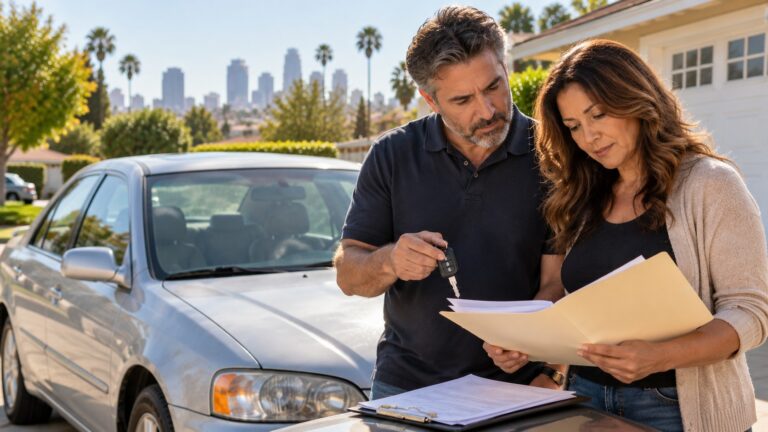
When money is tight enough to consider bankruptcy, keeping a car that is expensive, unreliable, or no longer useful can make the situation worse. For example, the monthly payment may be eating into the little cash you still have, the transmission may have failed, or the vehicle may simply be sitting while insurance, registration, storage, and repairs continue adding expenses you can no longer justify. Selling it sounds like the obvious way to remove one burden, but bankruptcy changes something important: even though your name is still on the title, you may no longer be the only person with authority over what happens to the car.
So, can you sell a car during bankruptcy in Los Angeles? In many cases, yes. But the transaction may need the involvement of the bankruptcy trustee or approval under the bankruptcy case before you sign the title or take the money. What matters is not simply whether you own the car. You also need to know which bankruptcy chapter you filed, whether the vehicle is still part of the bankruptcy estate, how much equity is actually in it, whether a lender has a lien, and what is supposed to happen to the sale proceeds. That is why a paid-off car worth $18,000 is treated very differently from an old sedan worth $700 that needs a $4,000 transmission. In one case, there may be real value available for creditors. In the other, the cost of recovering and selling the vehicle may be greater than what the estate would gain.
So before asking who will buy the car, you first have to answer a more important question:
Who actually has the authority to sell it right now?
Bankruptcy Changes Who Controls the Car Before It Changes Who Owns It
When you file bankruptcy, most of your property becomes part of what is called the bankruptcy estate. That sounds more dramatic than it necessarily is. It does not mean somebody immediately arrives to take your keys, and it does not mean everyone who files bankruptcy loses their vehicle. It means the car has to be accounted for while the bankruptcy case is being handled, and the rules for what happens next depend heavily on the chapter you filed. This is where Chapter 7 and Chapter 13 start moving in different directions. Chapter 7 is generally used by people who cannot repay much of their debt. A court-appointed trustee reviews the property in the estate and determines whether anything that is not protected should be sold so creditors can receive something. In Chapter 13, the debtor generally keeps property while making payments through a court-approved repayment plan over several years. The car may remain with you, but selling it can still affect what the plan says creditors are supposed to receive.
So imagine two Los Angeles drivers who own the same $12,000 car. The first is in Chapter 7. The second is in Chapter 13. The vehicle is identical, but the legal question is not. In Chapter 7, the first question is whether the trustee still has an interest in the vehicle as property of the bankruptcy estate. In Chapter 13, the question becomes whether the proposed sale fits the repayment plan, whether creditors are affected, and whether the trustee or court must approve what happens next.
That difference is why you should not treat bankruptcy as one generic rule saying either “you can sell” or “you cannot sell.” The chapter changes the entire path. And after you know the chapter, the next question becomes what the car is actually worth to the bankruptcy estate.
The Selling Price Is Not the Same Thing as the Value Bankruptcy Cares About
Suppose your car could sell for $13,000. At first glance, you might think the bankruptcy case sees a $13,000 asset. But if you still owe $9,000 to the lender, you do not really have $13,000 in ownership value. You have about $4,000 in equity before considering other transaction costs. Now imagine the same car is fully paid off. The full $13,000 may be equity. That difference matters because bankruptcy exemptions are designed to protect certain amounts of property value. California has two exemption systems commonly referred to as the 703 and 704 systems, and you generally use one system rather than mixing pieces from both. Under the exemption amounts effective from April 1, 2025, the basic motor-vehicle exemption is $8,625 in either system. The 703 system may also provide additional flexible protection through what is commonly called the wildcard exemption, while the 704 system may be more useful in situations where protecting home equity is important.
So imagine you own a paid-off car worth $15,000 and only the basic $8,625 vehicle exemption applies. You now have roughly $6,375 in equity beyond that basic protection. That does not automatically mean the trustee will sell the car. The trustee still has to think about the cost of selling it and how much money would actually remain for creditors after the exempt amount and other legitimate expenses are dealt with.
Now change the facts. The car is worth $15,000, but additional exemption protection covers the rest of the equity. Suddenly the vehicle may be fully protected. This is where people sometimes make the wrong jump and think:
“My car is exempt, so I can sell it whenever I want.”
Not necessarily. An exemption protects value. It is not automatically permission to transfer property that is still under the bankruptcy estate's control. So the next step is not to sign the title. It is to establish whether the estate has actually released its interest.
In Chapter 7, “The Trustee Does Not Want the Car” Needs to Become Something Real
A Chapter 7 trustee is not interested in selling property just for the sake of selling it. For example, imagine your vehicle is worth $8,000, but the lender is owed $6,500 and your allowable exemption protects the remaining value. Add sale expenses, and there may be little or nothing left for creditors. In that situation, keeping the vehicle inside the estate may accomplish nothing. The trustee can give up the estate's interest in property through a process called abandonment. Once abandonment has legally taken effect, the vehicle generally returns to the debtor's control, subject to the lender's rights and the ordinary California ownership rules.
The important word is legally. You should not simply assume the car has been abandoned because the trustee never asked for it. You should not assume it because months have passed. And you should not automatically treat a report saying there are no assets available for distribution as proof that this specific vehicle has been released. The bankruptcy record needs to support the conclusion that the car is no longer controlled by the estate.
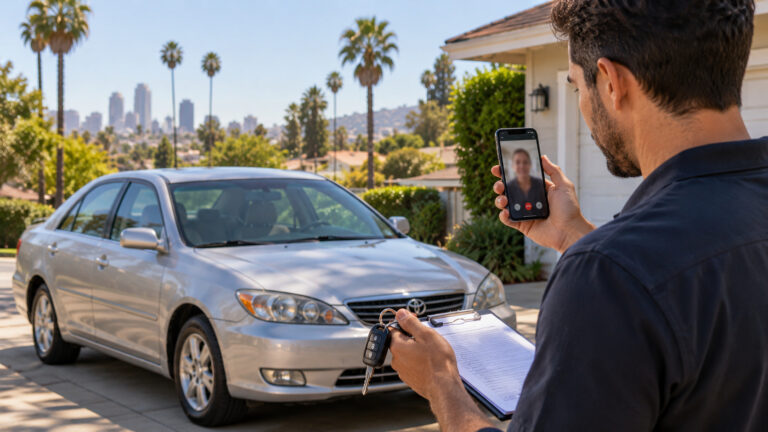
This is why the practical first step can be surprisingly simple. Get a real written offer for the car. If it is damaged, take photos. If it needs repairs, get the estimate. If there is a loan, request the payoff amount. Now your attorney and trustee are no longer discussing a hypothetical vehicle that might be worth $10,000. They are looking at a real car with a failed transmission, 175,000 miles, a $4,500 repair estimate, and an as-is buyer offering $900. That changes the conversation.
A Written Offer Can Be More Useful Than an Online Valuation When the Car Is Damaged
Imagine an older sedan that books at several thousand dollars under normal conditions. The problem is that yours does not run. The transmission is gone, the registration is expired, and towing will be required. An online retail estimate may tell everybody what a clean, functioning example is worth. That is not necessarily what somebody will pay for your actual vehicle. So instead of repairing the car just to prove what it is worth, obtain a written as-is offer. For example, Cash Cash Cars can evaluate vehicles needing major repairs and junk cars, trucks, SUVs, and minivans around Los Angeles. A real written quote can help show what the damaged vehicle is actually worth in its current condition.
That does not replace bankruptcy approval. It simply gives the bankruptcy side of the transaction a more realistic number to work with. And once you have that number, the next complication becomes much easier to see if the car still has a loan.
Bankruptcy and a Car Loan Are Two Different Problems
A trustee may decide there is no value in a vehicle for the bankruptcy estate. That does not make the lender disappear. For example, you owe $12,000 on the car, but the best realistic offer is $7,000. The bankruptcy estate may have no equity worth pursuing. But the lender still has a lien. You now have a $5,000 shortfall between what the buyer will pay and what the lender is owed. Unless the lender agrees to a smaller payoff and releases its lien, somebody still has to deal with that shortage before the buyer can receive clear ownership. Bankruptcy does not automatically force the lender to accept the $7,000 just because that is what the car is worth. That is why owners who are selling a car with an existing lien should start with the payoff amount, not simply the monthly statement balance.
In Chapter 7, an underwater vehicle may be abandoned because there is no equity for creditors. At that point, keeping the vehicle, continuing payments, surrendering it, or pursuing another lender-approved solution becomes the debtor's problem rather than an asset-sale opportunity for the trustee. Chapter 13 can handle vehicle debt differently through the repayment plan, depending on the loan and circumstances, but again the proposed sale still needs to fit the bankruptcy arrangement.
This is where the question often changes from: “Can I sell this car?” to: “Even if I can sell it, does the sale actually solve anything?” And sometimes it does.
A Paid-Off Car Can Still Be Worth Almost Nothing to the Estate
Now change the situation again. The car is completely paid off. That sounds much easier because there is no lender. But the vehicle is an old Los Angeles sedan with a failed transmission, several other mechanical problems, and a realistic as-is offer of only $600. At first, you may think:
“If it is paid off, the bankruptcy estate must want the whole $600.”
Not necessarily. A trustee still has to think economically. If recovering, arranging, towing, selling, and administering the vehicle costs nearly as much as the sale produces, there may be little practical benefit in keeping it as an estate asset.
This is another reason the vehicle should be documented honestly. Do not simply write “worthless” because you are tired of looking at it. Show why. Provide the offer. Show the repair bill. Show the condition. If the vehicle is sitting at a mechanic shop or tow yard, include those storage and release costs too, because they affect what anybody can realistically recover. Now the trustee can see the same thing you see: the car may technically be an asset, but economically it may be a burden. And if the estate does release it, you still have to think about what happens to the money once the vehicle is sold.
Getting Permission to Sell the Car Does Not Automatically Mean You Can Spend the Money
This is one of the easiest things to overlook. People focus so heavily on whether the vehicle can be sold that they forget the proceeds can create a second bankruptcy question. For example, a Chapter 7 trustee sells a vehicle containing nonexempt equity. The lender is paid if there is a valid lien. Appropriate sale expenses are dealt with. The debtor receives any protected exempt amount. The remaining money is handled under bankruptcy rules for creditors. That is very different from selling the car yourself, depositing the money in your checking account, and using it for rent the next morning. Even if a Chapter 7 vehicle has already been abandoned and you are allowed to sell it independently, you should not automatically assume the cash you receive is treated exactly like the vehicle was before the sale. The treatment of proceeds should be understood before the money starts moving.
Chapter 13 can make this even more important because the repayment plan may control whether proceeds go toward creditors, remain with the debtor for an approved need, or require another form of authorization. For example, maybe you want to sell an expensive, unreliable vehicle because the payment is destroying your monthly budget. That can be a perfectly sensible reason. But now you also need another car to get to work. Selling the first vehicle and financing a replacement may create a new debt while you are already inside an active Chapter 13 case. That can require another approval process. So the sale and replacement should be thought through together.
The question is not simply: “What will the buyer pay me?” It is: “Where is that money allowed to go, and what happens next?”
Selling Before Bankruptcy Can Be Just as Important as Selling During Bankruptcy
Now suppose you have not filed yet. You know bankruptcy is coming, and you want to sell the car first. That is not automatically improper. For example, selling a vehicle for a fair price to an unrelated buyer and keeping a clear record of the money can be very different from transferring the car to a cousin for $500 when it is worth $10,000 and then continuing to drive it as if nothing changed. The first looks like a normal transaction. The second can raise obvious questions about whether property was moved out of creditors' reach. Bankruptcy trustees can examine transactions made before filing, and some transfers can be challenged depending on timing and circumstances.
The same concern applies to what you do with the money. For example, selling a vehicle and then selectively paying certain relatives or creditors can create another issue even if the sale itself was legitimate. This is why timing matters. The closer the transaction is to the bankruptcy filing, the more important it becomes to preserve the offer, payment record, buyer information, and a clear explanation of where the proceeds went. You do not want the transaction to look mysterious simply because nobody kept records. And marriage can add another layer.
The Name on the Pink Slip May Not Tell the Whole Bankruptcy Story
California is a community-property state. That means the title alone does not always answer what property may be affected in a bankruptcy case. For example, one spouse files bankruptcy alone, while the vehicle is titled only in the other spouse's name. It may be tempting to assume:
“The filer is not on the title, so the bankruptcy has nothing to do with this car.”
That can be too simple. Certain property belonging to the marital community may still become part of the bankruptcy estate even when only one spouse filed. Separate property can be different, but the point is that title ownership and bankruptcy ownership are not always identical questions. So if the car is jointly owned, community property, or titled to a spouse while one partner is in bankruptcy, do not treat the DMV title alone as permission to sell. And if the vehicle has already been sold without the required authority, the worst response is usually pretending the transaction never happened.
If You Already Sold the Car, Hiding It Makes the Situation Worse
People sometimes discover these rules after the sale. For example, the car was sold last week. The buyer already has it. The money has been deposited. Then you learn that the trustee or court may have needed to approve the transaction first. That is a serious situation, but it is not automatically the same thing as deliberately committing bankruptcy fraud. The important step is to preserve the records and address the transaction promptly.
Keep the bill of sale. Keep the buyer's information. Keep the payment evidence. Do not spend or move the remaining proceeds merely because you are worried about what will happen. Give the documents to your bankruptcy attorney and let them determine what disclosure or corrective process may be necessary. Trying to hide the sale can create a much bigger problem than the unauthorized transfer itself.
The same caution applies after a bankruptcy discharge. A discharge does not always mean the case is fully closed. For example, your qualifying debts may have been discharged while the Chapter 7 trustee is still administering property. So before selling a car after discharge, confirm that the estate no longer controls it. Only once the car has been abandoned, otherwise released, or the case has reached the point where the vehicle is genuinely back under your control should you treat the sale like an ordinary California transaction. And once bankruptcy authority is settled, the DMV side still has to be completed properly.
Bankruptcy Permission Does Not Replace California DMV Rules
Suppose the trustee has cleared the sale. That solves the bankruptcy problem. It does not transfer the car. The person legally authorized to sell still needs to release ownership on the California title. If there is a lender, the lien needs to be dealt with. If the pink slip is missing, REG 227 may become part of the transaction. So even after getting bankruptcy clearance, you can still run into a missing-title problem, an odometer issue, a lender delay, or a smog requirement. If the title is missing, the separate guide to selling a car without a title explains the California process in more detail. Mileage disclosure may also apply depending on the model year. And California generally requires qualifying private-sale vehicles to meet the applicable smog requirements unless an exemption applies. Licensed dealer and dismantler transactions can be treated differently from ordinary person-to-person sales.
Then after the sale, the seller should file the Notice of Transfer and Release of Liability within five calendar days. Keep the confirmation. Keep the bill of sale. Keep the payment record. Keep the lender release. And in a bankruptcy-related transaction, keep the trustee or court authorization with the rest of the file. This is one of those situations where paperwork is not bureaucracy for its own sake. You want a complete story.
This is why the car could be sold. This is what it was worth. This is who bought it. This is where the money went. This is when the DMV was notified. If those answers are clear, the sale is much easier to defend later.
After Bankruptcy Clearance, the Best Selling Method Still Depends on the Car
Once you have authority to sell, the car itself becomes the next question. For example, a clean, functioning, well-maintained vehicle may still be worth advertising privately if there is enough time and the potential price difference justifies the extra effort.
Now change the vehicle. It does not run. The transmission is gone. The registration is expired. The body is damaged. And you are already dealing with bankruptcy, lenders, attorneys, paperwork, and financial pressure. Spending thousands repairing the vehicle just to chase a higher private-party price may make little sense. This is where an as-is sale can become more practical.
Cash Cash Cars buys vehicles across Los Angeles and Greater LA, including damaged, unwanted, wrecked, mechanically troubled, and non-running vehicles, with towing available in its service area. A seller can request an offer based on the vehicle's current condition, title situation, and location. The same service is available in areas such as Van Nuys and Santa Clarita, subject to pickup arrangements. But bankruptcy changes the order. The buyer does not get to decide whether you have authority to sell. Cash Cash Cars does not replace the trustee, court, lender, or your attorney. The correct order is to establish authority first, determine the car's realistic value, resolve the lien if there is one, understand what happens to the proceeds, and then complete the California transfer. That order may feel slower at the beginning. It is much faster than trying to unwind a sale afterward.
Bankruptcy Does Not Mean You Must Keep a Car You Can No Longer Afford
A car can become one of the biggest monthly expenses in a household already struggling financially. The payment continues. Insurance continues. Registration continues. Repairs continue. And if the vehicle barely runs or is no longer needed, keeping it simply because you are afraid bankruptcy prevents a sale can make the financial situation worse.
The important point is that bankruptcy does not automatically mean the car must stay with you. It means the sale has to fit the bankruptcy case. In Chapter 7, that can mean establishing whether the trustee still controls the vehicle or has abandoned the estate's interest. In Chapter 13, it can mean checking the repayment plan and obtaining any required approval. If there is a lender, the lien has to be addressed separately. If the vehicle is damaged or nearly worthless, a real as-is offer can help document what it is actually worth. And if the sale is approved, you still need to know where the money is supposed to go before spending it.
So the better question is not simply: “Can I sell my car during bankruptcy?” It is: “Who controls this vehicle right now, what is it actually worth, and what has to happen before I transfer it?” Once those three questions are answered, the rest becomes much easier.
If you are authorized to sell a vehicle in Los Angeles and want to know what it may be worth in its current condition, Cash Cash Cars can review the vehicle and provide an offer at 818-822-1863. If bankruptcy is active, make the offer part of the approval process rather than treating the sale as already complete.
This article provides general information, not legal advice. Bankruptcy rights depend on the chapter, exemptions, filing date, court orders, ownership, and the specific circumstances of the case. Consult a qualified bankruptcy attorney before transferring a vehicle during an active bankruptcy.