How to Liquidate a Joint-Owned Car Quickly During a Divorce in Los Angeles
Learn how to sell a jointly owned car during a Los Angeles divorce while handling court authority, title signatures, loans, payment records, towing, and DMV rules.
When a couple breaks up, divorce proceedings can bring numerous legal complications. For example, a jointly owned car can become a surprisingly stubborn obstacle, as the court may order the vehicle sold so its value can be divided under the marital settlement agreement.
Complications increase if the car needs repairs, has expired registration, carries an outstanding loan, or is titled in a way that requires both spouses to sign. In these scenarios, listing the vehicle online and waiting weeks for a private buyer is not always realistic. Time is usually short, so you cannot wait months simply because the couple still needs an authorized sale, a defensible price, secure payment, a valid DMV transfer, and documentation that allows their attorneys or the court to trace every dollar.
This is where a normal car sale can turn into another divorce problem.
The car may only be worth a few thousand dollars, but if one spouse refuses to sign, the loan payoff is unclear, or the sale price looks suspiciously low, that vehicle can create another round of arguments between the parties.
The goal, therefore, is not simply to sell the car quickly. It is to sell it in a way that makes sense on paper afterward.
First, Find Out Whether You Are Actually Allowed to Sell the Car
A divorce does not automatically mean either spouse can dispose of a jointly owned vehicle whenever they want.
For example, one spouse may have possession of the car and believe that gives them the right to sell it. The other spouse may no longer drive it, may have moved out of the home, and may not even want the vehicle. Even then, the car can still be part of the marital property that is subject to the divorce case.
California divorce cases normally involve Automatic Temporary Restraining Orders, commonly known as ATROs. These restrictions generally prevent either spouse from transferring, concealing, encumbering, or disposing of property without the other spouse’s written consent or a court order.
So before talking to buyers, read what the divorce paperwork actually says.
For example, the judgment may say the car must be sold and the net proceeds divided. A settlement agreement may require both spouses to approve the sale price. In another case, the judge may have given one spouse responsibility for obtaining offers and completing the sale.
Those details matter.
If the paperwork simply says “sell the vehicle,” another disagreement can begin over who chooses the buyer, what price is acceptable, who receives the payment, or who is responsible for paying off the loan.
The clearer the authority is before the sale starts, the easier the transaction becomes.
The Divorce Order Is Only One Part of the Problem
Even when the court has authorized the sale, the California title can create a second problem. For example, look at the names printed on the title.
If it shows:
John Smith AND Jane Smith
both owners generally need to sign the title before the vehicle can be transferred.
If it shows:
John Smith OR Jane Smith
either owner can generally sign the DMV release.
If there is no conjunction between the names, California DMV generally treats the ownership as though “AND” were used.
This sounds simple until the divorce becomes hostile.
For example, one spouse may be living in Los Angeles while the other has already moved to Arizona. Or one spouse may agree that the car should be sold but refuse to sign because they think the offer is too low.
Now selling the car is not really a car problem anymore; it has become a cooperation problem.
There is also an important distinction here.
An “OR” title may allow one spouse to complete the DMV signature alone, but that does not automatically mean the same spouse is free to ignore the divorce order and sell the car without approval.
In other words, there are two separate questions:
Can you sign the car over under DMV rules?
and
Are you authorized to sell it under the divorce case?
Those answers are not always the same.
What If Your Spouse Refuses to Sign?
This is where many people get stuck.
For example, the judge has ordered the car sold within 30 days. A buyer is ready. The offer is reasonable. The title says AND. But the other spouse simply refuses to sign.
You cannot solve that problem by signing their name, ignoring the second owner, or hoping the DMV will overlook it.
In this situation, the court will either enforce or clarify the order. Depending on the situation, the court may:
1- set a deadline for signatures
2- require the title or keys to be delivered
3- impose financial consequences on both spouses
4- clarify how the sale should proceed
5- or authorize another person to execute an ordered document.
That may sound excessive for an old vehicle, but it shows why liquidating car value during divorce becomes so frustrating. Generally, a $6,000 car creates more conflict than its value, especially when one spouse uses the vehicle as leverage during the divorce process. So if you’re buying such a vehicle, you will need to properly check both the divorce authority and the DMV paperwork.
When Disagreements Around The Actual Worth of Car Arise?
When both spouses agree to sell the vehicle, price may become a point of disagreement.
For example, one spouse may search online and find similar cars advertised for $14,000.
The other spouse may know their car has:
- a failing transmission,
- body damage,
- expired tags,
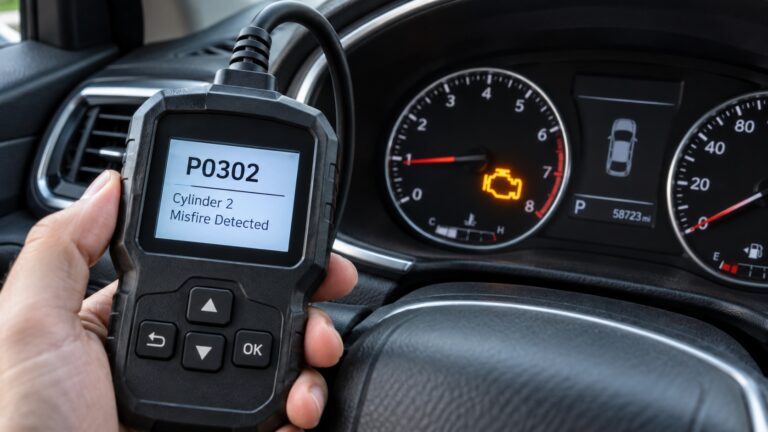
- warning lights,
- 170,000 miles,
- or has not run properly for months.
They are technically looking at the same vehicle, but they are not really talking about the same thing. So negotiating the value of a divorce car gives you more headaches than an optimistic online listing.
Online valuation guides, dealer listings, and comparable vehicles can help establish a range, but asking prices are not completed sale prices. The strongest practical evidence may be two or three written offers from buyers who actually know the car’s condition.
For example, if three independent buyers offer between $6,500 and $7,200 for a damaged vehicle, that tells you much more about its current market than a clean-condition online estimate of $10,500. That estimate matters later if one spouse claims the vehicle was intentionally sold too cheaply.
Instead of saying, “I thought $6,800 was fair,” you can show:
- the photos,
- repair estimates,
- mileage,
- condition,
- competing offers,
- and the final accepted price.
This will add a story behind the $6800 number.
A Car Needing Repairs Can Change the Entire Sale Strategy
Many divorce-related car sales involve vehicles that aren’t in ideal condition.
For example, the car may have been sitting during the separation because neither spouse wanted to spend money fixing it. Maybe it needs a transmission. Maybe the check engine light is on. Maybe it was involved in an accident. Maybe one spouse stopped paying registration while the divorce dragged on. So at this point, repairing the car just to chase a higher private-sale price doesn’t make financial sense.
Imagine spending $4,000 on repairs so you can possibly sell the vehicle for $5,000 more. On paper, that sounds like an extra $1,000. In reality, you still have to arrange the repair, agree on who pays, wait for the work to be completed, advertise the vehicle, deal with buyers, and hope the final selling price reaches your target.
That’s why, for a non-running vehicle, an as-is offer is often the most sensible option, rather than turning the repair itself into another financial dispute.
Now Imagine the Title Is Missing Too
Divorce does not make ordinary DMV problems disappear.
For example, one spouse may believe the other has the pink slip while the other spouse may insist it was lost years ago. And all of this happens when a court deadline is approaching, and a buyer is waiting.
In such situations, California DMV Form REG 227 can be used to request a replacement title or complete a replacement-and-transfer transaction. However, REG 227 is not a shortcut around every problem. For example, it doesn’t erase an existing lien, remove another owner’s rights, or automatically resolve a signature dispute.
So if the title is missing, deal with that before pickup day rather than discovering the problem when the buyer is already standing outside.
A Failed Smog Test Can Also Stop a Private Sale
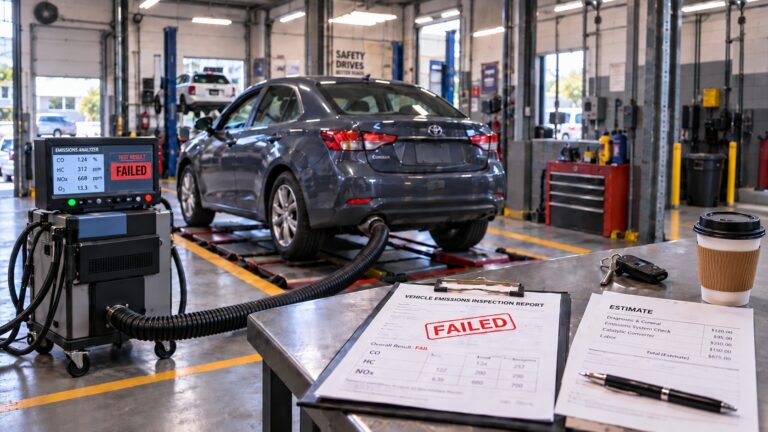
Another common problem is a vehicle that runs but cannot pass smog. In practice, the car may have a check-engine light, a catalytic-converter problem, or an emissions fault that neither spouse wants to repair. Now, California law generally requires the seller in a private-party transaction to provide a qualifying smog certificate unless an exemption applies, and writing “as is” on the bill of sale does not automatically remove that responsibility.
This aspect can matter a lot during a divorce because the couple usually has no interest in spending another $1,500 or $2,500 just to prepare the car for a private buyer. That’s why, depending on the situation, selling to an appropriately licensed dealer or dismantler may provide another legal route.
If smog is the problem, you can review the requirements on this page that Cash Cash Cars has prepared to help sellers involved in selling a car that failed smog before agreeing to a buyer.
Expired Registration Does Not Necessarily Mean the Car Cannot Be Sold
Expired registration is another issue that often appears when a vehicle has been sitting during a separation, as neither spouse may have wanted to renew the tags because neither was using the car. Months later, the court orders the vehicle sold.
Now, an expired registration does not automatically make the sale impossible, but it affects the value, paperwork, and what a buyer will be willing to pay. So you should disclose the registration issue when getting offers. Otherwise, the buyer may arrive expecting a clean, current vehicle and suddenly lower the price after discovering unpaid DMV issues.
After all, these are exactly the kind of last-minute disagreements that people want to avoid in a divorce transaction.
An Outstanding Loan Changes the Math Completely
When the car still has a loan, the lender’s rights complicate the situation and create confusion about the divorce order. For example, the divorce judgment says only one spouse is responsible for the car loan. That does not mean the lender will release the other spouse from financing the contract. If both spouses’ names are written on the loan, they will both be liable until the balance is paid or the lender approves another arrangement.
The best step is to request a current payoff statement from the lender before accepting an offer. It will tell the actual amount required to release the lien.
For example:
The car sells for $16,000.
The loan payoff is $10,500.
Authorized selling costs are $200.
That leaves:
$16,000 – $10,500 – $200 = $5,300
So the $5,300 is the net amount available after the lender and authorized costs are paid.
However, it does not automatically split it 50/50 because this is a divorce. The judgment or settlement agreement may contain other instructions, reimbursements, or offsets.
So let’s use a different example.
The lender is owed $25,000. The best offer for the car is $21,000. Transaction costs are $200. So the sale now creates a $4,200 shortage rather than proceeds.
In this situation, one has to fund that shortfall before the lender will release its interest. Again, the divorce agreement will determine who is responsible for that amount.
So if you are buying such a car, you will need to check the payoff before accepting a sale price. Otherwise, the couple may agree to sell the car and only later discover that they need thousands of dollars just to complete the transaction.
Payment Should Be Boring, Traceable, and Easy to Explain
The payment side of a divorce sale should not be complicated, and it must create a trail of everything.
For example, imagine the buyer pays the entire amount in cash to one spouse. That spouse says they used some of it to pay a bill, deposited the rest, and will send the other spouse their share later. Even if nothing dishonest happened, that arrangement creates unnecessary suspicion.
A cleaner transaction creates a visible paper trail. The buyer may pay the lender directly and send the remaining balance according to the divorce instructions. Or payment may go into an attorney trust account. Or the buyer may issue separate payments. Or the money may be deposited into another account agreed upon by both parties.
The exact method can vary, but the important thing is that the sale price and distribution can later be reconstructed from documents.
Anyone reviewing the transaction should be able to see the sale price, the amount that was paid to the lender, what the authorized costs were, what the remaining balance was, and where each spouse’s share went.
Such a trail is always easier to defend than an envelope of cash with a series of text messages.
Vehicle Pickup After Divorce Can Become A Flashpoint Without Proper Planning
The car may be sold, the price may be agreed, and the paperwork may be ready, but practical details still need resolving.
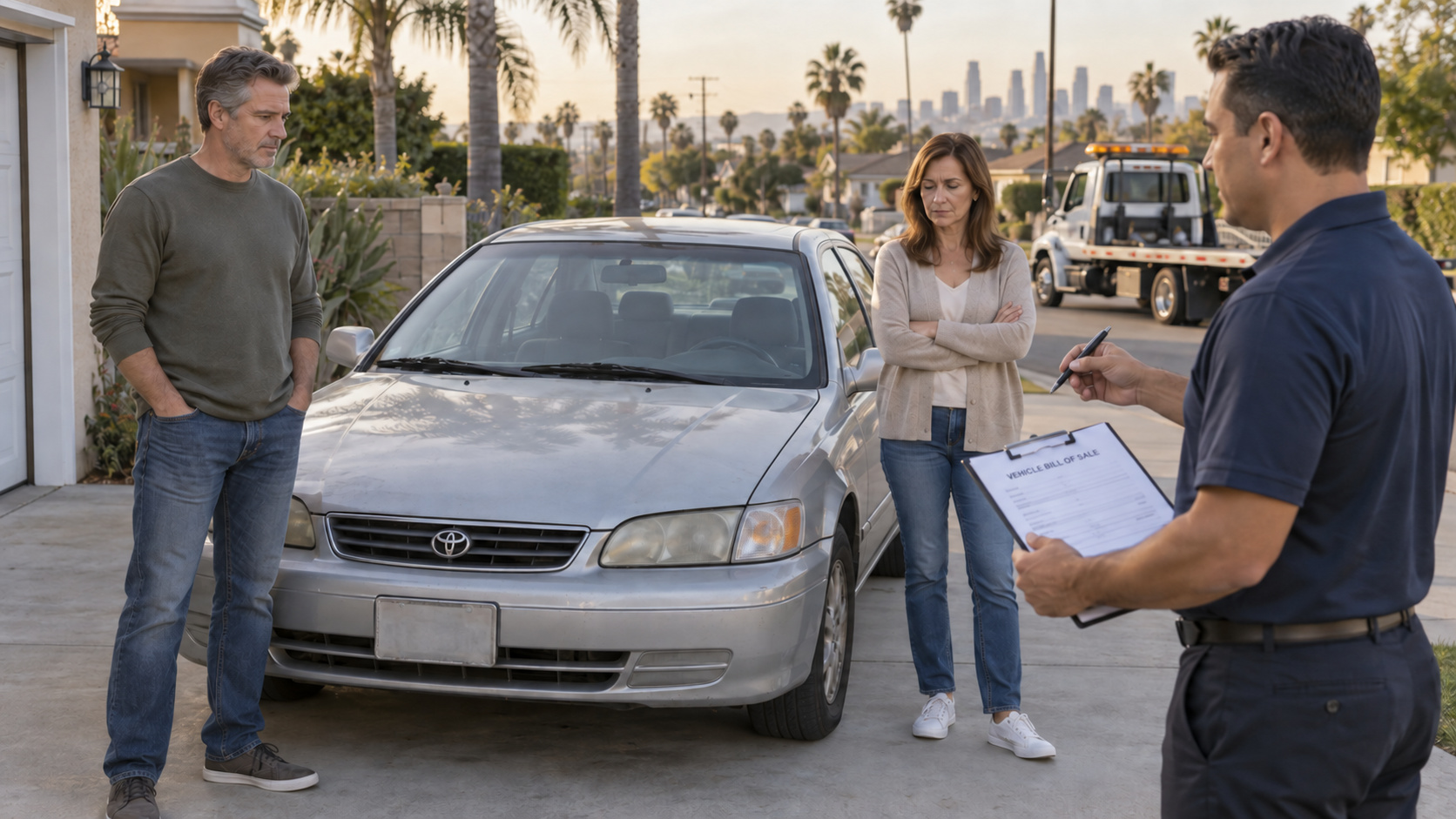
For example: who has the keys, who has the title, where the car is parked, who removes personal belongings, who meets the buyer, whether the vehicle needs towing, when payment is confirmed, etc.
If one spouse has the car and the other has the title, then you should sort that out before pickup day. If direct communication between the spouses is unsafe, prohibited, or simply too hostile, attorneys, mediators, or another approved person may need to coordinate the exchange.
The important point is to confirm the final price and towing terms beforehand. Beyond that, while CashCashCArs has been arranging the sale and towing of unwanted cars throughout the Los Angeles area, we make sure our pickup drivers don’t end up mediating a divorce argument in the driveway.
Do Not Forget the DMV After the Car Is Gone
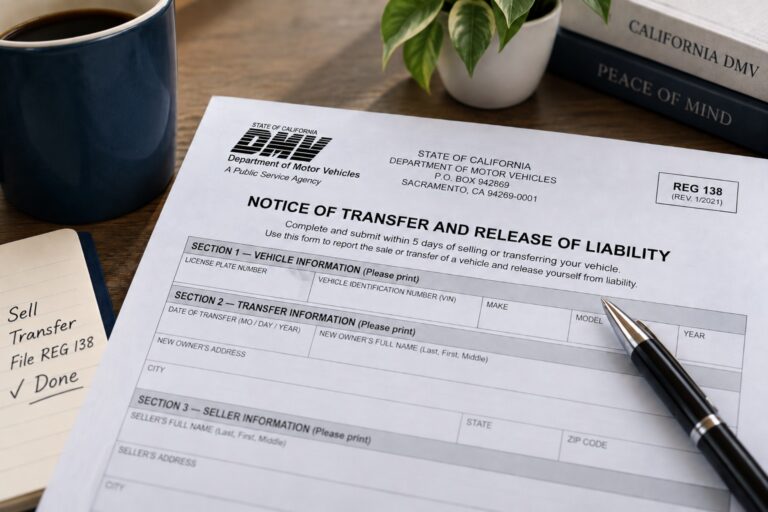
Many sellers feel relieved once the tow truck leaves. However, the sale process isn’t over just because the transaction has happened. California law requires sellers to file a Notice of Transfer and Release of Liability with the DMV within five calendar days after the sale.
For example, if the buyer later receives the parking tickets, toll violations, or becomes involved in another post-sale issue, the NRL helps establish when the former owners gave up possession. It does not transfer title itself, but it is an important part of the paper trail that confirms the vehicle sale.
Both spouses should also keep copies of the signed title, bill of sale, payment records, lien release if applicable, and any other important transfer documents. And you should not assume the other spouse will keep this information for you after the divorce.
You Do Not Need a Filing Cabinet. You Need a Story the Documents Can Prove
Divorce transactions can become overcomplicated because people start saving everything without knowing what actually matters. The practical rule about the transactions file is that it should be understandable for someone who wasn’t there to track the entire sale from the documents.
For example, your file should be able to explain points like who gave permission to sell the car, what condition the vehicle was actually in, what offers were available, why this buyer was selected, what was the final selling price, was there a loan, where did the money go, was the DMV transfer handled properly, etc.
Useful records may include the court order or written consent, photos of the vehicle, repair estimates, written offers, the accepted quote, signed transfer documents, payoff statements, proof of lender payment, towing records, payment confirmation, and the DMV NRL receipt.
You do not need paperwork for the sake of paperwork. You need enough paperwork to stop the same argument from starting again six months later.
The Car Should Leave the Divorce With as Little Drama as Possible
A jointly owned vehicle should not keep two people financially tied together longer than necessary.
For example, if both spouses have already agreed to sell a damaged car, there is little benefit in letting it sit for another six weeks simply because someone hopes a private buyer might eventually pay $1,000 more. On the other hand, selling it immediately for the first low offer you receive can create another dispute. The better approach usually sits somewhere in the middle.
Practically, this better approach requires you to get enough information to understand the vehicle’s actual condition and get several realistic offers to estimate a real value. Along the way, it is vital to check the title and the loan while confirming who has authority to approve the sale. Only then can you complete the transaction in a way you can explain later without relying on anyone’s memory.
For a clean, running vehicle with no deadline, a private sale may still make sense. However, for a damaged, non-running, unwanted, or mechanically troubled car that must be sold quickly, a professional buyer can remove much of the waiting and uncertainty. In this regard, Cash Cash Cars provides immediate offers and free towing across the Los Angeles area for vehicles in any condition. We can give divorcing spouses a documented transaction without spending weeks arranging repairs, answering buyer messages, scheduling test drives, or renegotiating repeatedly.
If the jointly owned vehicle has become one more unresolved issue in the divorce, call Cash Cash Cars at 818-822-1863 for a quote and find out what the car is worth in its current condition.
Disclaimer: This article provides general information and is not legal or tax advice. Divorce orders, title arrangements, liens, protective orders, and property allocations vary. Consult a California family-law attorney, the California DMV, and a qualified tax professional regarding your specific transaction.