Facing Car Repossession in Los Angeles? Selling vs. Voluntary Surrender
Behind on your car loan in Los Angeles? Learn when selling before repossession may beat voluntary surrender and how liens, remaining debt, and credit are affected.
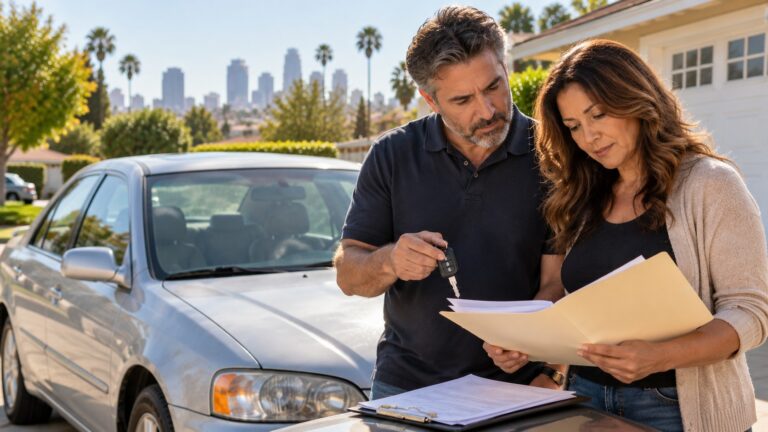
Missing a car payment in Los Angeles can become more than a money problem very quickly. For example, you may depend on the vehicle to get to work, take your children to school, or simply manage everyday trips across a city where going a few miles can already take half an hour. But if the payment has become unaffordable, keeping the car can drain the money you still have while the loan falls further behind. That is usually when the same question starts coming up: should you try to sell the car before the lender takes it, or should you voluntarily surrender it and stop fighting the payment?
Selling is often the stronger option when the vehicle is worth enough to satisfy the lender’s lien, because you have more control over the selling price and can potentially avoid a repossession entry. But it is not always possible. If you owe substantially more than the car is worth, a sale may leave a shortage that has to be paid before the lender releases its interest. Voluntary surrender can sometimes reduce the expense and confrontation of an involuntary repossession, but it does not make the remaining debt disappear.
So the real comparison is not simply: “Which option gets the car out of my driveway faster?” It is: “What will I still owe after the car is gone, and how much control do I still have before that happens?” That question becomes more urgent once you understand how quickly repossession can begin.
Repossession May Be Closer Than You Think
A lot of borrowers assume they have 30, 60, or even 90 days after missing payments before a lender can actually recover the car. California does not give every borrower that kind of guaranteed waiting period. Depending on the contract, missing even one payment can place the loan in default and allow the lender to begin repossession without first going to court or giving you advance warning. That does not mean a tow truck necessarily appears the next morning. Some lenders give short grace periods, send reminders, offer hardship options, or attempt collections for several weeks. Others may act more quickly depending on the account history and the agreement.
So imagine you missed last month’s payment and have just received another collection call. You may still have time. Now change the situation slightly. The lender tells you the account has already been assigned for repossession. At that point, you should act as though the car could be taken before you finish arranging your next option. A repossession agent can generally recover a vehicle from a public street, an accessible driveway, or an open parking area, although the agent cannot use threats, force, or create a breach of the peace to take it. A locked garage is not permission to break in, but those limits should not be treated as extra time to delay the decision.
The most useful thing you can do at this stage is work out two numbers immediately. How much will it cost to bring the loan current? And: How much will it cost to pay the loan off completely? Those two numbers tell you whether you are realistically trying to keep the vehicle or exit the loan altogether.
Talk to the Lender Before the Problem Becomes a Tow Truck
Calling the lender can feel pointless when you already know the payment is late. It is still the best place to start. For example, if you missed payments because you were between jobs for six weeks but have now returned to work, your situation is very different from someone whose income has permanently dropped and who can no longer afford the monthly payment at all. In the first situation, a deferment, extension, or repayment arrangement might solve the problem. The lender may be willing to move one or more payments to the end of the agreement or spread the missed amount over future payments. That does not necessarily make the arrangement free. Interest and other charges may continue, so you should ask what the entire modification costs rather than focusing only on whether this month’s payment becomes smaller.
Now imagine the payment will remain unaffordable even after the temporary crisis passes. At that point, extending the loan may only keep the problem alive longer. That is when selling starts to deserve a serious look. Tell the lender you are considering a sale and ask for the current payoff amount. If repossession activity has already started, explain that you are obtaining a genuine buyer’s offer and ask whether the lender will temporarily pause recovery while the transaction is completed. If they agree, get it in writing and pay attention to the expiration date. A representative saying, “Okay, we will note the account,” is not the same thing as a written confirmation that the repossession order has actually been paused.
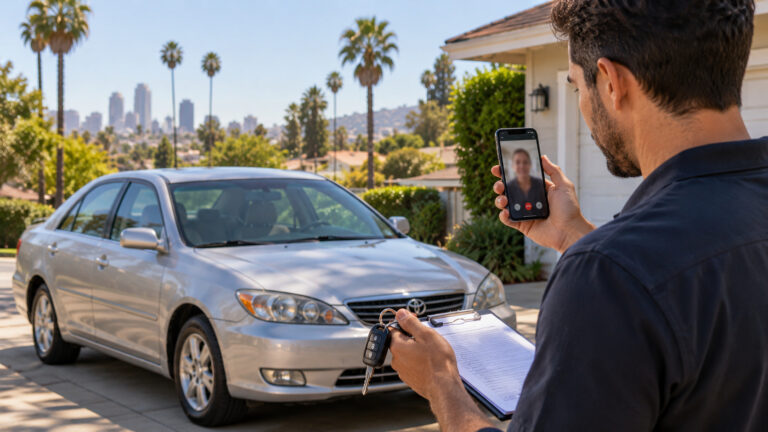
At the same time, start finding out what the car is worth as it sits. A real as-is offer gives you something useful to compare with the lender’s payoff instead of guessing from online retail prices. Cash Cash Cars can review vehicles in Los Angeles and provide an offer based on the actual condition, but the offer does not override the lien. It simply gives you the second number you need. Now you can compare the payoff with the market value. And that is where the decision usually becomes much clearer.
Positive Equity Gives You the Cleanest Exit
Suppose the lender’s payoff is $12,000 and a buyer offers $15,000. That is the easy version of the problem. The lender receives $12,000, releases its interest, and you receive the remaining $3,000 after any agreed transaction costs. The old loan is gone. The repossession threat tied to that loan is gone. And while earlier missed payments may still remain on your credit history, the account does not have to end as a repossession. This is why selling before the lender takes control can be so valuable when there is still equity in the car.
But the situation changes completely when you reverse those numbers. Imagine the payoff is $15,000, while the best realistic offer is only $10,000. Now you are $5,000 upside down. The buyer can pay every dollar the car is worth and the lender is still short $5,000. Since the lien generally will not be released until the lender’s requirements are satisfied, the sale cannot simply close because you found someone willing to pay market value. At this point, you have to decide how the shortfall will be handled.
If you have savings, you may be able to bring the difference into the transaction. If you do not, ask the lender whether it would consider accepting the buyer’s proceeds and putting the remaining amount into another repayment arrangement. A lender may consider a short payoff, but it is not required to agree. And if the lender does agree, get the terms in writing. You want to know whether the lien will actually be released, exactly what balance remains after the sale, how that balance will be paid, and how the arrangement may be reported. Without that written clarity, an attractive sale price still does not mean you have a completed transaction.
A Repossession Order Does Not Automatically Mean You Have Lost the Chance to Sell
Now imagine the lender has already assigned the vehicle for recovery. You still have the car. A buyer is interested. Is it too late? Not necessarily. The repossession assignment does not mean the vehicle has already been sold or that the lender can no longer accept a payoff. The problem is timing. The recovery agent may already be looking for the car while you are still discussing the transaction. So this is not the moment to spend three days comparing buyers over a few hundred dollars.
Call the lender’s recovery department and explain that you have a genuine buyer. Ask for the current payoff and request written confirmation that repossession will be paused long enough for the sale to close. The buyer also needs to know from the beginning that the lender controls the title release. For example, giving somebody the keys in exchange for cash and telling them that you will “handle the lien later” can leave that buyer with a vehicle that the lender can still repossess. A bill of sale does not remove the lender’s security interest.
This is why Cash Cash Cars should know the loan and repossession status during the first conversation, not after a tow truck has already been arranged. The car’s mileage, damage, mechanical condition, and location determine what the buyer can offer. The lender’s payoff and authorization determine whether the sale can actually happen. Those are two separate questions, and both have to work before the car should move. If they do not, voluntary surrender starts becoming a much more realistic alternative.
Voluntary Surrender Gives You More Control Over the Handover, Not Over the Final Debt
Voluntary surrender means you stop waiting for the repossession agent to find the vehicle and arrange to return it to the lender yourself. That can make an unpleasant situation more orderly.
You contact the lender, obtain the approved return location or pickup instructions, and coordinate the handover. Do not simply leave the car at a random dealership, branch office, or parking lot and assume the lender now accepts responsibility for it. If the vehicle does not run, ask who is responsible for towing and whether that cost will eventually be charged to the account. Before surrendering it, remove your personal belongings, toll transponders, garage remotes, identification documents, and information stored in the infotainment system. Photograph the vehicle from all sides, record the mileage, document the existing damage, and get a dated receipt confirming when the lender or its agent took possession.
That documentation matters because voluntary surrender solves only the possession problem. The lender still has to sell the car. The sale proceeds are then applied to what you owe. And if the proceeds are not enough, you may still be left with a deficiency balance. That is why voluntary surrender should never be understood as:
“I gave the car back, so the loan is over.”
The car may be gone. The debt may not be.
The Real Comparison Is the Shortfall You Face After the Vehicle Is Sold
Suppose you owe $15,000. You voluntarily surrender the car. The lender later sells it for $9,000. Before considering permitted fees or other adjustments, there is already a $6,000 difference between the loan balance and the sale proceeds. Now imagine you could have sold the same vehicle yourself for $11,000 before repossession. The initial shortage would have been $4,000 instead. That $2,000 difference is why establishing the car’s market value before surrender can matter so much. An auction does not always produce less than a direct sale, but once the lender controls the vehicle, you no longer control the selling process.
A forced repossession can also create recovery, towing, locating, and storage expenses that may increase the total amount associated with the account where the law and contract allow those charges. Voluntary surrender may reduce some of those expenses because the lender does not have to search for the vehicle, but surrender does not improve the eventual auction price by itself.
So when you compare selling with surrendering, do not compare: “cash sale vs. giving the car back.” Compare: “what shortage remains after each route is finished?” A real as-is offer from Cash Cash Cars can help give you one side of that comparison while you still have the vehicle. And there is another reason the selling route may be preferable when it can be completed properly. Credit.
Voluntary Surrender Is Still a Repossession Event People sometimes choose voluntary surrender because they assume handing the car back willingly protects their credit. That is not what voluntary surrender does. If you sell the vehicle and the lender is fully paid, you ordinarily avoid a repossession entry tied to that account, although missed payments that already occurred can still remain on your credit report. If the lender accepts less than the full amount through a settlement, that arrangement can also have its own credit-reporting consequences. Voluntary surrender is different. It is still associated with default, and credit reporting may identify it as a voluntary repossession. That can be seriously damaging, much like an involuntary repossession, and the information may remain on the credit report for up to seven years from the delinquency that led to the default. If the remaining deficiency later goes to collections, that can create another layer of problems.
So voluntary surrender has real advantages in the right situation. It gives you more control over when and where the vehicle is handed over. It may avoid some recovery expenses. It can remove the stress of wondering when the tow truck will appear. But protecting your credit history is not one of its main advantages. If selling is still possible and the lien can be satisfied, that route usually gives you more control over both the vehicle’s selling price and how the loan closes. If the car has already been repossessed, however, the decision changes again.
A Repossessed Car May Still Be Recoverable Before It Is Sold
Once the vehicle is gone from your driveway, it is easy to assume the entire process is finished. California provides borrowers with important notice and response rights after repossession in qualifying situations. The lender generally has to provide notice before disposing of the vehicle and give the borrower a period to respond. For covered retail installment contracts, that period is generally at least 15 days, and in certain situations a properly made request can extend the response period by another 10 days. That period matters because you may still have options. One is reinstatement, which generally involves curing the default by paying the overdue installments and applicable costs so the existing agreement continues. Another is redemption, which usually means paying the full amount required to satisfy the obligation and recover the vehicle. Those rights depend on the type of financing agreement and the specific circumstances, so you should not assume every loan is treated identically.
But the larger point is important: repossession does not always mean the car has already been permanently lost. Once the lender sells it, however, getting that same vehicle back through reinstatement is generally no longer an option. So if you want the car, contact the lender immediately after repossession and ask what amount is required, what deadline applies, and whether reinstatement is available under your agreement. And even if you do not want the car back, there may still be personal property inside it.
Your Personal Belongings Are Separate From the Vehicle A repossession company takes the lender’s collateral. It does not automatically become the owner of your personal property inside the car. The repossession agency generally has obligations related to notifying you about personal belongings and preparing an inventory within the applicable period, which the source material identifies as generally within 48 hours subject to applicable extensions. So if your laptop bag, work tools, children’s items, documents, medication, or other belongings were inside the car when it disappeared, contact the agency promptly. Do not wait until the lender has already sold the vehicle. And once the lender does sell it, the next letter you receive may be much more important than it looks.
A Deficiency Bill Is a Calculation, Not Something You Should Accept Blindly
Suppose the lender sells the repossessed vehicle and later sends you a bill for the remaining balance. You should not ignore it. You also should not automatically assume every number is correct. California imposes requirements around notice, accounting, and the manner in which the vehicle is sold that can affect whether and how the lender may pursue a deficiency. The sale generally has to be conducted in a commercially reasonable manner, and the final accounting should reflect the actual sale amount, applicable credits, and authorized charges.
So if the deficiency looks unusually high, ask for the paperwork. Request the pre-sale notice. Ask for the sale price. Review the charges. Look at how the remaining balance was calculated. A low auction result does not automatically erase the debt, but a serious problem with the sale process or notice can matter. And if the deficiency moves into collections or you receive court papers, do not ignore them. A difficult car loan can become much more expensive if it turns into a judgment because the paperwork was left unopened. This is why deciding what to do before repossession is usually much easier than dealing with the consequences afterward. But some owners face an additional problem: the vehicle is already broken down, damaged, or trapped somewhere expensive.
A Broken Car Can Still Be Repossessed, and It Can Still Have Sale Value
A lender’s lien does not disappear because the engine failed. For example, you still owe $11,000, but the transmission is gone and the car no longer runs. You may feel like the lender would not want it. The lender still has a security interest in the vehicle. The important question is how much that damaged collateral is realistically worth and whether another source may cover part of the loss.
If the car was damaged in an accident, first find out whether there is a valid insurance claim. A covered total loss may result in the insurer paying the vehicle’s actual cash value subject to the policy, deductible, and other terms. If GAP protection applies, it may cover an eligible portion of the remaining loan difference, but it should not be assumed to pay every deductible, overdue payment, fee, or other amount automatically.
Now imagine the problem is mechanical rather than accident-related. Before spending $4,000 repairing the engine just to make the vehicle sellable, find out what the repair would actually add to the offer. Cash Cash Cars can evaluate a non-running car based on its current condition. If the vehicle is worth $4,000 as-is and $6,000 after a $4,000 repair, fixing it only makes the financial problem worse. This is where the lender payoff, repair cost, and buyer’s offer should all be looked at together. And if the car is sitting somewhere that charges storage, time starts becoming even more important.
A Mechanic Shop or Tow Yard Can Add Another Creditor to the Problem
Suppose the financed car is sitting at a repair shop. The transmission diagnosis is complete, but you have not paid the repair or diagnostic bill. The lender has a lien. The shop may also have rights connected to unpaid repair or storage charges. You find a buyer. Now three different parties can matter before the vehicle moves. That is why you should get the shop’s current invoice, find out who has the keys, and ask exactly what must happen before the vehicle can be released. Agreeing with a buyer on a price does not automatically force the shop to hand over the car.
The same problem becomes more urgent at an impound or tow yard. Storage charges may grow every day, and a lien-sale process may eventually begin. So if the vehicle is already at a tow yard, ask for the current release amount and the relevant deadlines first. Then contact the lender, because the lender also needs to know where its collateral is sitting. A buyer considering a car at a mechanic shop or vehicle at a tow yard needs accurate information about the lender, the facility’s charges, the title, the vehicle’s condition, and what is required for physical release. Letting the car sit while deciding can make every option worse. That is why timing matters so much once repossession, storage, and mechanical problems begin overlapping.
If You Sell, Close the Loan and the DMV Record at the Same Time
Suppose you manage to sell before repossession. The buyer has paid. The lender has received the payoff. The car leaves. Do not treat that as the end until the paperwork confirms what happened. Keep proof of the buyer’s payment and the lender payoff. Keep the lien release. Confirm how the title will be handled. If the lender uses an electronic title, ask how the release will be recorded. If there is a paper title, check that the correct owners and lienholder information are being signed in the correct places. The exact process for signing a California pink slip depends on the ownership information shown on the title.
Then file the California Notice of Transfer and Release of Liability within five calendar days of the qualifying sale. Save the confirmation. The NRL helps establish when the vehicle left your possession, but it does not replace the buyer’s title-transfer paperwork. If you voluntarily surrender rather than sell, ask the lender how the DMV record will be handled instead of assuming that returning the keys automatically changes ownership. And in either situation, remove toll transponders, parking accounts, garage remotes, personal data, connected apps, and belongings before the vehicle leaves. The whole point is to stop the car from continuing to create new problems after you no longer control it.
Choose the Outcome You Can Actually Afford
When repossession becomes a possibility, doing nothing can feel easier because every available option seems expensive. But waiting usually gives you less control, not more. If the car is worth enough to satisfy the loan, selling before repossession will often leave you in a cleaner position because you control the buyer, the price, and the timing. If you are upside down, work out the shortage before assuming the sale is impossible. You may be able to pay the difference, negotiate a lender-approved short payoff, or arrange another repayment structure. If your income problem is temporary, a written hardship arrangement may let you keep the car without replacing it or damaging the loan further. If none of those paths works and keeping the vehicle is only making the financial situation worse, voluntary surrender may become the more realistic choice. It can give you a controlled handover and may avoid some recovery costs, but it still leaves the lender to sell the vehicle and calculate whatever debt remains. And if the repossession has already happened, act quickly. The sale may not yet have taken place, and your rights after recovery can disappear once it does.
That is why the best decision is not simply: “How do I stop the tow truck?” It is: “Which option leaves me with the smallest financial problem after the car is gone?”
For Los Angeles owners considering a sale, Cash Cash Cars can review the vehicle’s condition, pickup location, and title or lien situation before making an offer. Be clear about the lender payoff and whether repossession activity has already started, because a real offer only becomes useful when it can be matched against the lender’s actual requirements. For pickup information in Van Nuys, North Hollywood, and Santa Clarita, the same lender-payoff and title requirements apply. Call 818-822-1863 to discuss the vehicle while you still have time to compare the options. The goal is not simply to get rid of the car. It is to stop a difficult loan from becoming a larger and more expensive problem.