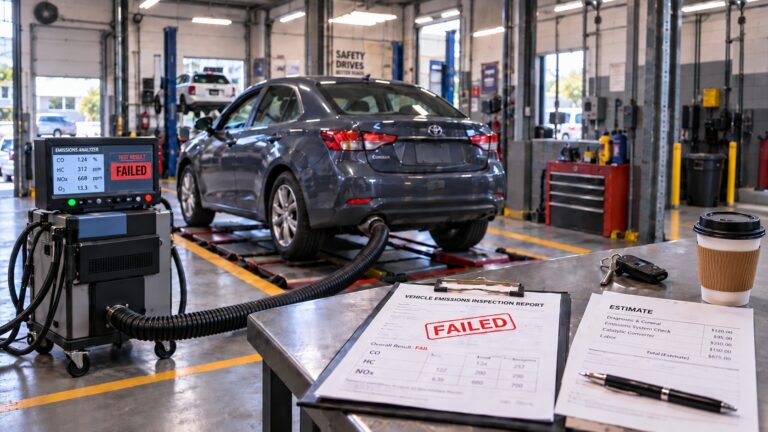
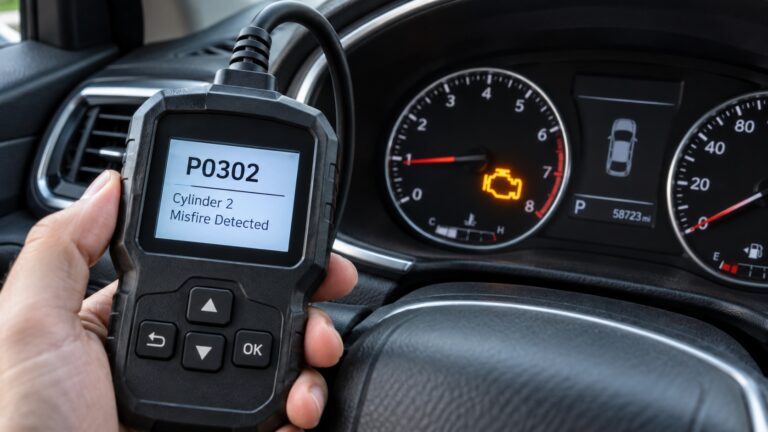
Should You Accept an Insurance Payout or Keep and Sell Your Wrecked Car in Southern California?
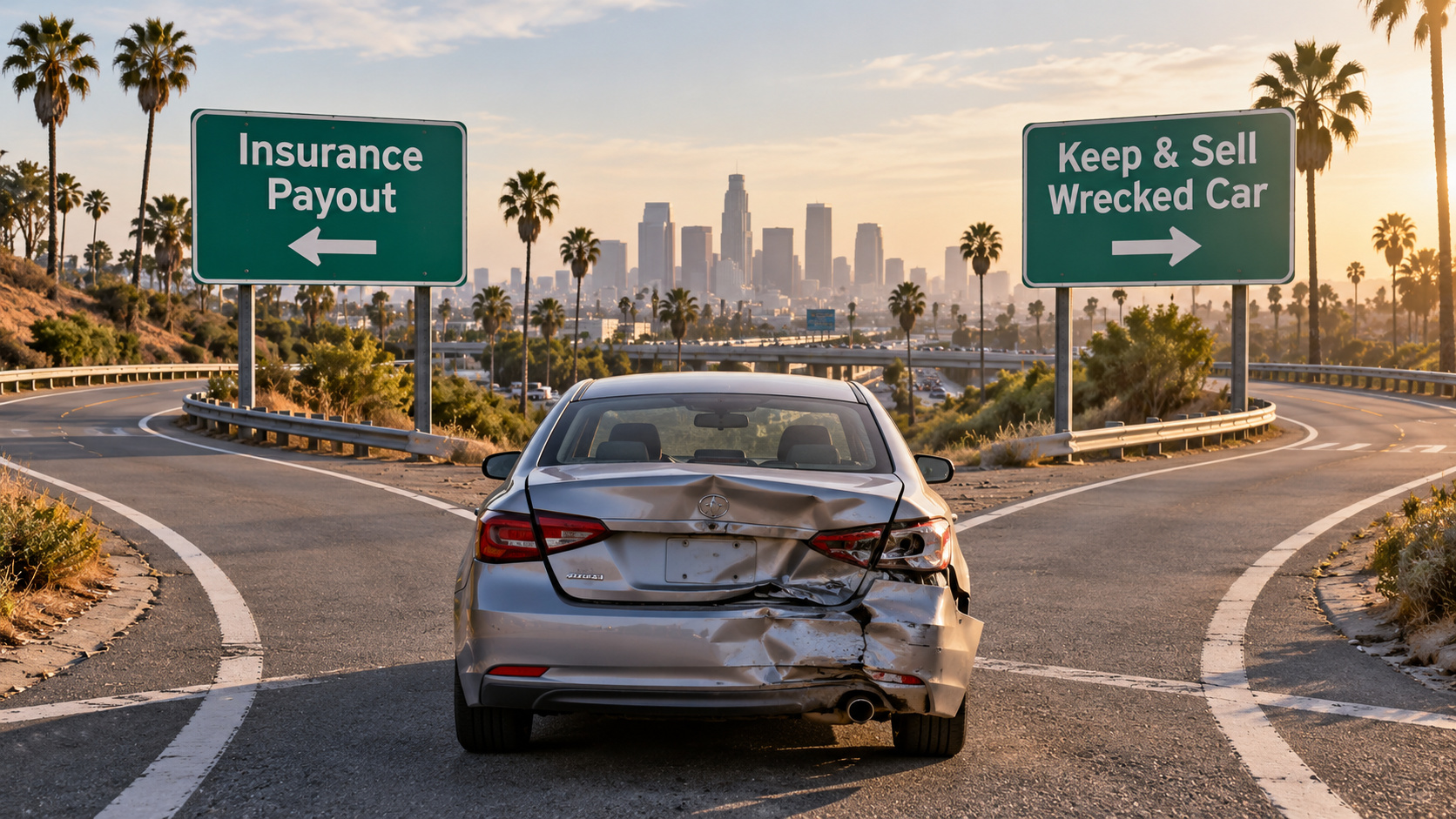
Should you accept the insurer’s payout or keep and sell your totaled car? Compare ACV, salvage value, towing, storage, liens, and California DMV rules.
If your car was wrecked on the 405, rear-ended on the 101, or badly damaged somewhere else in Southern California, the insurance company may decide that repairing it no longer makes financial sense.
That is when the adjuster declares the vehicle a total loss.
For many owners, the next step seems automatic. The insurer gives you a settlement figure, takes the damaged vehicle, and eventually sells the wreck through a salvage auction, dismantler, or another vehicle-disposal channel.
But before you sign the car over, there is another number worth finding out: what the wreck is actually worth to an independent buyer.
California owners may sometimes be able to keep a totaled vehicle through what is commonly called owner-retained salvage. Instead of surrendering the car, you accept a reduced insurance settlement, retain the damaged vehicle, and then decide whether to repair it or sell it independently.
If an outside buyer will pay more for the vehicle than the amount the insurer is deducting as salvage value, keeping and selling it yourself can sometimes leave you with more money overall.
The important thing is to compare the real numbers before making the decision.
What Does It Mean When an Insurance Company Totals Your Car?
A totaled vehicle is not necessarily destroyed beyond repair.
The decision is usually economic. The insurer looks at what the vehicle was worth immediately before the accident, the expected cost of repairing it, and the value that remains in the damaged vehicle.
The pre-accident value is known as the Actual Cash Value, or ACV.
That is why a vehicle can be totaled even though it still starts or moves. The engine and transmission may have survived. The interior may be largely untouched. There may still be valuable body panels, electronics, wheels, emissions equipment, batteries, suspension components, or other reusable parts.
From the insurer’s perspective, those remaining parts and materials have salvage value.
If the insurer takes the vehicle, it receives whatever can later be recovered from that salvage. If you keep the vehicle instead, the insurer normally deducts the salvage value from your settlement.
That is the basic tradeoff behind owner-retained salvage.
What Happens If You Let the Insurance Company Keep the Car?
The standard total-loss route is fairly simple.
The insurer establishes the vehicle’s Actual Cash Value, applies the settlement adjustments that apply to the claim, subtracts your deductible if one applies, and pays any lender that still has a legal interest in the vehicle.
You transfer the car to the insurer, and the insurer handles the wreck from there.
This is often the right choice when the settlement is fair and the wreck is not worth enough independently to justify keeping it.
It is also the lowest-effort option. You do not have to find another buyer, arrange removal, or take on additional salvage paperwork.
The mistake is not choosing this route.
The mistake is choosing it without first knowing what the alternative is worth.
How Owner-Retained Salvage Changes the Math
Suppose the insurance company values your vehicle at $10,000.
You have a $1,000 deductible.
If you surrender the vehicle, a simplified settlement would begin around:
$10,000 ACV – $1,000 deductible = $9,000
Now suppose the insurer determines that the damaged car has a salvage value of $2,500.
If you retain it, the simplified insurance payment becomes:
$10,000 ACV – $1,000 deductible – $2,500 salvage deduction = $6,500
Looking only at the insurance check, keeping the car seems like the worse deal.
But you still own the wreck.
If an independent buyer offers $3,300 for the damaged vehicle, your total recovery becomes:
$6,500 insurance settlement + $3,300 vehicle sale = $9,800
That is $800 more than the simplified surrender settlement.
This is why you should not compare the full insurance check with the reduced owner-retained check. The correct comparison is the surrender settlement against the owner-retained settlement plus the actual sale value of the wreck.
For owners who want a real number to use in that comparison, CashCashCars.com has a dedicated wrecked-car buying page covering accident-damaged and total-loss vehicles. Its own site says wrecked-car offers consider the damage, mileage, usable parts, title or insurance status, location, and whether the vehicle can be accessed for pickup.
Make Sure the Insurance Company’s ACV Is Correct First
Before worrying about the wreck’s salvage value, make sure the insurance company has valued the undamaged version of your car correctly.
Actual Cash Value is supposed to represent what the vehicle was worth immediately before the collision.
Insurance companies commonly use vehicle-valuation services and local comparable vehicles, then adjust for mileage, trim, condition, drivetrain, equipment, factory options, and prior unrelated damage.
That process can produce a reasonable number, but mistakes happen.
A premium trim can be entered as a base model. Four-wheel drive can be missed. Factory equipment may be left off. Mileage may be wrong. A well-maintained vehicle may be treated like an average-condition example.
Ask for the complete valuation report rather than negotiating against one number from the adjuster.
Review the comparable vehicles being used. Check whether they genuinely match your year, model, trim, mileage, drivetrain, and equipment.
If the insurer has missed important features or used weak comparables, gather better Southern California examples and challenge the valuation before agreeing to the settlement.
There is little point in optimizing the salvage side of the transaction if the ACV itself is already too low.
The Salvage Deduction Deserves the Same Scrutiny
Once the ACV looks reasonable, ask exactly how much the insurer will deduct if you retain the car.
That number can decide whether owner retention makes sense.
If the insurer deducts $2,000 and an independent buyer will pay $3,200, there may be a worthwhile spread.
If the insurer deducts $4,000 and your best outside offer is $2,600, keeping the wreck is probably a losing proposition.
California’s automobile claims regulations place standards around how total-loss salvage values are established. If the insurer’s salvage figure looks unusually high, ask for the basis of the calculation and the supporting salvage-market information.
You want to know whether the amount reflects something a real salvage buyer would actually pay for your specific vehicle rather than an abstract estimate.
Get an Actual Offer, Not a Generic Junk-Car Estimate
The value of a wrecked vehicle cannot be determined accurately from scrap weight alone.
A buyer needs to know what vehicle you have and what survived the crash.
The year, make, model, mileage, drivetrain, accident severity, airbags, catalytic converter, missing parts, title status, location, and towing access can all change the offer.
This is where photos are particularly useful.
A clear photo of the damaged side, the opposite side, interior, wheels, engine area, VIN information, and any missing or damaged major components gives a buyer much more useful information than simply saying, “The car was totaled.”
CashCashCars.com’s online quote form specifically asks sellers to disclose whether a vehicle runs, the type of damage, missing parts, paperwork issues, and pickup conditions such as a garage, tow yard, or mechanic shop. That makes the quote more useful for this kind of insurance comparison because it is based on the actual vehicle and its situation.
Why One Totaled Car May Be Worth Much More Than Another
Two cars involved in similarly serious crashes can have very different salvage values.
A popular Toyota, Honda, pickup truck, or SUV may have strong demand for engines, transmissions, body panels, electronics, and other reusable components.
Newer vehicles often contain more valuable technology and body parts. Hybrids and electric vehicles may have valuable battery and electrical components, although damage to those systems can also make them more complicated to handle.
Mileage matters as well.
A lower-mileage engine or transmission may remain valuable even when the car around it has been totaled.
The location of the damage is another major factor. A vehicle with severe front-end damage but an intact drivetrain and rear body is different from one affected by fire, flooding, rollover damage, or major structural deformation.
Airbag deployment can reduce value because modern restraint systems can be expensive to restore properly. The catalytic converter can matter too, particularly in California, where compliant emissions components can be expensive.
Missing parts also reduce the offer. Removing wheels, batteries, catalytic converters, electronics, or drivetrain components before getting the car priced can lower the value of the complete vehicle and make towing more difficult.
A Running Totaled Vehicle Is Still a Totaled Vehicle
The fact that a wrecked car still starts can help its value.
It tells a buyer something about the engine and drivetrain and may make loading easier.
But “runs” does not mean “safe to drive.”
A totaled vehicle can start perfectly while still having serious damage to its suspension, steering, brakes, structure, lighting, wheels, or airbags.
Tell a buyer that the vehicle starts or moves because that information can help with valuation.
Do not treat it as evidence that the car is roadworthy.
Towing Costs Can Change Whether the Deal Works
Transportation is one of the easiest costs to overlook when comparing owner-retained salvage with the insurance company’s offer.
Suppose a buyer offers $3,200 but later subtracts $350 for towing.
Your true sale price is $2,850.
That difference could completely change the calculation.
So ask for the amount you would actually receive after pickup costs are considered.
CashCashCars.com says on its site that pickup access is part of its vehicle review, particularly when a wreck is at a home, apartment lot, body shop, mechanic shop, tow yard, storage yard, or garage. Its wrecked- and salvage-vehicle pages specifically tell sellers to disclose these conditions before scheduling pickup.
That is the useful part for someone considering owner-retained salvage. You want towing and access issues reflected in the quote before comparing it with the insurer’s salvage deduction, not discovered after you have already committed to keeping the vehicle.
Free Pickup Does Not Erase Existing Tow-Yard Charges
There is an important difference between the cost of transporting a vehicle and the charges already owed to the facility holding it.
A buyer may be able to collect the car without billing you separately for ordinary transportation, but a tow yard may still require its storage and release charges to be paid before the vehicle can leave.
Those are separate costs.
If the wreck is sitting at a tow yard, ask for the exact release balance immediately.
Then ask the insurer whether it is currently covering storage and when that coverage stops.
A potentially profitable owner-retained sale can become a bad financial decision if several additional days of storage eat up the advantage.
Do Not Delay While Storage Charges Keep Growing
Imagine that selling the vehicle independently appears likely to put another $700 in your pocket.
That sounds worthwhile.
But if the vehicle is sitting at a facility adding substantial storage charges every day, the extra $700 can disappear quickly.
There is no single Southern California storage price that applies everywhere. The only amount that matters is what your particular facility is charging.
Find that number before choosing owner retention.
The same applies to rental-car costs. If your insurer or the other driver’s carrier is about to stop paying for the rental, delaying the total-loss decision may begin creating additional expenses elsewhere.
Ask for the storage and rental cutoff dates in writing.
What Happens to the Title If You Keep the Vehicle?
Owner-retained salvage creates California DMV responsibilities.
A vehicle that has been settled as a total loss does not simply continue indefinitely with its previous clean-title status.
California’s salvage process generally involves reporting the total loss and obtaining a Salvage Certificate.
The paperwork commonly involves REG 488C, Application for Salvage Certificate or Nonrepairable Vehicle Certificate, followed by issuance of the Salvage Certificate that becomes the ownership document for the vehicle.
The DMV process also involves short deadlines following a total-loss settlement, commonly including a 10-day period for certain owner-retained salvage requirements.
License plates must also be handled according to California’s salvage procedures.
Because the precise responsibilities can depend on how the insurer processes the claim, follow the current DMV instructions provided for the transaction rather than relying on an old online checklist.
What If You Only Want to Keep the Car Long Enough to Sell It?
This is different from retaining the car because you want to rebuild it.
If your only reason for keeping the wreck is that an outside buyer will pay more than the insurance company’s salvage deduction, you do not need to make the car roadworthy merely to sell it as salvage.
You do, however, need to make sure the ownership and salvage paperwork are handled correctly.
CashCashCars.com has a separate salvage-vehicle page for vehicles with salvage titles, rebuilt titles, total-loss history, accident damage, or insurance-related title situations. The company also advises owners to explain whether the title is clean, salvage, rebuilt, missing, held by a lender, or tied to an insurance claim before pickup is arranged.
That is useful if your insurance settlement has changed the vehicle’s title status and you need to know whether the buyer can work with the paperwork you actually have.
What If the Title Is Missing or the Registration Is Expired?
A collision can expose paperwork problems that had nothing to do with the accident.
Maybe the title cannot be located. Maybe registration expired months ago. Maybe the ownership documents are not as straightforward as you thought.
These issues can complicate a sale, but they do not automatically make the vehicle worthless.
The important issue is whether acceptable ownership can ultimately be established.
A legitimate buyer should want to know about the problem before pickup rather than after the vehicle is already on a truck.
CashCashCars.com specifically says it reviews missing-title and other paperwork situations, although proof of ownership still matters. Its missing-title information page explains that title and ownership questions should be discussed before scheduling the transaction.
An Active Lien Is More Complicated
A lien is different from simply losing your title.
If a lender still has a legal interest in the vehicle, the total-loss settlement normally has to address that debt.
Suppose you owe $20,000 but the insurer values the car at only $15,000.
Keeping the wreck does not make the remaining $5,000 disappear.
The lender’s legal interest still has to be resolved before you can freely transfer the vehicle to another buyer.
If the car is financed, talk to the lender before agreeing to owner retention. Ask what has to be paid, how the lien will be released, and whether the proposed transaction is permitted.
The same caution applies to GAP coverage. GAP contracts vary, and owner retention can affect how a deficiency claim is handled. Get the requirements in writing before making the decision.
What If You Only Carry Liability Insurance?
If you caused the accident and only carried liability coverage, your own policy generally does not pay for damage to your vehicle.
There may be no ACV settlement and therefore no owner-retained salvage calculation with your own insurer.
But you still own the wreck.
The car may have value based on its drivetrain, reusable components, condition, completeness, and repair potential.
In that situation, the question is not whether you should surrender the vehicle to your insurer. It is whether repairing it makes sense or whether selling the damaged vehicle as-is will recover more value.
What If the Other Driver Was at Fault?
If another driver caused the collision, you may have a third-party property-damage claim against that driver’s insurer.
That differs from making a claim under your own collision policy.
A third-party property-damage settlement generally does not involve your own collision deductible, but you also do not have the same contractual relationship with the other driver’s insurer.
You can still negotiate over the vehicle’s pre-accident value and, when owner retention is part of the settlement, the value assigned to the salvage.
The same economic test applies.
Find out how much the insurer is deducting because you are retaining the car, and compare that figure with what the damaged vehicle is actually worth elsewhere.
Repairing the Vehicle Is a Completely Different Decision
Some owners choose owner-retained salvage because they plan to repair the vehicle and continue driving it.
That requires a much broader calculation.
The repair estimate is only the beginning.
A vehicle returned to California roads after a total-loss salvage event generally has to go through the revived salvage process.
That can involve identification verification, safety-system inspection requirements, emissions compliance where applicable, DMV paperwork, fees, and replacement plates.
California’s inspection system has changed over time, so older references to separate brake-and-lamp certificates may not reflect the current process. Relevant revived salvage vehicles now fall under the newer Vehicle Safety Systems Inspection framework.
There may also be structural damage, airbag replacement, electronic-system calibration, suspension work, and hidden mechanical problems to deal with.
Then consider the vehicle’s future value.
A repaired total-loss vehicle does not return to ordinary clean-title status. Its salvage history remains part of the record and can affect resale value, financing, warranty treatment, and insurance.
For many owners who simply want the best financial outcome, keeping the car long enough to sell it may therefore be much simpler than rebuilding it.
File the Release of Liability After the Sale
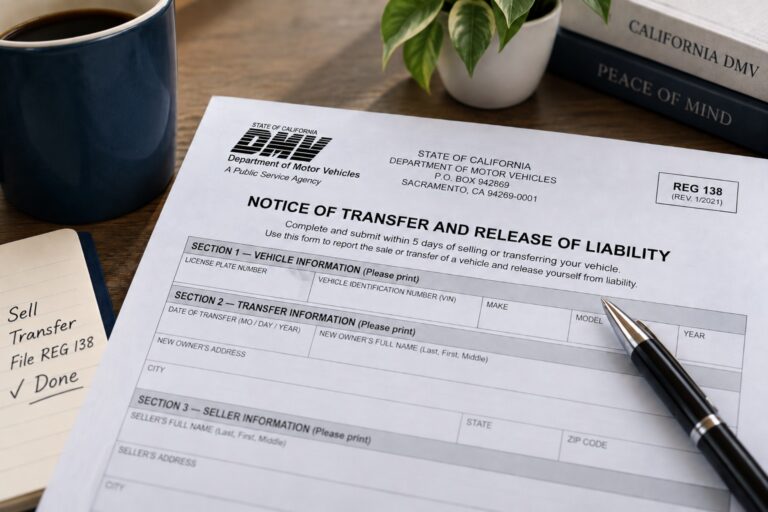
When the vehicle is eventually transferred to another buyer, complete California’s Notice of Transfer and Release of Liability.
The seller generally has five calendar days to report the transfer.
Keep the confirmation along with the purchase paperwork, payment record, buyer information, and copies of the relevant salvage documents.
Those records can become important if questions arise later about ownership, towing, storage, or registration.
Run Both Outcomes Before Making the Decision
This is ultimately a math problem.
Suppose surrendering the car to the insurer would leave you with $8,700 after the relevant deductions.
Keeping it would reduce the insurance payment to $6,500.
If an outside buyer will actually pay $3,200 for the vehicle under the agreed pickup terms, your total becomes:
$6,500 + $3,200 = $9,700
You are roughly $1,000 ahead.
That may justify the additional work.
But suppose the outside offer is only $2,000.
Your combined recovery becomes:
$6,500 + $2,000 = $8,500
Now you are $200 behind before considering storage, paperwork, or your time.
In that situation, surrendering the vehicle is probably the smarter choice.
The Difference Needs to Be Worth the Extra Work
Owner-retained salvage should not be pursued simply because it produces one dollar more.
You are taking responsibility for an asset the insurer otherwise would have removed.
There may be DMV work, lender coordination, storage deadlines, paperwork, and towing logistics to manage.
If the independent route leaves you $50 or $100 ahead, the extra effort may not be worthwhile.
If it leaves you several hundred or more ahead, it deserves closer consideration.
If the difference reaches $1,000 or more, the decision can become financially significant.
Before You Sign the Wreck Over, Get the Second Number
The most important step is also the simplest.
Before surrendering the totaled vehicle, ask the insurer for the exact owner-retained salvage deduction.
Then find out what the damaged vehicle is actually worth to an independent buyer.
Those two numbers tell you far more than a generic discussion about whether keeping a totaled car is “good” or “bad.”
If you want to make that comparison locally, CashCashCars.com lets Southern California owners submit their vehicle details for a quote, including accident damage, running condition, missing parts, title issues, and pickup circumstances.
If the outside offer substantially exceeds the insurer’s salvage deduction after towing, storage, liens, and other costs are considered, owner-retained salvage may put more money in your pocket.
If it does not, let the insurer take the car and move on.
The goal is not to keep every totaled vehicle.
It is to avoid giving one up before you know what it is actually worth.