Can You Sell a Car With Expired Registration?
Can you sell a car with expired registration? Yes. Learn when to renew, how fees affect value, and when selling as-is makes more sense.
Yes, you can sell a car with expired registration in California.
And in many cases, you do not have to renew the registration before selling it.
That is usually the first thing owners want to know because the real concern is not whether the car can be sold. It is whether they are going to have to hand hundreds or even thousands of dollars to the DMV before they can get rid of it.
Fortunately, renewal is not always the necessary first step.
The better question is whether renewing the registration will actually leave you with more money than simply selling the vehicle as-is.
If you are trying to sell a car with expired registration, it helps to understand the paperwork and buyer options before paying DMV fees upfront.
Do I Have to Renew My Registration Before Selling My Car?
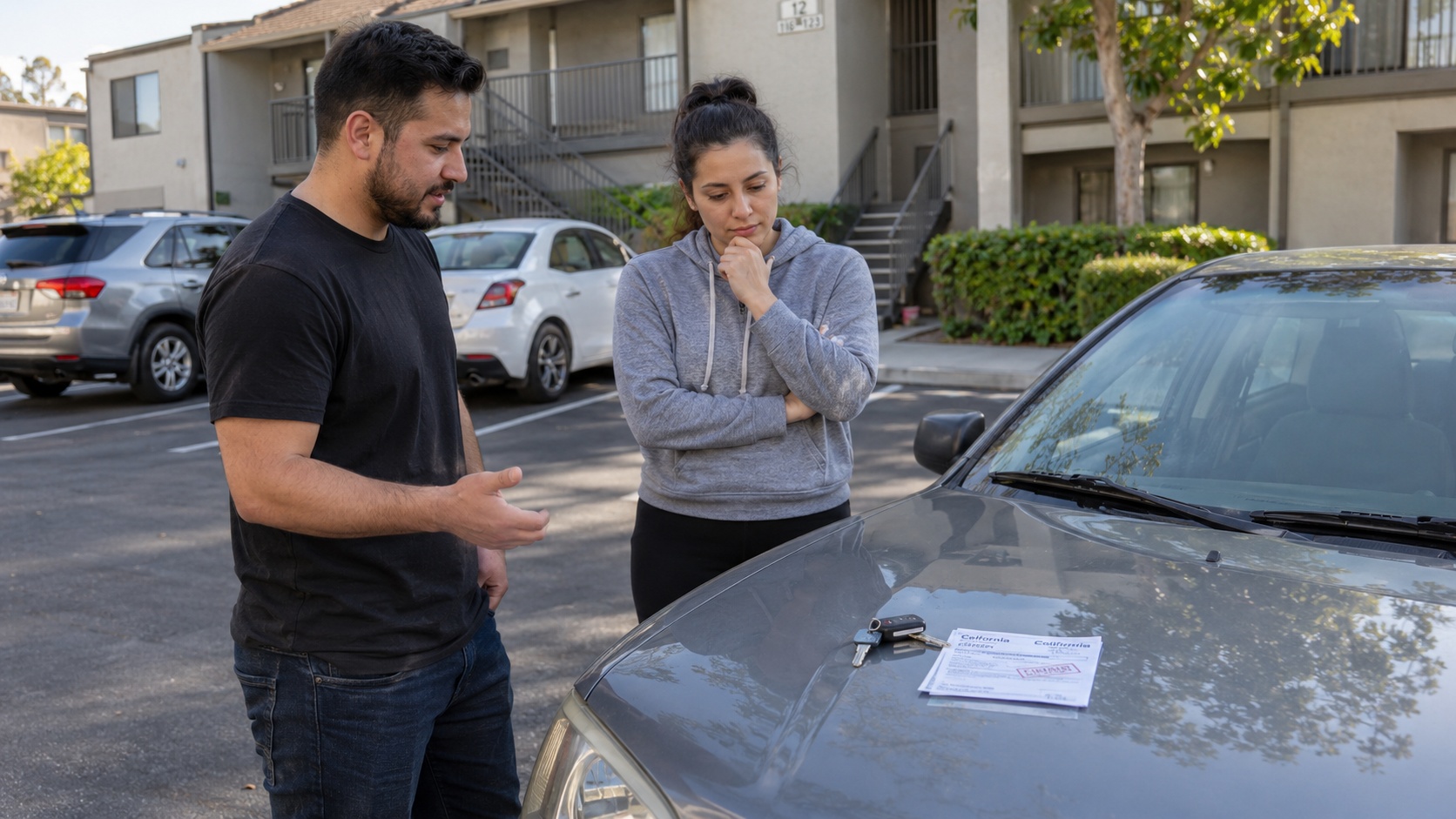
Usually, no.
An expired registration does not automatically prevent you from transferring ownership of the vehicle. California treats vehicle registration and vehicle ownership as separate issues.
Your registration determines whether the vehicle can legally be operated on public roads. Your California Certificate of Title establishes ownership. An expired registration does not automatically invalidate your title.
So if your registration expired six months ago but you still have a valid California title in your name, you still own the vehicle and can potentially sell it.
The real issue is what happens to the unpaid registration fees and whether paying them before the sale makes financial sense.
Planned Non-Operation Can Stop the Situation From Getting Worse
If you are not using the vehicle, Planned Non-Operation, usually called PNO, may help.
But PNO should not be thought of as a way to erase old registration debt.
It is better understood as a way to stop additional registration obligations from continuing while a vehicle is legally kept off public roads.
California DMV allows PNO to be filed up to 60 days before registration expires and up to 90 days after expiration. If you file after the expiration date, applicable late penalties still apply. The vehicle also must not have been driven, towed, stored, or parked on public roads or highways during the applicable non-operation period.
If you filed PNO before expiration
This is the cleanest situation.
The vehicle can remain legally non-operational without normal registration renewal being required while the PNO remains in effect. You can then decide whether to sell the vehicle or eventually return it to active registration.
If the registration recently expired
California still allows PNO to be filed for up to 90 days after expiration, provided the vehicle qualifies. However, late penalties are due in addition to the PNO filing fee.
So PNO does not erase what has already accrued.
It simply may prevent the situation from continuing to get worse.
Important: PNO is not a debt eraser. Fees and penalties already due do not disappear simply because you later place the vehicle on non-operation.
If more than 90 days have passed
The normal late PNO filing window has closed. At that point, you need to evaluate the registration balance, the value of the vehicle, and whether bringing the registration current makes financial sense before selling.
Expired Registration Still Costs You Money, Even If You Do Not Pay It First
This is where sellers sometimes misunderstand what “you don’t have to renew it before selling” actually means.
It does not mean the registration problem has no financial effect.
An informed buyer is going to look at what will be required to transfer and register the vehicle and factor those costs into what they are willing to pay.
Suppose your car would otherwise be worth $5,000, but there are approximately $600 in registration fees and penalties associated with bringing it current.
A buyer who expects to absorb those costs is unlikely to value the vehicle like a clean $5,000 car.
You may effectively be negotiating from something closer to $4,400 before other condition issues are considered.
That is why it is worth checking California DMV’s registration fee calculator before agreeing to a price.
California Registration Penalties Get Expensive Quickly
California does not apply one simple flat late-registration charge.
The penalty combines a percentage of the Vehicle License Fee and applicable weight fee with separate registration and California Highway Patrol late charges.
For California-registered vehicles, DMV currently lists the following renewal penalty structure:
| How Late | VLF/Weight Penalty | Registration Late Fee | CHP Late Fee |
|---|---|---|---|
| 1–10 days | 10% | $10 | $10 |
| 11–30 days | 20% | $15 | $15 |
| 31 days–1 year | 60% | $30 | $30 |
| More than 1–2 years | 80% | $50 | $50 |
| More than 2 years | 160% | $100 | $100 |
The major jump happens once the registration is more than 30 days late.
That is why ignoring an expired registration for another few months can materially change the economics of selling the car.
A simple example
Suppose the normal registration obligation is $250 and $100 of that amount is Vehicle License Fee.
If the payment is around two weeks late, the penalty structure includes a 20% VLF penalty plus $15 registration and $15 CHP late charges.
If the same registration remains unpaid for several months, the percentage portion increases to 60%, along with the larger flat late charges.
The exact amount depends on the vehicle and the fees applicable to it, which is why you should use DMV’s calculator rather than relying on a generic estimate.
A Car Expired for Three Weeks Is Not the Same as One Expired for Three Years
How long the registration has been expired should affect how you approach the sale.
A recently expired vehicle may still be a straightforward private-sale candidate.
A vehicle that has been sitting for years may have registration fees, mechanical deterioration, smog problems, insurance issues, towing requirements, missing paperwork, or other complications that make a conventional sale much harder.
Here is a practical way to think about it:
| Time Expired | Main Concern | Likely Selling Approach |
|---|---|---|
| 1–90 days | Smaller penalties, possible PNO eligibility | Private buyer, dealer, or cash buyer |
| 90 days–1 year | Higher penalties, normal late PNO window closed | Private buyer or dealer/cash buyer |
| 1–2+ years | Larger penalties, condition and smog risk increase | Dealer or as-is cash buyer often becomes more practical |
| Several years | Fees plus storage, repair, paperwork and movement complications | Specialized or as-is buyer may be easier than private sale |
The important point is that the longer the car has been sitting, the less likely registration is the only problem.
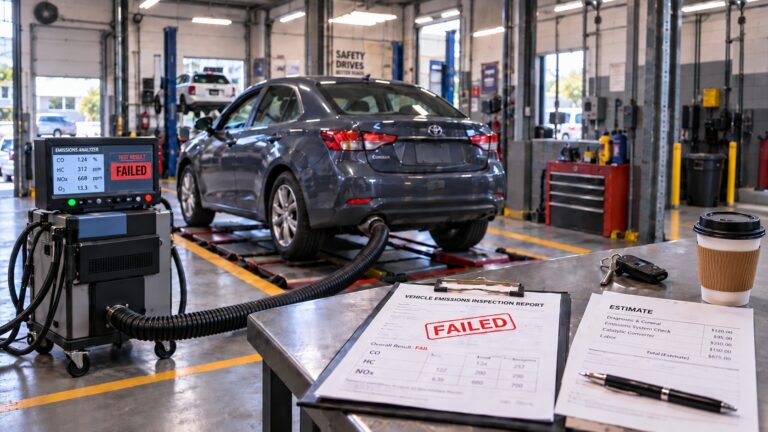
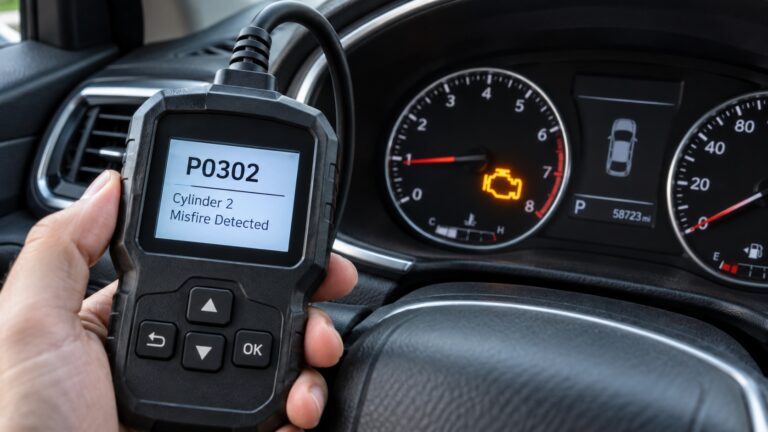
Battery failure, flat-spotted tires, stale fuel, brakes, emissions faults, rodent damage, missing paperwork and inability to legally drive the vehicle can all become part of the transaction.
Expired Registration Does Not Mean Your Title Expired
This is worth making very clear.
Registration is permission to operate the vehicle. Title is evidence of ownership.
If your registration expired two years ago but the California title is still properly issued in your name, the expiration itself does not make the title invalid.
What if the title is missing too?
That is a separate paperwork problem.
California DMV uses REG 227, Application for Replacement or Transfer of Title, when the California title has been lost, stolen, damaged, illegible, or is otherwise unavailable in qualifying circumstances. The form can also be used in certain transfer situations.
So an expired registration plus a missing title does not automatically make the vehicle unsellable. It simply means the transfer requires additional paperwork.
Should You Renew the Registration Before Selling?
Do not automatically pay the DMV simply because you plan to sell.
Run the numbers first.
You need three figures:
- What the vehicle would realistically sell for with its registration situation resolved.
- What someone is willing to pay for it as-is.
- What it will cost to bring the DMV side current.
Then compare:
Market value after resolving registration − DMV costs = your estimated net proceeds
Compare that number with your best as-is offer.
Example 1: Renewing may make sense
Suppose:
- Clean-market value: $8,000
- DMV cost: $700
- As-is offer: $6,800
If you spend $700 and can actually sell the vehicle for $8,000, your net is about $7,300.
That leaves you roughly $500 ahead of the as-is offer.
For a reliable vehicle that is otherwise easy to sell, paying the registration costs may make sense.
Example 2: The math looks better, but the risk does not
Now suppose:
- Vehicle value if fully sale-ready: $1,500
- DMV costs: $800
- As-is offer: $300
On paper, resolving the registration could leave you with $700 instead of $300.
But you have to put $800 of your own money into a low-value vehicle before you know whether you can recover it.
If the car also needs emissions work, tires, a battery, towing or mechanical repairs, the apparent $400 advantage can disappear very quickly.
That is why the decision should not be based on registration fees alone.
For an older vehicle needing substantial mechanical work, it can make more sense to sell the vehicle needing repair as-is rather than continuing to invest money simply to make it easier to sell.
What About Smog?
Smog is separate from expired registration, but it matters because it can affect whether a private sale is practical.
California DMV states that when a seller is required to provide smog certification, the seller generally provides a valid certificate to the buyer. Certain exemptions apply, including qualifying newer vehicles and some other transfer categories.
So do not assume:
“I don’t have to renew the registration” = “I don’t have to deal with smog.”
They are separate requirements.
This becomes particularly important when the registration expired because the car already had an emissions problem.
Before putting hundreds of dollars into registration, consider whether the vehicle can realistically satisfy whatever smog requirements apply to your sale.
Can You Privately Sell a Car With Expired Registration?
Yes, but the transaction needs to be handled carefully.
The seller and buyer should understand the expired-registration situation before money changes hands.
California’s basic title-transfer requirements can include the properly endorsed title, transfer documents, applicable fees, and smog certification when required.
A Bill of Sale, REG 135, can also document the buyer, sale price and date of sale.
It is sensible to make the registration issue explicit between both parties and base the agreed price on the known condition of the vehicle.
But do not assume that writing “buyer accepts responsibility for smog” on a homemade agreement automatically overrides California’s statutory transfer requirements. A private agreement cannot necessarily eliminate obligations imposed on the seller by state law.
Do Not Let the Buyer Simply Drive Away on Expired Registration
Selling the car changes ownership.
It does not automatically make the vehicle legal to operate on public roads.
If the vehicle is not currently registered for lawful operation, plan how it will physically leave your property before completing the handoff.
Depending on the circumstances, DMV-issued permits may provide a lawful way to move certain unregistered vehicles for limited purposes.
Otherwise, towing is often the simplest option.
For a non-running, long-expired, uninsured, or mechanically questionable vehicle, putting it on a flatbed is generally much safer than trying to improvise a drive home.
Do not confuse signing the title with making the vehicle street legal. Ownership paperwork and lawful operation are two different things.
Private Buyer, Dealership or Licensed Cash Buyer?
At this point, the decision usually comes down to maximum possible price versus maximum convenience.
Private buyer: potentially more money, more work
Private sale often makes the most sense when:
- the vehicle still has meaningful retail value,
- it runs properly,
- the registration only recently expired,
- the paperwork is clean,
- and the seller is willing to deal with the transfer process.
You may get closer to market value, but you also carry more of the logistical work.
Traditional dealership: useful when you are already trading in
A conventional dealership can make sense when you are already buying another vehicle and simply want the expired-registration car included in the trade.
The dealer will evaluate the vehicle and price any registration, condition or paperwork issues into the trade value.
For an old, non-running or badly deteriorated car, however, an ordinary retail dealership may have little interest.
Licensed cash or junk-car buyer: increasingly useful as the problems stack up
An as-is buyer becomes much more attractive when the car has several problems at once:
- registration expired a long time ago,
- substantial DMV costs,
- failed smog,
- mechanical problems,
- cannot legally or safely be driven,
- or simply is not worth investing more money into.
That is where a service such as CashCashCars can fit naturally into the decision.
The vehicle can be evaluated based on its actual condition and paperwork situation rather than forcing the seller to make it retail-ready first. For low-value or heavily deteriorated vehicles, the junk cars, trucks, SUVs and minivans option may also be more appropriate than putting additional money into registration and repairs.
The tradeoff is straightforward:
A good car with recently expired registration may justify the effort of a private sale.
A long-expired or problem vehicle increasingly favors an as-is sale where the buyer is prepared for the condition and pickup requirements.
File the Notice of Transfer and Release of Liability
Whatever buyer you choose, do not forget this step.
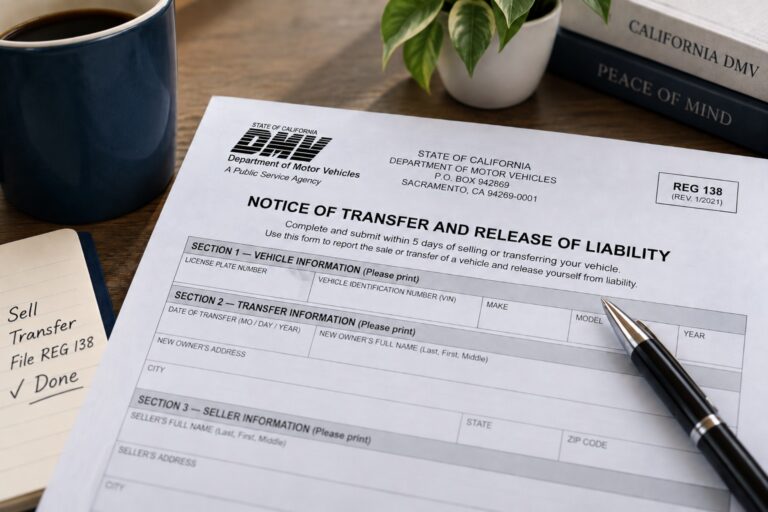
California requires the seller to submit a Notice of Transfer and Release of Liability, REG 138, within five calendar days of the transfer. DMV allows this to be submitted online.
The NRL is extremely important, but there is one distinction sellers should understand:
Filing the NRL does not itself transfer title to the buyer.
It notifies DMV that you have sold or transferred the vehicle and provides important liability protection associated with events after the reported transfer. The actual ownership transfer still has to be completed through the title-transfer process.
File it promptly and keep your confirmation and sale records.
A Three-Phase Checklist for Selling a Car With Expired Registration
Phase 1: Gather the facts
Check your DMV balance.
Find out what is actually due instead of estimating.
Check whether PNO is still available.
If you are within the applicable filing window and the vehicle qualifies, PNO may help prevent the situation from becoming more expensive.
Estimate the vehicle’s real market value.
Know what it would realistically sell for if the registration problem were resolved.
Phase 2: Decide whether spending money makes sense
Consider smog and mechanical condition.
Do not evaluate registration in isolation if the vehicle also needs emissions or repair work.
Compare your net proceeds.
Market value minus DMV and other necessary costs should be compared with actual as-is offers.
Choose the appropriate buyer.
A solid vehicle with recently expired registration may justify private-sale effort.
A trade-in can make sense if you are already buying another car.
A long-expired, non-running or low-value vehicle may be better suited to an experienced as-is buyer.
Phase 3: Close the sale safely
Arrange legal transportation.
Do not assume the buyer can simply drive the expired vehicle home.
Complete the ownership paperwork accurately.
Use the actual sale date and complete the required title-transfer documents. If the California title is missing, determine whether REG 227 applies.
Keep copies of your sale records.
File the NRL promptly.
California gives you five calendar days, but there is little reason to deliberately wait until day five.
So, Can I Sell My Car If the Registration Is Expired?
Yes.
You can sell a car with expired registration in California, and you should not automatically assume you must renew it first.
For a good vehicle whose registration recently expired, bringing it current may increase your net proceeds enough to justify the expense.
But when the registration has been expired for a long time, penalties have accumulated, the vehicle has smog or mechanical problems, or you would have to put substantial cash into it before selling, an as-is transaction may make considerably more sense.
The important thing is to stop treating the registration bill as the only number that matters.
Find out what is owed, determine what the car is really worth, consider what else must be fixed or completed, compare that with an as-is offer, and choose the path that leaves you with the best result after all of those costs are considered.