Where Can I Junk My Car for Cash?
Wondering where you can junk your car for cash? Learn how to find a licensed buyer, compare cash offers, avoid common scams, handle title and DMV paperwork, and protect yourself after the vehicle is sold.
If you are asking, “Where can I junk my car for cash?”, the obvious answer seems to be whoever offers you the most money.
In California, I would look at it differently.
The price matters, of course, but so does the person or business taking possession of your vehicle. A high cash offer does not do you much good if the buyer disappears with the car, fails to complete the necessary paperwork, or cuts the offer after the tow truck arrives.
That is why I would start with licensed dismantlers, licensed vehicle dealers, and established cash-for-cars companies working through properly licensed operations. California regulates businesses involved in dismantling and dealing in vehicles, and the DMV provides a public Occupational License Lookup that lets consumers check the status of these businesses.
So, before asking only, “Who will pay the most for my junk car?”, ask another question:
Who can buy it legally, pay what they promised, and give me the documentation I need to protect myself afterward?
Where Can I Junk My Car for Cash?
For most California owners, there are several possible routes.
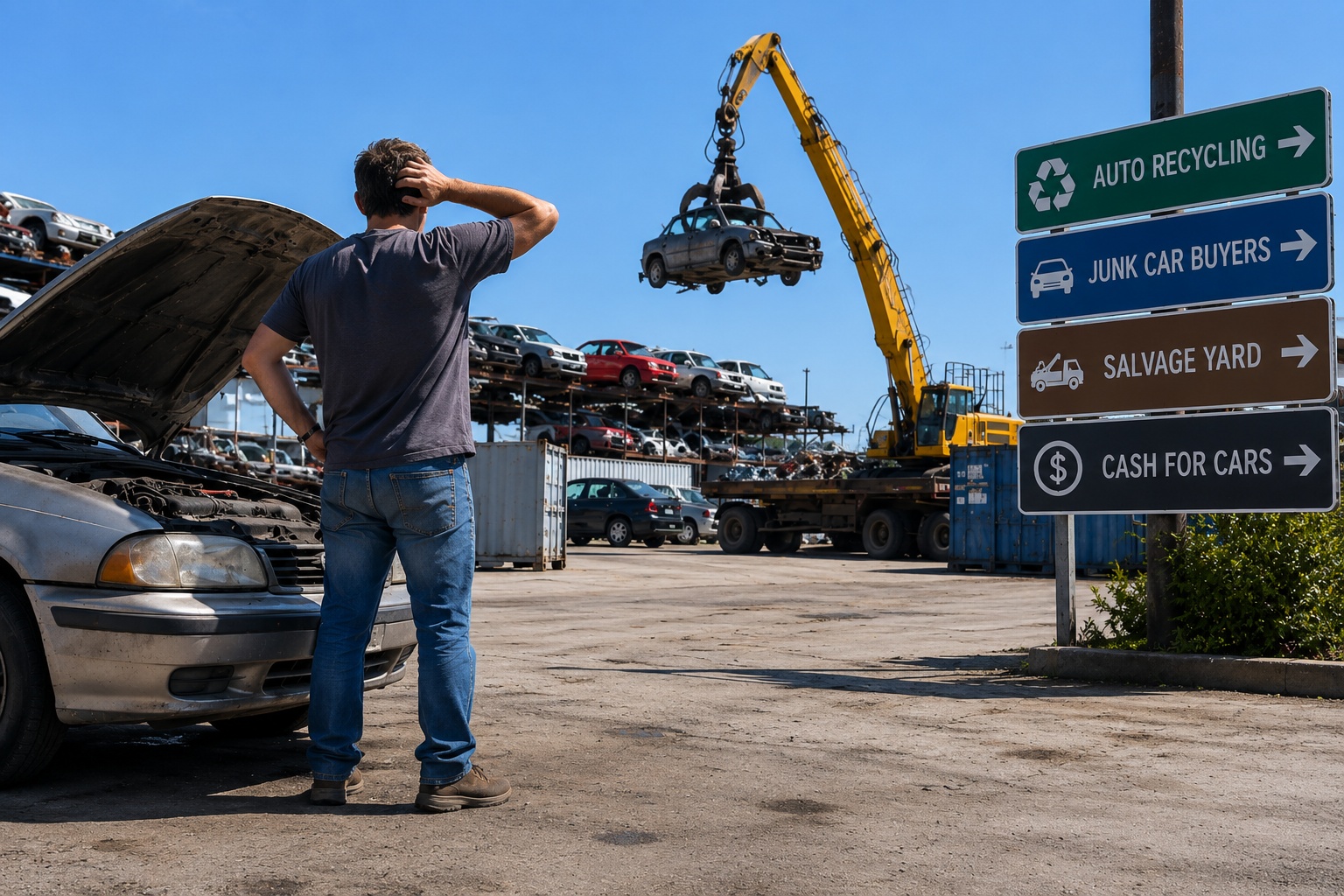
1. Licensed auto dismantlers and salvage yards
If the vehicle is genuinely at the end of its useful life, a licensed dismantler is one of the most straightforward options.
California requires a dismantler license for businesses that buy nonrepairable vehicles for dismantling, deal in their component materials, or deal in used motor-vehicle parts.
That regulatory framework matters because you are not simply selling a pile of steel. You are transferring a vehicle that is still connected to a VIN, registration record, and registered owner.
2. Cash-for-cars companies
Another option is an established cash-for-cars company that can evaluate the vehicle, make an offer, arrange pickup, and handle the buyer’s side of the transaction.
For example, Cash Cash Cars buys vehicles throughout the Los Angeles region, including vehicles that may no longer make sense to repair. Owners can start through the Cash Cash Cars website or see more specifically how the company handles junk cars, trucks, SUVs and minivans.
The important point is not simply that a company has a website or advertises “cash for junk cars.” Verify who is actually buying the vehicle and whether the relevant business holds an active California license.
3. Licensed used-car dealers
A car does not necessarily become “scrap” just because you no longer want to repair it.
If it still runs, has a usable drivetrain, or is a model with strong resale or parts demand, a licensed dealer or vehicle buyer may see more value in it than a scrap yard does.
Hence, it is worth getting more than one quote before deciding where to junk your car for cash.
Who should you avoid?
Be particularly careful with anonymous cash buyers, curbstoners, or people who want you to sign the title while leaving the buyer information blank.
The same caution applies when an independent tow-truck operator suddenly becomes the “buyer” but cannot clearly identify the licensed business purchasing the vehicle.
If the buyer refuses to provide a proper business identity, won’t explain the paperwork, or tells you to leave parts of the ownership documents blank, the extra $100 or $200 being offered is not worth the risk.
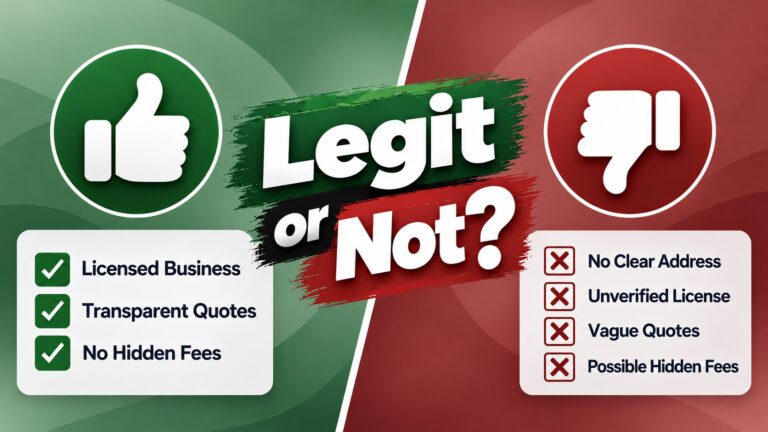
How Do I Know Whether a Junk Car Buyer Is Licensed?
Don’t rely on a logo, Google listing, business card, or what the driver tells you.
California DMV maintains an Occupational License Lookup where consumers can search businesses in categories including Dismantler and Vehicle Dealer. You can search using information such as the business name, city, ZIP code, or occupational license number.
So ask the buyer for the legal business name and license information, then verify it yourself before scheduling the pickup.
California DMV Occupational License Lookup
This takes only a few minutes, and in my view it is one of the most useful checks you can make before handing over a vehicle.
What Paperwork Do I Need to Junk My Car?
The cleanest transaction is one where you have:
- Your California Certificate of Title
- Government-issued identification
- The VIN and license-plate information
- Registration information, if available
- Any applicable lien-release documentation
But missing one document does not automatically mean the vehicle cannot be sold.
For example, California has procedures for replacing or transferring a lost title. The exact paperwork depends on the vehicle record and circumstances, so I would not recommend assuming that a handwritten bill of sale alone solves an ownership problem.
If you have no title and little or no other documentation, tell the buyer before accepting the offer. A legitimate buyer should determine what documentation is legally required rather than asking you to sign something questionable at pickup.
Most importantly, being physically in possession of a car is not the same as having the legal authority to sell it.
Can I Junk a Car With a Lien?
Potentially, but the lien has to be dealt with properly.
An active lien means another party has a legal interest in the vehicle. Depending on the situation, the transaction may involve obtaining a payoff amount, coordinating payment with the lienholder, obtaining a lien release, or completing other required transfer procedures.
So don’t hide the lien from the buyer and don’t assume that simply signing over whatever paperwork you possess extinguishes it.
If the vehicle is sitting at a mechanic’s shop or tow yard, there may also be storage, towing, repair, or possessory-lien issues to resolve. In that situation, get the exact amount required to release the vehicle before comparing it with what a buyer is willing to pay.
Can I Junk a Car With Expired Registration?
Expired registration does not automatically turn a vehicle into something that cannot be sold or dismantled.
However, registration history, outstanding fees, parking or toll issues, and the precise status of the DMV record can complicate a transaction.
That is why I would disclose expired registration while requesting the quote rather than waiting until pickup.
Also be cautious when somebody makes a blanket statement such as, “All DMV fees disappear when you junk it.” Different fees, penalties, holds, and obligations can be treated differently.
The safer approach is to identify what is actually attached to the vehicle or owner and determine what applies to your specific transfer.
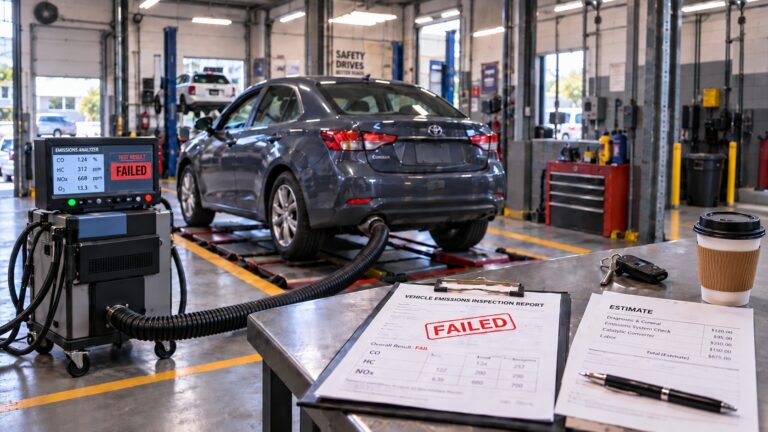
What If the Car Failed Smog?
A failed smog inspection is often one of the reasons owners start searching “where can I junk my car for cash near me” in the first place.
Maybe the repair estimate is $1,800. Maybe the catalytic converter is failing. Or perhaps the car has several problems and passing the next inspection would require putting more money into a vehicle that is already near the end of its life.
Before spending that money, compare the repair cost with the car’s realistic post-repair value and the amount a legitimate buyer would pay for it as-is.
Also remember that California’s smog rules depend on the type of transfer and vehicle involved. Do not assume that the rules governing an ordinary private-party sale are identical to those applying when a vehicle is being acquired for dismantling.
How Much Cash Can I Get for My Junk Car?
There isn’t one California junk-car price.
The offer depends heavily on what the buyer can actually recover from the vehicle.
Some of the biggest factors include:
Catalytic converter: Original converters can contain valuable precious metals. A missing converter can therefore make a meaningful difference to the offer.
Vehicle weight: If much of the value is ultimately scrap metal, heavier vehicles can be worth more.
Engine and transmission: A running drivetrain can move a vehicle from pure scrap value toward salvage or parts value.
Make and model: Popular vehicles may have stronger demand for used components.
Completeness: Missing major components can substantially reduce an offer.
Location and accessibility: A vehicle that rolls and can be loaded normally may be easier and cheaper to collect than one requiring unusual recovery work.
That is also why things owners recently spent money on don’t necessarily return dollar-for-dollar value. An oil change, new battery, window tint, stereo, or ordinary replacement tires may have cost you money, but they may add very little to what a dismantler is willing to pay.
Don’t Automatically Accept the Highest Junk-Car Quote
This is where many sellers get caught.
Imagine one company offers $500 with free towing and confirms the amount in writing. Another says your vehicle is worth “up to $850.”
The $850 sounds better until the driver arrives and suddenly discovers $250 in supposed towing costs and another $150 deduction for something you already disclosed.
Now both offers are effectively similar, except one buyer got you there through a bait-and-switch.
When comparing offers, ask:
- Is towing completely free?
- Is this the actual offer or an “up to” amount?
- What could cause the offer to change at pickup?
- Does the quote already account for the vehicle’s missing or damaged parts?
- When and how will I be paid?
- What licensed business is actually purchasing the vehicle?
Describe the car accurately when getting the quote. If the catalytic converter is missing, say so. If the engine is gone, say so. If it doesn’t roll, tell them.
A guaranteed $500 based on accurate information can be far more valuable than an $800 number designed simply to get a tow truck into your driveway.
What Should Happen When the Tow Truck Arrives?
Don’t treat pickup as an informal handoff just because the vehicle is junk.
The driver should first verify that the vehicle matches the description you provided. You should then review the paperwork carefully, make sure the buyer’s information is properly completed, and confirm the agreed payment.
Do not sign a title with the purchaser information intentionally left blank.
You should also understand exactly when and how payment will be made before surrendering possession of the vehicle. The specific payment method may vary by business, so what matters is that the arrangement is clear and consistent with what you agreed to.
Keep a copy or clear photograph of the completed transaction documents and retain the buyer’s identifying information and receipt.
File Your California Release of Liability
This is the step I would never leave entirely to the buyer.
California DMV says sellers must notify it when a vehicle is sold or transferred by completing a Notice of Transfer and Release of Liability (NRL).
The NRL requires information including the new owner’s name and address, license plate number, the last five digits of the VIN, and the odometer reading.
Once DMV receives the notice, qualifying liability for parking violations, traffic violations, and civil litigation occurring after the date of sale shifts to the subsequent purchaser.
But there is an important distinction:
The NRL is not itself a transfer of ownership.
DMV specifically states that the new owner still has to complete the applicable transfer requirements. That is why you want both a properly documented sale and your NRL confirmation.
File or learn about the California Notice of Transfer and Release of Liability
Save the confirmation with your receipt and copies of the sale documents.
Could California Pay More Than a Junkyard?
Possibly.
Before junking an operational older vehicle, it is worth checking California’s Consumer Assistance Program (CAP) through the Bureau of Automotive Repair.
As of 2026, BAR lists three potential vehicle-retirement incentive levels:
- $1,350 for qualifying owners who do not meet the income requirement, with additional program requirements including a failed most-recent Smog Check
- $1,500 for qualifying income-eligible owners under the applicable retirement option
- $2,000 for qualifying income-eligible owners whose vehicles meet the higher incentive requirements
For the income-based options, BAR currently uses a household-income threshold of no more than 225% of the federal poverty level.
The catch is that this is not a general junk-car program.
BAR requires qualifying vehicles to meet operational and equipment requirements. Among other things, the vehicle has to be driven to a BAR-contracted dismantler and must be capable of moving forward under its own power. Program participation is also subject to eligibility requirements and available funding.
California BAR vehicle retirement program
So if your vehicle qualifies, checking CAP before accepting a scrap offer makes sense.
If the engine is blown, the vehicle is badly wrecked, it cannot be driven, you need the vehicle removed quickly, or it fails other CAP requirements, selling directly to a legitimate buyer may be the more practical option.
Where Can I Junk My Car for Cash Today?
If I were doing this today in California, I would use a simple process.
First, write down the year, make, model, mileage, VIN, plate number, whether the vehicle runs, and which major components are missing.
Then get two or three offers and give every buyer the same information.
Next, ask whether towing is free and whether the quoted amount is guaranteed based on the condition you described.
Before scheduling anyone, verify the purchasing business through California DMV’s licensing system.
Then prepare your title, identification, and any other applicable transfer documents. Remove your personal belongings, toll transponder, garage-door opener, and anything else you don’t want disappearing with the vehicle.
At pickup, verify the paperwork and buyer information before completing the transaction. Make sure the agreed payment arrangement is honored before surrendering the vehicle.
Finally, keep copies of everything and complete your Notice of Transfer and Release of Liability promptly.
The Best Place to Junk a Car Isn’t Always the One Offering the Biggest Number
So, where can you junk your car for cash in California?
You have several options, but I would narrow them down to properly licensed businesses that can clearly explain who is purchasing the vehicle, what they will pay, how pickup works, and what paperwork you will receive.
Because once a car reaches the end of its useful life, getting another $50 out of it is nice.
Getting paid fairly and knowing the vehicle was transferred through a legitimate process is much more important.
That is ultimately what separates a good junk-car sale from simply watching your old car disappear on the back of a tow truck.