Five Years Gone, and the Car Remembered Every Day of It
What happens to a car nobody drives, told through one owner's return after half a decade abroad.
Five Years Gone, and the Car Remembered Every Day of It
When Storage Turns Into Damage
A car that sits untouched does not stay suspended in time. Moisture keeps moving, wiring keeps aging, brakes keep corroding, and the question quietly changes from “How do I fix this?” to “What am I really fixing now?”
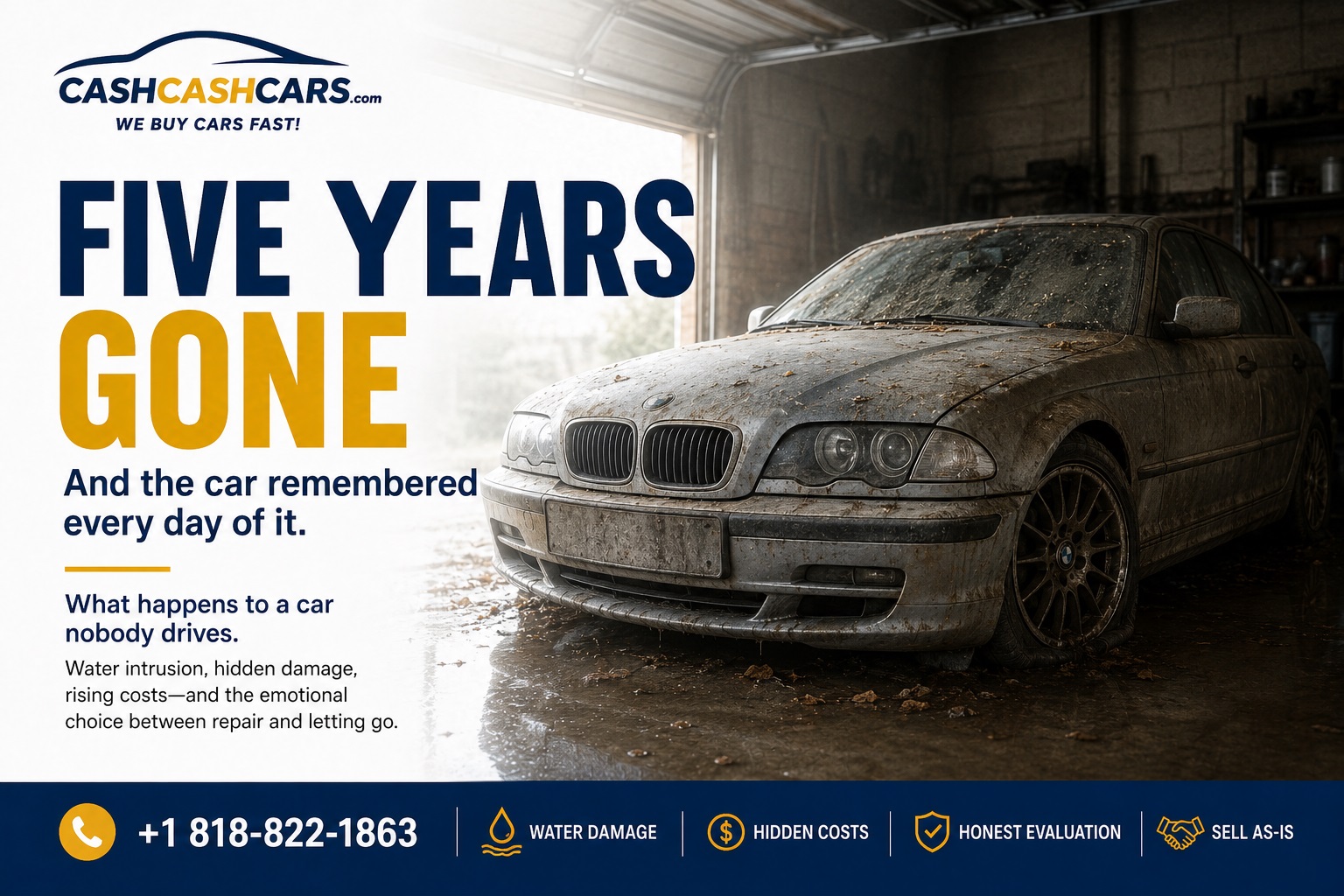
The garage door had not been opened in five years. When it finally lifted, the smell hit first, something between a basement and low tide, and underneath the dust the shape of the BMW sat exactly where it had been left, patient in the way only inanimate things can be patient. The tires had gone flat and stayed flat so long they had taken on a permanent lean, like a person who had been sitting too long in one chair. And on the driver’s seat, a stain, dark and old, spreading from somewhere above.
The drain nobody thinks about
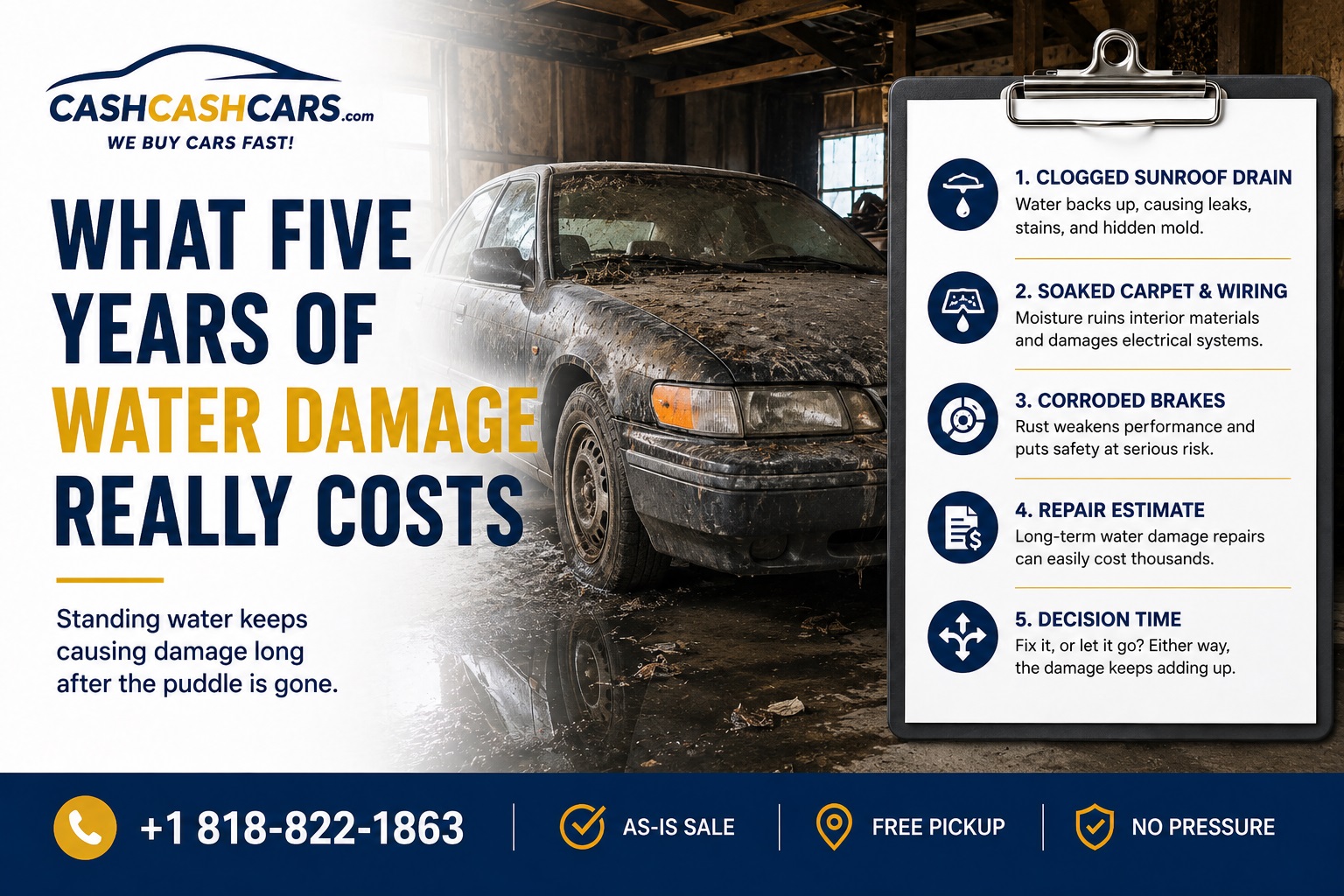
Every car with a sunroof has a set of small drainage channels built to carry rainwater safely down through the pillars and out beneath the car, a system so unglamorous that most owners never learn it exists until it fails. A leaf, a bit of pollen, a season of neglect, and one of those channels clogs.
Rain falls the way it always does, but instead of running out through the drain, it backs up and finds the one place it was never supposed to go: down, into the headliner, into the wiring beneath the seats, into the carpet where it has nowhere left to travel except sideways, spreading, soaking, sitting. A car that is not driven does not get the chance to dry out between storms. It just accumulates.
Standing water is not only a stain or a smell. It can reach electrical systems, interior materials, metal components, and places that do not reveal themselves until much later.
What five years actually costs
When the owner finally got a shop to look at it, the number that came back was fifteen thousand dollars, and even that felt more like an opening bid than a final total. Water that sits in a car for years does not behave like water that gets wiped up in an afternoon. It works into connectors and grounds, into places a technician cannot fully inspect without taking half the car apart first, and it keeps causing new symptoms long after the visible puddle is gone.
The brakes had corroded from disuse. The insurance had lapsed the whole time the owner was away, since nobody thought to keep covering a car that was not going anywhere. Every part of the situation had quietly compounded while the garage door stayed shut.
This is also why pages like cash for damaged cars and cash for vehicles needing repair matter to real owners. By the time the shop estimate arrives, the problem often no longer fits inside one neat repair line item.
The question underneath the repair estimate
The real question was never only about the money. It was about whether spending fifteen thousand dollars would even end the story, or whether it would just be the first chapter of a much longer one, with more surprises waiting behind the dashboard. That is the part a repair estimate cannot tell you. It can only tell you what has been found so far, not what else five years of standing water might have quietly reached.
A long-stored car can also become a non-running vehicle, or at least one that no longer inspires confidence. When that happens, the conversation stops being about nostalgia alone and starts becoming a value decision.
Two different endings, neither of them a failure
There is a version of this story that ends with the repair, the BMW rolling out of the shop months later, worth the fight. There is another version, just as common, where the honest move is admitting the car’s real value now has very little to do with what it once was, and everything to do with what it can honestly become for someone willing to take on damage like this with open eyes.
Neither version is a failure. They are simply two different endings to the same five years. The only wrong choice is spending another year not choosing either one.
Frequently asked questions
Can a parked car really develop serious water damage?
Yes. If drains clog or seals fail, rainwater can move into the headliner, carpet, and wiring. A car that sits for a long time may never dry properly, which lets the damage spread.
Why can old water damage become so expensive to repair?
Because the visible stain is only part of the issue. Water can reach connectors, modules, carpeting, padding, and metal components, and those hidden areas often require more labor and more replacement parts than owners expect.
Is it always worth repairing a water-damaged car?
Not always. Sometimes the car is still worth saving, but sometimes the estimate becomes the first chapter of a much longer and more uncertain repair story. The right decision depends on value, condition, and tolerance for risk.
What if the car has been sitting so long it no longer runs properly?
That changes the equation even more. A long-idle vehicle may also have brake, battery, tire, fuel, and electrical issues, which is why many owners start comparing repair costs with the option of selling as-is.
If the car has been sitting for too long, you do not have to keep guessing
Whether the story ends with a repair or an as-is sale, it helps to know what the car is realistically worth now. Cash Cash Cars can help you evaluate the next step.
Vehicle offers depend on ownership documents, actual condition, location, title status, and other transaction details.