How to Sell a Car in LA When Your Name Doesn’t Match the Title
Does your car title show an old married name, maiden name, or spelling error? Learn how to prove ownership and sell your car legally in Los Angeles.
You bought your car several years ago when your name was different. Since then, you may have married, divorced, returned to a former surname, or legally changed your name for another reason. Your driver’s license now shows who you are today, but the California title still shows the name you used when you bought the car. Everything seems fine until you decide to sell it. Now you are standing there with a driver’s license that says Jennifer Anderson and a pink slip that says Jennifer Miller, and the buyer is naturally wondering whether both documents actually belong to the same person. That can feel like a serious title problem, but in many cases it is not. California has procedures for connecting a former legal name, corrected name, or changed name with the same registered owner, which means you do not necessarily have to wait for a completely new title before selling the car. The real question is whether you can clearly establish that the person standing in front of the buyer today is the same person recorded as the owner years ago.
And that distinction matters because a name mismatch and an ownership mismatch are two very different problems. For example, a title showing your former married name may simply require you to connect that old identity with your current one. A title showing your brother’s name, the previous owner’s name, or somebody who never transferred the vehicle to you is not a name-change problem at all.
So before worrying about how to sign the title, first ask:
Is the name different because I changed my name, or because the title actually belongs to somebody else?
If you are still the same registered owner, the situation is usually much easier.
A Different Name Does Not Mean You Lost Ownership of the Car
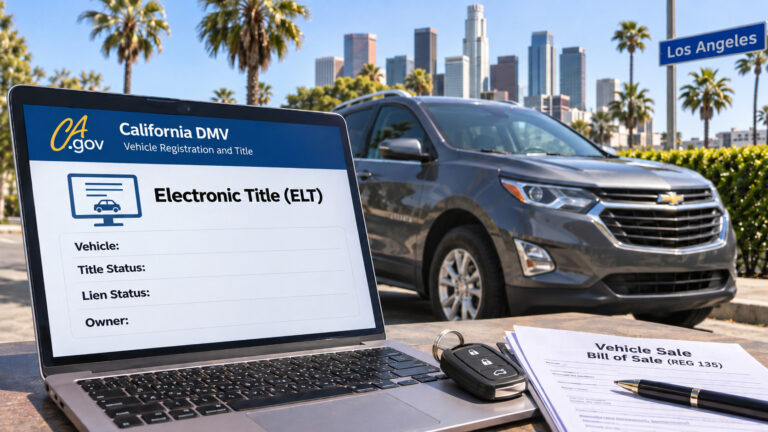
Imagine Jennifer Miller bought a car in North Hollywood several years ago. She later got married and became Jennifer Anderson. She updated her driver’s license, bank accounts, and other records, but never bothered changing the name on the vehicle title because the car was paid for and everything continued working normally. Years later, she decides to sell it. The title says Jennifer Miller. Her current identification says Jennifer Anderson. The buyer may initially think the seller’s name does not match the owner, but legally Jennifer did not stop owning the vehicle just because her surname changed. She is still the same person whose ownership was recorded when the car was purchased. California DMV Form REG 256, Statement of Facts, is one of the important tools for explaining that connection. Its Name Statement section can be used to establish that two different names refer to the same person, document a spelling mistake, or explain a change from an old legal name to a new one.
So Jennifer may not need to apply for a newly printed title saying Jennifer Anderson before she can sell the car. She needs to make the identity connection clear. But this is where another important point comes in. REG 256 can establish that Jennifer Miller and Jennifer Anderson are the same person. It cannot establish that Jennifer owns something she never owned in the first place.
That means any co-owner still matters. A bank lien still matters. A court order still matters. And if someone else’s ownership appears on the title, a name statement cannot simply replace that person’s rights. So the mismatch itself may be simple, but you still need to read the entire title before deciding that REG 256 is the only paperwork involved.
Start With the Exact Name Already on the Title
When a seller sees an old surname on the pink slip, the first instinct can be to start “correcting” the document immediately. That is usually where you should slow down. First, read the title exactly as it appears. Check the owner’s name, VIN, any co-owner, and any lender. Then compare that information with your current identification. If a form asks for the registered owner of record, the safest approach is generally to use the name that actually appears in the DMV record rather than pretending the old name never existed. Your current identity can then be connected through the appropriate name statement and supporting documents.
This is important because your signature and your printed legal name are not necessarily the same thing. For example, your title may say Jennifer Miller while your normal signature today looks completely different from the way you signed ten years ago. That does not mean you should try to recreate your old signature from memory. You should use your genuine signature. If the name difference is large enough to raise questions, explain the change through the proper paperwork instead of trying to make your signature look like somebody you no longer call yourself.
A marriage certificate, divorce decree, or certified court order can help if you have one. A bill of sale under your current legal identity can also make the transaction easier for the buyer to understand. The point is not to bury the mismatch. It is to present the buyer with a complete story: This is the name on the old title. This is my current legal name. These documents show why they belong to the same person. When the paperwork is organized before the buyer arrives, the name difference usually feels far less suspicious. And sometimes the mismatch is even simpler than a legal name change because the DMV name was wrong from the beginning.
A Spelling Error Is Not the Same Thing as a Name Change
Suppose your driver’s license says Jonathon Williams, but the title says Johnathan Williams. Or your middle initial is wrong. Or a letter was dropped from your surname. That is not really the same situation as changing from Miller to Anderson. It is a record correction. REG 256 has a
specific process for explaining a misspelled registered-owner name and identifying the correct spelling. California also has procedures for correcting an incorrect printed name on the ownership certificate.
But this is where people can accidentally create more trouble than the original typo. For example, you should not start using white-out, rewriting signatures, or casually altering completed transfer information because the spelling looks wrong. A proper DMV correction is one thing. Changing a completed endorsement is another. If someone already made an actual mistake while completing the title, REG 101, Statement of Error or Erasure, may become relevant.
And before correcting anything, make sure it is actually an error. California DMV records can sometimes display multiple-word or hyphenated surnames without spaces or punctuation. Something that looks wrong to you may simply be the way the name was entered in the system. So the better approach is to confirm the mismatch first and correct only what truly needs correcting. The same principle becomes even more important when your name has changed more than once.
Several Name Changes Do Not Require Several Different Ownership Stories
Imagine Sarah originally bought her car as Sarah Collins. She married and became Sarah Bennett. After divorce, she changed her name again. Years later, she remarried and now uses Sarah Parker. Her current driver’s license says Sarah Parker, but the title still says Sarah Collins. To a buyer who does not know the history, those names may look completely unrelated. But the ownership question has still not changed. The DMV needs to be able to connect the person signing today with the person listed as the registered owner. For a more complicated history, REG 256 can help establish that the former and current names refer to the same person, while the additional statement space can explain how the changes occurred in sequence.
And this is one place where chronological order matters. Instead of handing the buyer four documents and saying, “These are all me,” explain the chain. Sarah Collins became Sarah Bennett after marriage. Sarah Bennett later became Sarah Parker. Now the old title makes sense. If supporting documents are available, arrange them in the same order. That is much easier for a buyer or DMV employee to follow than a pile of unrelated-looking names.
And if one of those marriage certificates or divorce documents is missing, that does not automatically mean the sale is over.
Missing Marriage or Divorce Papers Do Not Always Stop the Sale
People lose old paperwork. Marriage certificates disappear during moves. Divorce judgments end up with attorneys. A court-order copy may be buried in storage. So a seller may understand
exactly why the name changed but no longer have every document that originally proved it. That is one reason REG 256 matters. The form allows the owner to make a formal declaration about the name discrepancy under penalty of perjury. For a straightforward registered-owner name change or correction, that statement can sometimes be enough to explain the difference without forcing the seller to wait for replacement marriage or divorce records.
But that does not mean REG 256 is a universal substitute for every missing document. If the ownership history is unusual, the names cannot easily be connected, a court order affects who owns the vehicle, or the buyer reasonably wants more evidence before paying, additional documentation may still be necessary. This is particularly important with expensive cars because a buyer taking a $20,000 or $30,000 risk may want stronger proof than a buyer purchasing an old $1,500 vehicle. So if the name history is complicated and the supporting documents are limited, have the paperwork reviewed before the sale rather than trying to explain everything while the buyer is already holding the money.
And if the pink slip itself is also missing, now you have two problems that need to be handled together.
A Missing Title and an Old Name Can Usually Be Separated Into Two Problems
Suppose your car is still registered under your maiden name and you also cannot find the title. This can sound like the worst possible combination. But the two problems actually do different things. The missing title is a document problem. The outdated name is an identity problem. California’s REG 227, Application for Replacement or Transfer of Title, may help with an eligible replacement-and-transfer transaction when the original title is lost, stolen, or damaged. REG 256 can then help connect the old ownership name with your current legal identity. That means you may not necessarily need to obtain a duplicate title first, then separately change the name, and only then begin the sale.
But the underlying ownership record still has to make sense. For example, if a lender still has an active electronic lien, REG 227 does not cancel it. If another owner is on the record, REG 227 does not eliminate their rights. And if the DMV cannot confidently connect you with the recorded owner because the address, name, and supporting information have all changed, additional identification may be required.
So when talking to Cash Cash Cars about a vehicle without the original title, mention the name mismatch at the same time. Do not present one problem first and reveal the second one when the truck arrives. The buyer needs to know whether they are dealing with a missing document, a changed identity, a disputed owner, or some combination of those issues. And divorce is one area where a simple name mismatch can suddenly turn into a real ownership dispute.
Divorce Can Change More Than the Name on Your Driver’s License
Imagine you bought an SUV during marriage. At the time, the title listed you under your married surname. You later divorce and return to your previous surname. If you are the only registered owner, you may simply need to connect the current name with the name on the old title.
Now change one detail. Your former spouse is also on the title. The issue is no longer just your surname. It is whether both ownership interests have been released. California treats co- owners differently depending on how the names are joined. Titles using OR or AND/OR are generally handled differently from titles using AND, and a slash can also matter depending on how the ownership is recorded.
So imagine the divorce judgment awards the SUV to you, but the old title still shows both spouses. REG 256 can explain why your surname changed. It cannot automatically replace your former spouse’s required signature. If the judgment clearly identifies the car and gives you the authority necessary to transfer it, that court order may become part of the ownership solution. If the wording is vague or your former spouse disputes what the order means, the DMV may need more documentation or the court may need to clarify the issue.
That is why a divorce-related sale should be separated into two questions:
Who are you now?
And:
Who has the legal right to sell this car now?
Those questions can have very different answers. The same is true when a lender appears on the title.
Changing Your Name Does Not Change the Bank’s Rights
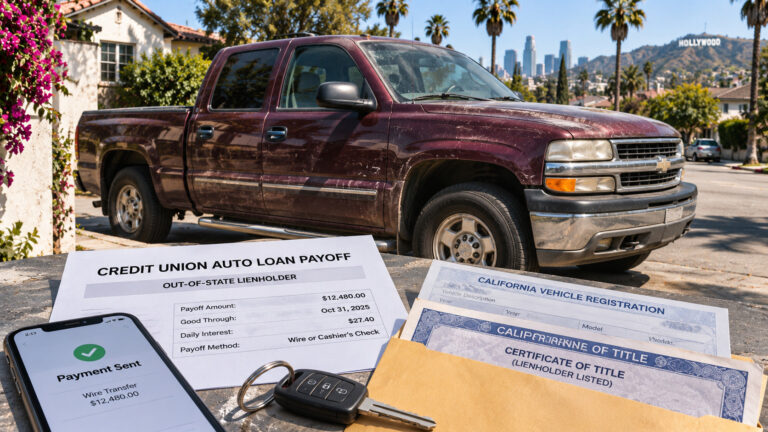
Suppose you financed the car as Jennifer Miller and later became Jennifer Anderson. The name change affects your identity. It does not remove the lender’s lien. If money is still owed, the lender’s interest has to be handled before the buyer receives clear ownership. That can mean obtaining the current payoff, arranging how the buyer’s money reaches the lender, and then obtaining the appropriate lien release.
This is where several problems can overlap. You may have a missing title. Your name may have changed. And the loan may still be active. REG 256 addresses the name. REG 227 may address the missing title in an eligible transaction. The lender handles its own lien release. These are not three versions of the same problem. They are three separate issues that happen to exist on one car. Once you understand that, the paperwork becomes much easier to organize.
And it also explains why private buyers sometimes become nervous when they see a name that does not match.
From the Buyer’s Side, a Name Mismatch Can Look Like Title Jumping
You know why the name is different. The buyer does not. They see a seller named Jennifer Anderson holding a title issued to Jennifer Miller. That can look innocent. It can also look like somebody trying to sell a vehicle they never properly registered. One concern is title jumping, where someone buys a vehicle and then resells it without completing the required ownership transfer into their own name. That can leave the next buyer with missing signatures, unpaid fees, broken ownership records, or a car that cannot be registered. That situation is completely different from an owner who legally changed their name while continuing to own the same vehicle.
But the buyer needs evidence to see the difference. This is why current government-issued identification matters. So does the REG 256. If you have a marriage certificate, divorce judgment, or court-order record, showing it can make the transaction even more comfortable. The buyer should also compare the VIN on the title with the VIN on the vehicle. A vehicle- history report can help identify brands or prior title events, but it cannot prove that the person standing there has the authority to sell. If uncertainty remains, having the DMV review the transfer packet before final payment can protect both sides.
A legitimate seller should not be offended by reasonable verification. After all, if you were buying the car, you would probably ask the same questions. And if the DMV has already rejected the transfer once, the solution is usually to identify the exact missing link rather than throwing more forms at the problem.
A Rejected DMV Transfer Usually Tells You Which Problem You Actually Have
Imagine the buyer already submitted the paperwork and the DMV rejected it. That does not automatically mean you were not allowed to sell the car. The application may simply have been incomplete. For example, the REG 256 may not connect the names clearly enough. Another owner’s release may be missing. Someone may have altered a completed title endorsement. Or the lender may still appear in the DMV record. The smartest next step is to find out exactly why the transfer was rejected. Do not keep resubmitting the same paperwork and hoping another clerk sees it differently.
If the problem is a genuine correction error, REG 101 may help. If the name-change evidence is incomplete, another supporting document may solve it. If another owner or lender still has an interest, no name-change form can replace that missing authority. And if you cannot appear personally, REG 260 may allow an authorized representative to sign certain permitted documents for you, although mileage disclosures and other specific requirements still have their own limitations. Again, the solution depends on identifying the real problem.
Once the transfer has finally been completed properly, there is one more step you should handle yourself rather than assuming the buyer will take care of everything.
Your Name May Have Changed, but the DMV Still Needs to Know When the Car Left You
After the buyer takes the vehicle, file the Notice of Transfer and Release of Liability within five calendar days. This is particularly important when your current name differs from the old ownership record because the DMV has to match the sale with the vehicle and registered owner information already in its system. Keep the NRL confirmation. Keep the bill of sale.
Keep the REG 256. Keep any supporting name-change documents you used. If a parking citation, toll notice, registration problem, or towing bill appears later, you want to be able to show exactly when the vehicle left your possession and how your current identity connects with the old title. The NRL does not complete the buyer’s title transfer. It gives you your own record of the sale.
And for many sellers with a name mismatch, this is where selling to a professional buyer starts looking easier than explaining the same story repeatedly to private shoppers.
A Name Mismatch Can Make Private Buyers Nervous Even When the Paperwork Is Fine
Imagine you are trying to sell an old car privately in Los Angeles. The car needs repairs. Registration expired. The title still carries your former married name. Every person who responds to the listing asks some version of the same question:
“Why isn’t your name on the title?”
You explain the marriage. Then the divorce. Then the name change. Then the REG 256. Then another buyer stops replying. Nothing may actually be wrong with the ownership. But the friction is real. That is where a direct sale can be more practical.
Cash Cash Cars reviews vehicles with outdated names, missing-title issues, expired registration, mechanical problems, accident damage, and other paperwork complications across Greater Los Angeles. A seller can explain the name discrepancy before pickup so the title, identification, and any supporting name-change documents can be considered together.
This becomes particularly useful when the title mismatch is only one of several issues. For example, the car may have been sitting in an apartment garage since the divorce. Registration expired a year ago. The battery is dead. And the title still shows the former surname. You do not necessarily have to fix every mechanical problem before asking what the car is worth. An expired registration or non-running condition can be discussed together with the title issue as long as the ownership itself can be lawfully established.
Before calling, gather the title or current registration, your current identification, and whatever documentation you have connecting the old and current names. Then provide the year, make, model, mileage, VIN, condition, and exact location of the vehicle. If the car is in an underground apartment garage, repair shop, narrow driveway, or tow yard, say that too because the pickup can require different equipment. Cash Cash Cars can then review the situation before the truck is sent. Payment is handled before the vehicle leaves once ownership and paperwork have been verified, and free towing is available for qualifying purchases.
The Name on the Title Is Usually Not the Real Question
A title showing your maiden name, former married name, or an old spelling mistake can look like a major obstacle when you first see it. But the name itself is usually not what decides whether the car can be sold. The real question is whether the person selling it today is still the person who legally owns it. If you are, California has procedures for explaining the name difference. If another owner is still involved, their rights have to be addressed. If a lender is on the title, the lien has to be released. If a divorce judgment changes who controls the car, that court order matters. And if the title belongs to somebody else entirely, REG 256 cannot turn that into your vehicle.
So the best way to approach the sale is not to hide the mismatch or rush to replace the pink slip. Start with the actual ownership record. Then connect your old identity with your current one. Handle any separate ownership, lien, divorce, or missing-title issues for what they actually are. Once those pieces fit together, the mismatch stops looking like a suspicious title and starts looking like what it often was all along:
an old name on a car you still legally own.
If you want to discuss a vehicle in Los Angeles with an outdated name on the title, you can request a cash offer from Cash Cash Cars or call 818-822-1863 and explain the title discrepancy, current identification, and vehicle condition before arranging pickup.