How Do I Know If a Cash for Cars Service Is Legitimate?
Learn how to spot a legitimate cash for cars service, avoid bait-and-switch tactics, verify payment, and protect yourself during the sale.
Selling a car for cash should be a straightforward transaction. You describe the vehicle, receive an offer, arrange pickup, complete the paperwork, get paid, and the car leaves your property. In reality, the process only stays simple when the buyer is legitimate.
The problem is that questionable operators often look convincing at first. They may have a polished website, a local phone number, strong-looking reviews, and an offer that beats everyone else. None of those things, by themselves, prove much. What matters is whether the company can be independently verified and whether the transaction still makes sense once you look past the marketing.
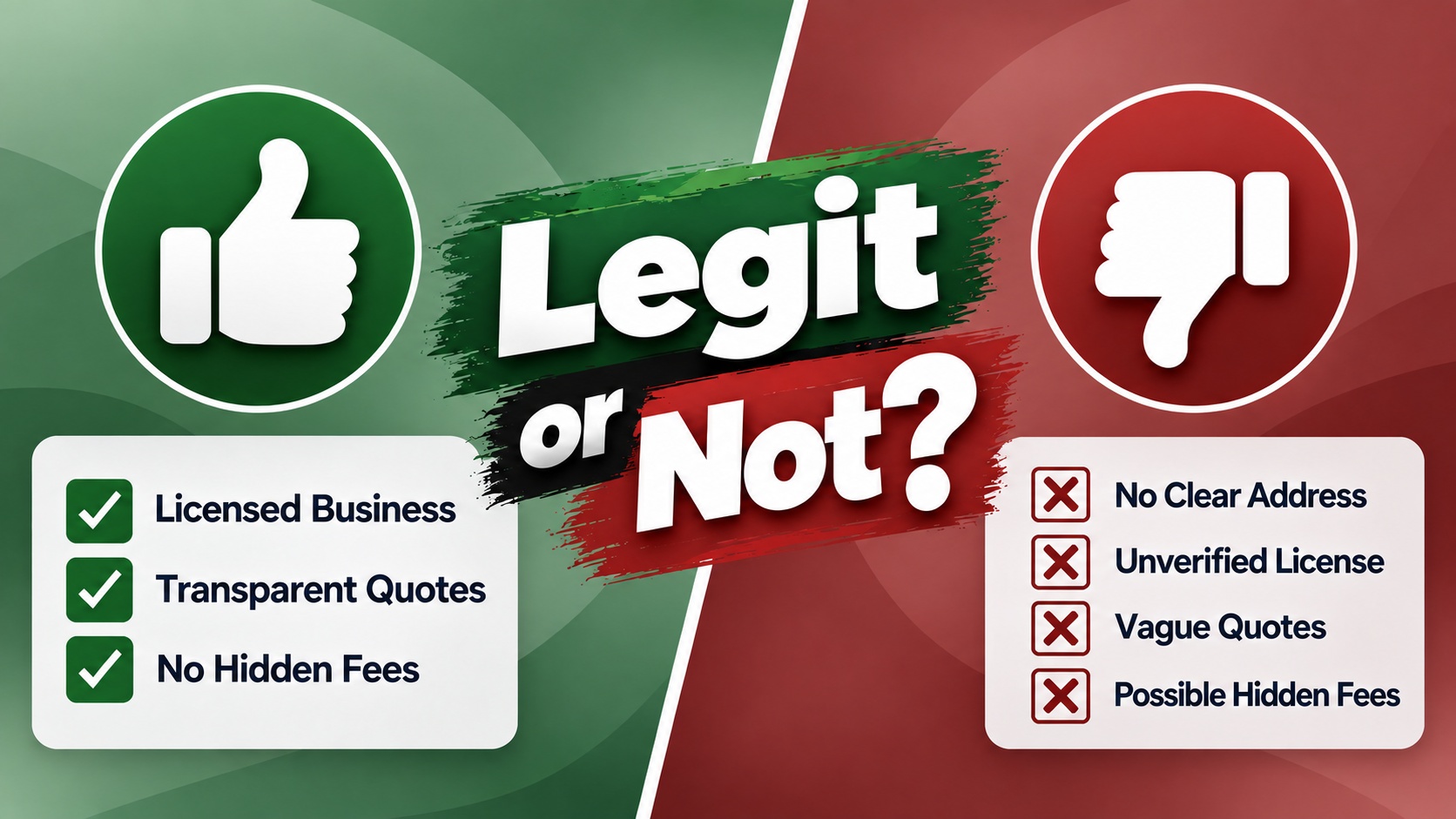
A legitimate cash-for-cars service should be easy to identify, easy to check, clear about how it prices your vehicle, and precise about what happens when the tow truck arrives. If the company becomes vague when you ask basic questions about licensing, payment, paperwork, or fees, that is usually more revealing than anything written on its homepage.
Start by Verifying the Business Itself
Before worrying about the quote, make sure there is a real business behind it.
A legitimate vehicle buyer should normally have some kind of physical presence, whether that is a dealership, dismantling yard, office, or commercial facility tied to the company. Search the business on Google Maps and look at the address rather than simply accepting whatever appears on its website.
If the address leads to a real commercial operation, that gives you something tangible to verify. If it leads to a house, mailbox store, empty lot, or unrelated business, that does not automatically prove the company is fraudulent, but it does mean you should start asking more questions.
Some legitimate buyers use separate administrative offices or third-party yards, so the address itself is not the entire test. The important point is whether the company can clearly explain who it is, where it operates, and under what legal name it buys vehicles.
That distinction matters because anonymous operators are much harder to deal with when something goes wrong. If all you have is a phone number and a vague website claiming to serve dozens of cities, you have very little leverage if the buyer disappears after taking the car.
Check the License Instead of Trusting the Website
A professional cash-for-cars company will usually need some form of dealer, dismantler, salvage, or motor vehicle buyer authorization depending on the state and how the business operates.
Do not assume a logo or badge on the company’s website proves anything. Ask for the actual license number and verify it yourself through the relevant government database.
You are not just checking whether a number exists. You want to make sure the license is active and that the legal business name matches the company you are speaking with. If the name, address, or status does not line up, the explanation needs to make sense before you move forward.
A legitimate company should have no reason to avoid this question. Licensing is part of operating the business, so a buyer that becomes defensive or evasive when asked for basic credentials is giving you useful information.
If a separate towing company will handle the pickup, it is also reasonable to ask who they are. You should know whether the person arriving at your property works for the buyer directly or is a third-party contractor.
Reviews Matter, but the Pattern Matters More
Reviews are useful, but the average star rating can be misleading.
A company with a high rating can still have a serious problem if the same complaint appears repeatedly. That is why reading the reviews is far more valuable than simply looking at the number beside the stars.
Suppose a company has hundreds of five-star reviews, but several one-star reviews posted over a period of months all tell essentially the same story: the customer was quoted one amount over the phone and then offered far less when the tow truck arrived. That repeated pattern matters more than the overall score because it suggests a consistent business practice rather than an isolated misunderstanding.
Positive reviews can also tell you something when you look closely. Real customers tend to mention details. They talk about the car they sold, how pickup went, whether the driver arrived on time, and whether the payment matched the quote. A wall of vague comments saying nothing more than “great service” or “highly recommend,” especially when they were posted close together, deserves more scrutiny.
The company’s response to criticism is another clue. A real business may disagree with a customer, but it will usually respond with specifics and try to resolve the issue. A company that ignores every complaint or attacks reviewers personally is showing you how it may behave if your own transaction goes badly.
A Serious Buyer Should Ask Serious Questions
One of the easiest ways to judge a company is by how it prepares the quote.
If someone gives you an unusually strong offer after hearing nothing more than the year, make, and model, the number may not mean very much. A legitimate buyer needs enough information to understand what it is actually buying.
That usually means asking for the VIN, mileage, title status, whether there is a loan or lien, whether the vehicle starts and drives, and whether there is major damage or missing equipment. With older or damaged cars, the buyer may also ask about the catalytic converter, battery, engine, transmission, or other high-value components.
Photos can be helpful for the same reason. If the buyer has already seen the exterior, interior, dashboard, and obvious damage before giving you a number, there is much less room for an argument at pickup.
This is important because one of the easiest ways to create a bait-and-switch is to avoid asking detailed questions at the beginning. The company gives you a high quote, wins your business, and then later claims the car was not described accurately. A proper quote process removes much of that ambiguity before anyone gets in a tow truck.
That is also why a quote form should ask for more than basic vehicle information. Cash Cash Cars asks sellers to provide relevant details about the vehicle before an offer is reviewed. If you are ready to compare that kind of process for your own car, you can request a vehicle quote here.
Get the Offer in Writing Before You Schedule Pickup
A verbal quote is easy to change because there is very little to point back to when the driver arrives.
A legitimate buyer should be willing to send the offer in writing through email, text, or an online portal. The written quote should identify the vehicle and tell you how much you are actually supposed to receive.
This is also where you need clarity about fees.
If a company says towing is “included,” ask what that means in practical terms. Is towing completely free, or will the cost be deducted from your payout? The same question applies to paperwork, administration, processing, disposal, or dispatch fees.
You are not trying to negotiate every small detail. You are trying to establish the real number.
If the written offer says $1,500, you should know whether $1,500 is what will actually be paid when the car is collected. A company that cannot answer that clearly before pickup is leaving room for the price to change later.
Not Every Price Change Is a Scam
There is an important distinction between a legitimate adjustment and a bait-and-switch.
If the car is materially different from what you described, the buyer may have a valid reason to revise the offer. For example, if you said the vehicle runs but it does not, if the catalytic converter is missing, if the engine has been removed, or if an undisclosed lien appears on the title, the buyer is now looking at a different vehicle or a different transaction than the one originally quoted.
That is very different from reducing the price because the driver notices a scratch, faded paint, interior wear, or other normal imperfections on an older car that was already honestly described.
The question to ask is whether the new issue actually changes the vehicle’s value or ownership status in a meaningful way. If it does, a revised offer may be reasonable. If the driver is simply searching for excuses to cut the payout after arriving, that is where the transaction starts to look predatory.
The Bait-and-Switch Usually Happens in the Driveway
The most common lowball tactic works because of timing.
The company starts with an attractive quote, often higher than the numbers you received elsewhere. You choose them, stop calling competitors, arrange your schedule around pickup, and mentally treat the car as sold.
Then the truck arrives and the offer suddenly drops.
At that point, the buyer knows you are under pressure. The vehicle may need to be gone that day. You may not want to restart the whole process. The tow truck is already in your driveway, and refusing the new offer feels inconvenient.
That inconvenience is exactly what makes the tactic effective.
The best defense is to settle as much as possible before pickup. Give accurate information, provide photos if requested, get the quote in writing, and make sure you understand what can legitimately change the price. If the car matches what you described and the driver still tries to reduce the offer without a real reason, you are under no obligation to accept it.
You still own the car. You can keep the keys and walk away from the deal.
Surprise Fees Are Another Form of the Same Problem
A last-minute fee can reduce your payout just as effectively as a lower offer.
Some buyers may suddenly introduce a towing fee, dispatch charge, paperwork fee, processing fee, distance surcharge, or similar deduction once the truck is already there.
The specific label does not matter much. What matters is whether the cost was disclosed before you accepted the deal.
If towing is supposed to be free, it should be free. If the company quoted $1,500 with no deductions, the driver should not arrive with a new explanation for why you are only receiving $1,250.
Ask the question directly before pickup: is the quoted amount the exact amount I will receive after towing and every other fee?
Then keep the answer in writing.
You Should Know Who Is Coming to Your Property
Pickup should not feel improvised.
A legitimate company should be able to tell you whether the vehicle will be collected by one of its own employees or by a contracted towing service. You should also have a pickup date, a reasonable time window, and some idea of how the driver will contact you.
If an unmarked truck appears unexpectedly and the driver does not know the company name, quoted amount, or details of the transaction, do not assume everything is fine simply because they know your address.
You are handing over a vehicle, title, and potentially thousands of dollars in value. Knowing who is collecting it is a basic part of the transaction.
Payment Should Be Confirmed Before the Car Leaves
Once the vehicle is loaded and gone, your leverage changes completely.
That is why payment should be settled before or at the time of pickup, not later.
Cash can be straightforward for lower-value cars because there is no delay between payment and possession. For larger amounts, checks and electronic payments can also work, but verification matters.
If you are paid by check, make sure it comes from the actual business you are dealing with. If necessary, verify it through the bank using contact information you find independently.
If the buyer uses an electronic transfer, check your own banking app. Do not rely on a screenshot, text message, or confirmation displayed on the driver’s phone. Those things are easy to fake.
The important point is that you should not surrender the car based on a promise that payment will happen afterward. Once the vehicle leaves your property, resolving a payment dispute becomes much harder.
Never Sign a Blank Title
The title is not just another piece of paperwork. It is the document that connects legal ownership of the vehicle to the transaction.
If a buyer asks you to sign the title while leaving the buyer section blank, that creates unnecessary risk. The company name should be entered properly, and you should understand who is taking ownership.
A blank title can make it easier for someone to resell the car without ever documenting the intermediate transfer. That may leave you dealing with tickets, toll notices, registration problems, or questions about a vehicle you no longer possess.
Take photos or copies of the completed title before handing it over.
A legitimate buyer should not object to you keeping a record of what you signed.
Be Careful With “No Title Needed” Claims
Advertising that says “no title needed” can sound helpful, especially when dealing with an old vehicle whose paperwork has been lost.
The real situation is usually more nuanced.
A missing title does not necessarily mean the car cannot be sold, but ownership still needs to be established and the proper paperwork has to be used. The correct path can depend on why the title is missing, whose name is on the vehicle record, whether a lien exists, and what other documents are available.
If that is the problem you are dealing with, the Cash Cash Cars guide to selling a car without a title explains the paperwork issue in more detail.
That is very different from someone saying, “Don’t worry about the title, we’ll just take the car.”
Convenience is useful. Avoiding a paper trail is not.
The same principle applies when the registration card is missing. That is not automatically the same problem as having no proof of ownership. If you have the title but cannot find the registration paperwork, see the guide on how to sell a car without registration before assuming you need to replace everything first.
“Guaranteed Highest Price” Is Mostly a Marketing Claim
No cash-for-cars company can realistically guarantee that it will always pay more than every other buyer.
Vehicle values depend on too many variables, including condition, title status, auction demand, parts value, scrap prices, location, and what different buyers need at a particular time.
That does not mean every company using aggressive marketing is dishonest. It does mean the slogan should not influence you more than the actual terms of the offer.
A slightly lower written quote from a company that explains everything clearly may be worth more than a much higher number from a buyer that plans to renegotiate at pickup.
The only price that really matters is the amount that ends up in your hands.
Pressure Before Pickup Is a Bad Sign
You should have time to understand the transaction.
A company that keeps telling you the offer will disappear in an hour, that the price will collapse tomorrow, or that you must schedule immediately may be trying to stop you from comparing alternatives.
Pressure also shows up in more subtle ways. A salesperson may ask repeatedly why you need the money, how urgently the car has to be removed, or whether you have spoken with other buyers.
Those questions may sound conversational, but they also reveal how much leverage you have.
A professional buyer should be able to explain the offer and let you make a decision without turning the conversation into a countdown.
Get a Receipt Before the Truck Leaves
Once payment and paperwork are complete, you should have a written record showing that the buyer took possession of the vehicle.
The receipt or bill of sale should identify the company, the vehicle, the sale amount, and the date of the transaction. Recording the pickup time can also be useful.
Keep that document with your copy of the title and payment record.
The goal is to create a clean paper trail showing exactly when the car stopped being your responsibility and who took possession of it.
Finish the Transfer on Your Side Too
Watching the tow truck drive away does not always complete the legal side of the sale.
Depending on where you live, you may also need to file a notice of sale, release of liability, or similar document with the motor vehicle agency.
That step matters because it creates a government record that you transferred the vehicle.
If a parking ticket, toll charge, registration notice, or other problem appears later, your filing can help establish that the vehicle was no longer in your possession at the time.
License plate rules also vary by state. In some places the plates stay with the vehicle, while in others the seller keeps or returns them. Check the rules that apply where you live rather than relying on generic advice.
Your insurance should also be updated once the sale is complete. Keep coverage active until the vehicle is actually transferred, then remove it from the policy according to your insurer’s procedures.
Keep the Paper Trail After the Sale
You may never need any of the paperwork again, but keeping it is still worth doing.
Save the written quote, bill of sale, payment record, photos of the completed title, transfer confirmation, relevant texts or emails, and insurance confirmation in one place.
If nothing goes wrong, those documents will simply sit there.
If something does go wrong six months later, they become the easiest way to show exactly what happened.
So, How Can You Tell If a Cash-for-Cars Service Is Legitimate?
A legitimate buyer should become easier to trust the more closely you examine the transaction.
You should be able to verify the company, confirm its licensing, understand how the vehicle was valued, get the offer in writing, know who is collecting the car, see exactly what fees apply, confirm payment before the vehicle leaves, and complete the ownership paperwork properly.
What should make you nervous is the opposite pattern.
The company is hard to identify. The address does not make sense. The license cannot be verified. The quote sounds unusually high but is only verbal. The representative avoids detailed questions about the vehicle. The driver arrives with a lower number, surprise fees, vague paperwork, or a promise that payment will come later.
Those are not small administrative details. They are the parts of the transaction that determine whether you are actually protected.
A legitimate cash-for-cars company should not need you to ignore uncertainty in order to complete the sale. The process should become clearer at every step, not murkier.
If you have a running, damaged, junk, salvage, non-running, or otherwise difficult vehicle and want to see the types of vehicles Cash Cash Cars considers, you can browse the vehicles we buy section before requesting an offer.