What Should I Do If My Vehicle Fails the Smog Test?
A failed smog test can lead to repairs, registration delays, or a decision to sell. Here’s how to choose the right path under California law.
Failing a smog test in Los Angeles does not automatically mean you are facing a major repair bill or that the car is finished. It does mean you need to figure out exactly why it failed before spending money.
California’s Smog Check system can fail a vehicle for several very different reasons. One car may simply have incomplete computer monitors because the battery was recently disconnected. Another may have an illuminated check engine light. An older vehicle may be producing excessive emissions, while another may fail because a catalytic converter, intake, or other emissions component is missing or not approved for use in California.
Those situations should not be handled the same way.
Start with the Vehicle Inspection Report you received from the Smog Check station. From there, you can decide whether the sensible next step is driving the vehicle until its monitors reset, repairing it, applying for state assistance, taking the problem to a Smog Check Referee, retiring the car, or selling it through a legal alternative to a private-party sale.
Start With Your Vehicle Inspection Report
After a failed Smog Check, the station should give you a Vehicle Inspection Report, commonly called the VIR. Do not treat it as paperwork to stuff in the glove box. It tells you where the vehicle failed and is the starting point for every decision that follows.
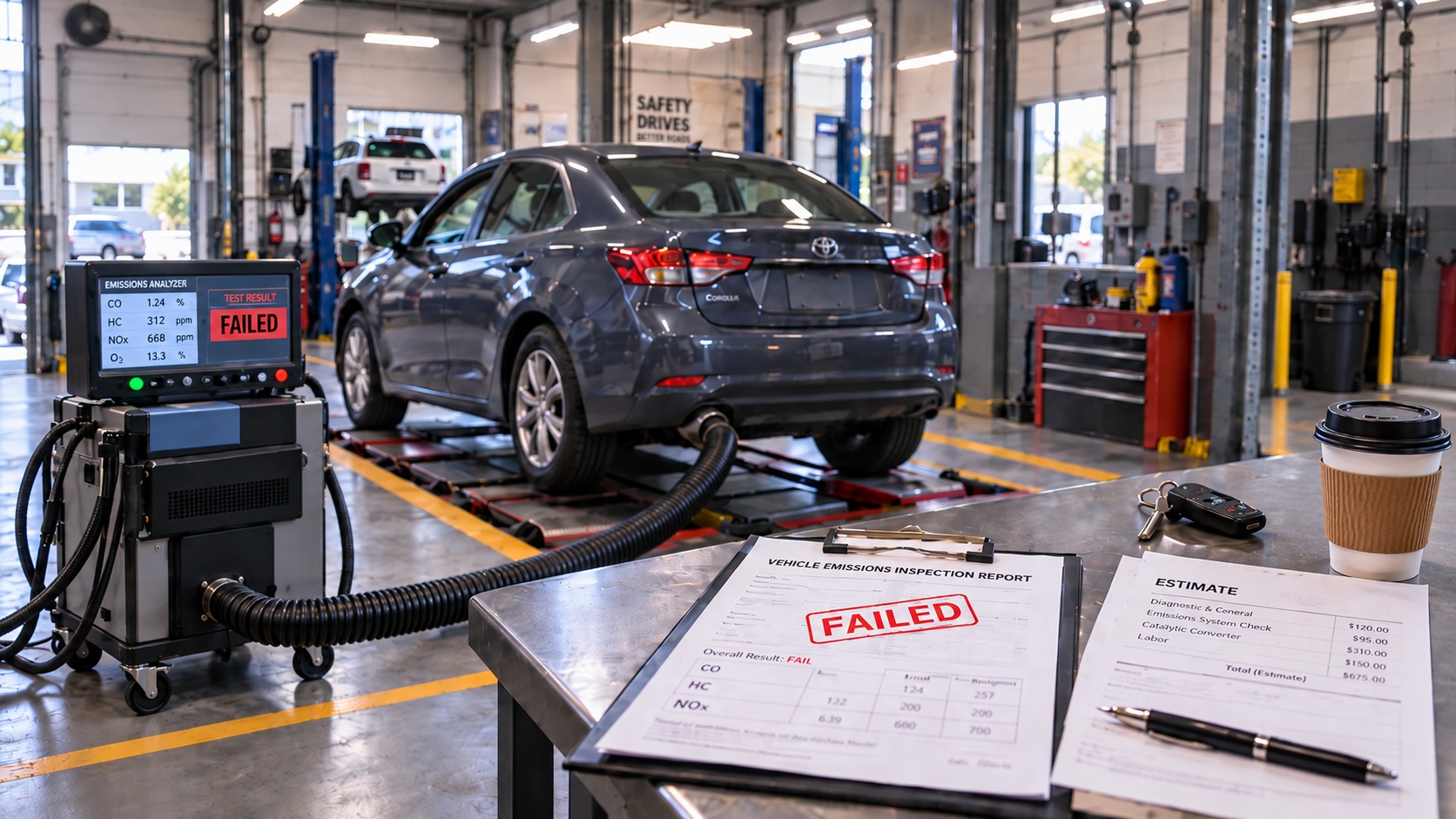
Look closely at the inspection results, particularly the visual, functional, OBD, and emissions portions of the report.
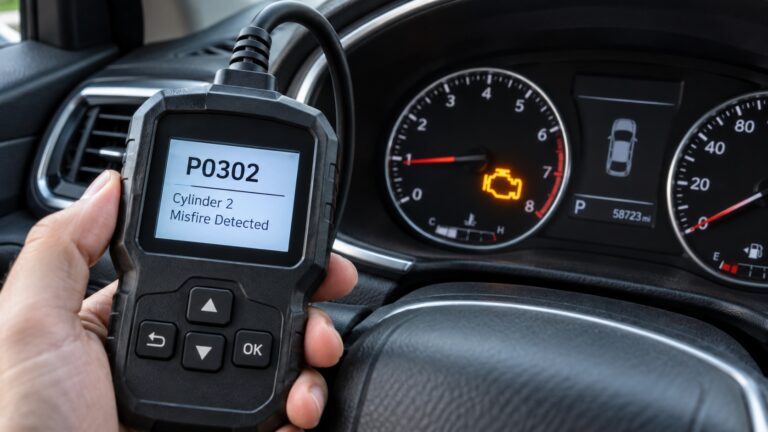
Check engine light or OBD failure
If the malfunction indicator lamp, better known as the check engine light, is illuminated while the engine is running, the vehicle will not pass an applicable California Smog Check.
The VIR may also show diagnostic trouble codes such as P0420, P0300, or another emissions-related code.
A trouble code is not necessarily a diagnosis.
For example, a catalytic-converter-efficiency code does not automatically mean the catalytic converter itself needs to be replaced. Exhaust leaks, oxygen-sensor problems, engine misfires, fuel-control issues, and other faults may contribute to the same code.
That is why replacing the most expensive component associated with a code before properly diagnosing the vehicle can be a costly mistake.
Readiness monitors show “Not Ready”
This is a very different situation.
Your vehicle’s onboard computer continuously performs emissions self-tests called readiness monitors. Clearing diagnostic codes, disconnecting or replacing the battery, or completing certain repairs can reset those monitors.
If too many required monitors have not completed, the vehicle may not be ready for its Smog Check even though nothing new is mechanically wrong.
The solution may simply involve driving the vehicle through the conditions necessary for the computer to complete its self-tests. That can involve a combination of city and highway driving rather than a quick trip around the block.
Do not repeatedly clear codes immediately before returning to the smog station. Clearing them also resets the monitors and can put you right back where you started.
Visual inspection failure
California also checks required emissions equipment.
A vehicle can fail because a required component is missing, disconnected, modified, or replaced with equipment that is not approved for that particular vehicle.
This is particularly important with:
- catalytic converters
- aftermarket air intakes
- headers
- engine modifications
- emissions hoses and controls
- certain turbocharger or performance modifications
A seemingly minor problem, such as a disconnected emissions hose, may be inexpensive to correct. A missing catalytic converter or noncompliant modification can be much more costly.
Tailpipe emissions failure
Older vehicles subject to tailpipe testing may fail because hydrocarbons, carbon monoxide, nitrogen oxides, or other measured emissions exceed allowable limits.
Those readings can help a qualified technician narrow down the problem, but they should not be treated as a parts-shopping list.
High hydrocarbons, for example, can be associated with incomplete combustion or misfires. Excessive carbon monoxide can point toward an overly rich fuel mixture, while elevated nitrogen oxides may involve combustion temperatures, EGR operation, catalytic-converter performance, or other causes.
At this point, proper diagnosis is usually worth more than guessing.
Do Not Authorize an Expensive Repair Until You Know What the Car Is Worth
A failed smog test can turn into a financial decision surprisingly quickly.
Before approving a four-figure repair, compare the estimated repair cost with what the vehicle would realistically be worth if it passed smog and were otherwise in its current condition.
A useful rule of thumb is to become cautious once smog-related repairs approach roughly half the usable value of the vehicle. That is not a California legal rule. It is simply a way of preventing a $1,500 repair from being approved automatically on a car that may only be worth $2,500 after it is fixed.
Think of the calculation this way:
Value after passing smog − necessary repairs = what fixing the car is really worth to you
The rest of the vehicle matters too.
A catalytic converter may technically solve the emissions problem, but spending heavily on it makes less sense if the same car also has a slipping transmission, significant oil consumption, a failing head gasket, severe suspension problems, or other expensive issues waiting behind it.
If the repair estimate is starting to exceed the practical value of the vehicle, it may be worth comparing that bill with what you could get by selling a car that needs repairs instead.
Get a second diagnosis when the estimate is large
Emission-control systems interact with one another, so misdiagnosis can become expensive.
If one shop recommends a major catalytic converter replacement, for example, another qualified technician may discover an upstream exhaust leak, sensor problem, ignition issue, or engine fault that needs to be addressed first.
Taking your VIR and diagnostic codes to another licensed repair facility can be worthwhile before approving an expensive repair.
Also ask the technician to separate:
- repairs actually required to correct the smog failure, and
- unrelated maintenance or recommended work.
That makes the financial decision much clearer.
Repairing the Vehicle and Taking the Smog Test Again
If the repair cost makes sense, you can fix the underlying problem and have the vehicle retested.
You generally do not have to return to the station that performed the original inspection. Your Smog Check result is transmitted electronically, so another properly licensed station can perform the new inspection.
However, check your DMV renewal notice. If it says “Smog Certification Required at a STAR station,” the required inspection must be performed at a STAR station.
A free retest is not guaranteed by California law. Some businesses offer free or discounted retesting within their own stated period when they perform the repairs, so ask about the policy before authorizing work.
There is also no general rule requiring you to wait a fixed number of days after a repair. What matters is whether the vehicle is actually ready to be tested.
If the battery was disconnected or codes were cleared during the repair, make sure the required readiness monitors have completed before paying for another inspection.
If the car fails again, you can continue diagnosing, repairing, and retesting it. There is no simple rule that says a vehicle gets only two or three attempts.
At some point, however, repeatedly buying tests and replacing parts can cost more than changing strategy.
California May Help Pay for Emissions Repairs
If the cost of fixing the car is the problem, California’s Consumer Assistance Program may help eligible owners with emissions-related repairs.
As of 2026, the Bureau of Automotive Repair says its Repair Assistance option can provide up to:
- $1,450 for model-year 1996 and newer vehicles
- $1,100 for model-year 1976 through 1995 vehicles
The household-income limit is generally 225% of the federal poverty level, and the vehicle must meet additional program requirements. Repair Assistance applies to vehicles that failed a required biennial Smog Check and does not apply to every type of smog failure or transaction.
Most importantly, do not assume you can pay for repairs first and get reimbursed afterward.
If you intend to use CAP, review the eligibility requirements and get approved through the program before proceeding with covered repairs. CAP repairs are performed through participating STAR Test-and-Repair stations, and a consumer co-payment can apply.
That decision should therefore be made before you authorize an expensive repair, not after the invoice is already paid.
What If You Have Already Spent Hundreds and the Car Still Will Not Pass?
California also has a Repair Cost Waiver for certain vehicles that cannot pass despite qualifying repair efforts.
This is not a general exemption from the Smog Check program.
BAR guidance states that an owner may qualify after spending at least $650 on qualifying repairs at a Smog Check station, subject to applicable requirements. A post-repair Smog Check is also required before going to the Referee.
If approved, the waiver can allow an eligible vehicle to complete registration without immediately achieving a passing emissions result.
There are important limitations. The waiver is associated with qualifying biennial inspections. It is not a way to bypass the smog requirement during a normal ownership transfer, and unrepaired emissions tampering can make the vehicle ineligible.
If you are approaching that point, talk to the Smog Check Referee before continuing to spend money simply because you assume another repair is your only option.
When the Smog Check Referee Makes More Sense Than Another Repair Shop
The California Smog Check Referee is not just another testing station. It handles situations that cannot always be resolved through an ordinary inspection or repair facility.
A Referee appointment may make sense when:
- you dispute a Smog Check inspection result
- an approved aftermarket component has been questioned
- the vehicle has undergone an engine change
- required emissions equipment is no longer reasonably available
- you are pursuing a Repair Cost Waiver
- an unusual OBD or emissions configuration needs specialized evaluation
The program regularly handles inspection and repair disputes, engine-change vehicles, repair-cost waivers, parts issues, and OBD-monitor problems.
This can save you from paying multiple shops to solve something that ultimately requires a Referee decision anyway.
Aftermarket and Missing Emissions Parts Need Special Attention
A normal mechanical failure and a tampered emissions system are not treated the same way in California.
Suppose a catalytic converter was replaced with an inexpensive universal converter that is not approved for that vehicle. Or a previous owner installed an aftermarket intake, header, or other emissions-related modification without the required California approval.
Simply making the check engine light disappear will not solve the visual inspection problem.
The vehicle generally needs to be returned to a legal emissions configuration using the appropriate original equipment or California-approved replacement equipment.
For aftermarket emissions-related parts that require approval, verify that the part has the appropriate California Air Resources Board Executive Order and that the approval applies to your specific vehicle and engine configuration.
What if the catalytic converter was stolen?
Catalytic-converter theft creates the same practical problem even though the owner did not intentionally modify the vehicle.
The replacement still needs to meet California requirements. Installing whatever inexpensive universal converter happens to fit physically can leave the vehicle unable to pass.
Do not buy a replacement based only on pipe diameter or vehicle size. Confirm that the converter is legally approved for the exact vehicle application before spending the money.
Engine swaps and unusual configurations
A legal engine change can also require Referee involvement.
The Referee can inspect the configuration and determine whether the required emissions equipment is present. Once an approved configuration is properly documented and labeled, future inspections become much more straightforward.
If an emissions component genuinely cannot be obtained because it is obsolete or unavailable, the Referee may also be able to evaluate the vehicle through California’s parts-assistance process rather than leaving you to search indefinitely.
Can You Sell a Car That Failed Smog in California?
Yes, but who buys it matters enormously.
A failed-smog vehicle is not something you should casually sell to another private individual with “AS-IS” written across the bill of sale and assume the problem has disappeared.
For a normal California private-party transfer where a Smog Check is required, the seller is responsible for providing a valid smog certification. The vehicle generally must have passed within the preceding 90 days.
That means an agreement saying the buyer knows the vehicle failed smog does not transform a transaction that legally requires certification into one that does not.
If you want to sell the vehicle privately for normal road use, getting it to pass is generally the cleanest path.
Selling to a licensed automotive business is different
If repairing the vehicle no longer makes financial sense, selling it into the licensed automotive trade can give you another route.
Licensed dealers and dismantlers operate under different acquisition and resale rules from ordinary private buyers. A dismantler, for example, acquires vehicles for dismantling, parts, or scrap rather than handing the same failed-smog vehicle directly to another consumer for normal road use.
For a vehicle that has become uneconomical to repair, you can also compare offers from businesses that buy junk cars, trucks, SUVs, and minivans rather than continuing to spend money trying to make an aging vehicle pass.
Before turning over the vehicle, verify that the buyer is properly licensed and make sure the ownership paperwork is completed correctly.
California Will Also Pay Some Owners to Retire a Vehicle
If the car is operational but repairing it no longer makes sense, CAP’s vehicle retirement program may be worth comparing with an outside offer.
As of 2026, California lists three potential incentive levels:
- $1,350 with no income requirement when the vehicle meets the applicable failed-Smog-Check requirements
- $1,500 for qualifying income-eligible owners whose vehicle meets the applicable inspection requirements
- $2,000 for qualifying income-eligible owners when the vehicle’s most recent Smog Check failed
The income threshold for the higher incentives is generally 225% of the federal poverty level, and the vehicle must satisfy CAP’s registration, ownership, operational, and other eligibility rules.
That means retirement can occasionally make more sense than spending $1,500 or $2,000 to rescue an older vehicle worth little more than the proposed repair bill.
If the vehicle is simply old, unwanted, or no longer worth repairing, you can also compare the state retirement amount with what you might receive by selling an old or unwanted car.
Compare the numbers before making the decision.
Pay Your Registration Fees Even If the Car Has Not Passed Yet
One of the easiest mistakes to make after failing smog is allowing the registration deadline to pass while waiting to figure out the repair.
You can generally pay the DMV registration fees even though the smog requirement has not yet cleared. Paying on time can prevent registration penalties from piling up while you deal with the failed inspection.
Paying the fees does not, by itself, make the vehicle legally registered for continued road use. DMV still needs the required smog certification before completing the renewal and issuing the registration evidence.
Think of paying the fees and satisfying the smog requirement as two separate pieces of the same renewal.
If You Need More Time, Look at a Temporary Operating Permit
California provides a limited option for some owners whose vehicles fail a required biennial Smog Check.
A Biennial Smog Certification Temporary Operating Permit, or TOP, may allow temporary operation while you deal with the problem.
DMV currently requires:
- registration renewal fees to be paid
- the failed Smog Check report
- proof of insurance
- a $50 nonrefundable TOP fee
The permit can be valid for 60 days from the registration expiration date, or in certain circumstances from the date a vehicle comes off Planned Non-Operation.
A TOP is breathing room, not a permanent alternative to fixing the registration problem.
Use that period to diagnose the car, apply for assistance if appropriate, arrange repairs, or decide whether keeping the vehicle still makes financial sense.
Planned Non-Operation Is Different
If you are not going to drive the vehicle, Planned Non-Operation can be another option, provided you meet DMV’s filing rules.
PNO is useful when you intend to keep a vehicle off public roads rather than immediately repair it.
But it is important not to confuse PNO with permission to drive an unregistered vehicle. A vehicle on PNO cannot simply be used whenever convenient. DMV rules restrict its operation and use on public roads.
PNO also has timing requirements, so do not wait indefinitely after registration expiration and assume you can always file it later without consequences.
If your goal is simply to park the car while you decide whether to repair, retire, or sell it, investigate PNO early rather than after penalties and registration problems have accumulated.
Do Not Ignore Expired Registration While You Save for Repairs
Driving indefinitely with expired registration is the worst of the available options.
A failed Smog Check does not create a blanket exemption from California registration rules. Paying your fees, obtaining a qualifying TOP, putting the vehicle on PNO when appropriate, or arranging another lawful solution is much safer than simply continuing to drive and hoping the issue goes unnoticed.
In Los Angeles, the financial consequences of allowing an unusable vehicle to turn into a registration, citation, towing, and storage problem can quickly exceed the original smog repair bill.
If you already know you cannot afford to fix the car, make that decision early.
What If You Think the Smog Station Got It Wrong?
Not every failed inspection should automatically result in a repair.
If you believe the technical inspection itself is wrong, the Smog Check Referee may be the appropriate next stop.
Examples could include:
- a legitimate CARB-approved aftermarket part being rejected
- a stock vehicle being identified as modified
- disagreement over a visual inspection
- an unusual engine configuration
- an OBD-related testing problem
Keep the original VIR and any documentation for the part in question, including the applicable CARB Executive Order information when relevant.
Complaints about repairs, billing, or shop conduct
A different process applies when the dispute is not really about whether the vehicle should have passed.
If you believe a repair facility performed unauthorized work, misrepresented necessary repairs, improperly increased the bill, damaged the vehicle, or otherwise violated California automotive-repair requirements, you can file a complaint with the Bureau of Automotive Repair.
BAR can review and mediate consumer complaints and investigate potential violations. A complaint does not guarantee a refund, but documentation can make an enormous difference.
Keep:
- the original Vehicle Inspection Report
- written repair estimates
- signed authorizations
- final itemized invoices
- diagnostic reports
- receipts
- photographs of relevant parts or damage
- CARB documentation for aftermarket components
- correspondence with the shop
Do not rely on a verbal conversation if a dispute is developing.
A Simple Decision Path After Failing Smog
If you walk out of a Los Angeles Smog Check station with a failed VIR, the sensible order is usually:
- Read the VIR before approving anything. Find out whether the issue is OBD-related, readiness-related, visual, or emissions-related.
- Do not clear codes blindly. You may erase useful diagnostic information and reset the readiness monitors.
- Get a proper diagnosis. For an expensive repair, consider a second opinion.
- Compare the repair with the car’s value. Look at the entire condition of the vehicle, not just the smog problem.
- Check CAP eligibility before paying for major repairs. Approval needs to be handled through the program.
- Repair and retest if the numbers make sense.
- Contact the Referee if the problem involves a disputed inspection, engine change, unavailable emissions part, unusual configuration, or possible Repair Cost Waiver.
- If fixing the vehicle no longer makes sense, compare CAP retirement with selling through an appropriate licensed automotive buyer rather than attempting an improper private sale.
- Keep your DMV deadlines under control. Paying fees, obtaining an eligible TOP, or using PNO appropriately can prevent a failed Smog Check from becoming a much bigger registration problem.
A Failed Smog Test Does Not Mean You Have to Keep Repairing Forever
The worst way to deal with a failed Smog Check is to start replacing parts without knowing what actually failed.
Sometimes the solution is surprisingly simple. The vehicle may need its readiness monitors to complete, an emissions hose reconnected, or a relatively inexpensive engine problem corrected.
Sometimes the economics point in the opposite direction.
If a high-mileage car needs an expensive catalytic converter, has several other mechanical problems, and is worth little even after it passes, California does not require you to keep pouring money into it indefinitely. Depending on the circumstances, state assistance, vehicle retirement, or selling the vehicle through an appropriate licensed buyer can provide a cleaner way out.
If selling becomes the better option, Cash Cash Cars buys vehicles throughout the Los Angeles area in a wide range of conditions, including cars with mechanical problems that owners no longer want to repair.
The VIR tells you what failed. The important part is using that information to choose the solution that makes sense legally and financially, before a smog problem turns into a repair, registration, and towing problem all at once.