How to Get the Most Money for Your Junk Car
Learn how to maximize your junk car payout by comparing net offers, preparing paperwork, avoiding fees, and negotiating the final price.
If you want to get the most money for your junk car in California, the biggest quote is not always the best offer.
A buyer might quote $700 over the phone while another offers only $500. But if the first company later deducts towing charges, title-related fees, pickup costs, or other unexpected expenses, the lower quote may actually leave you with more money.
That is why the real question is not simply, “How much will someone offer for my junk car?” It is how much money you will actually receive after every deduction is accounted for.
So, if you are trying to figure out how to get the most money for your junk car, the right approach is to understand what affects its value, prepare the vehicle and paperwork properly, compare buyers on the same terms, and lock in the final payout before the tow truck arrives.
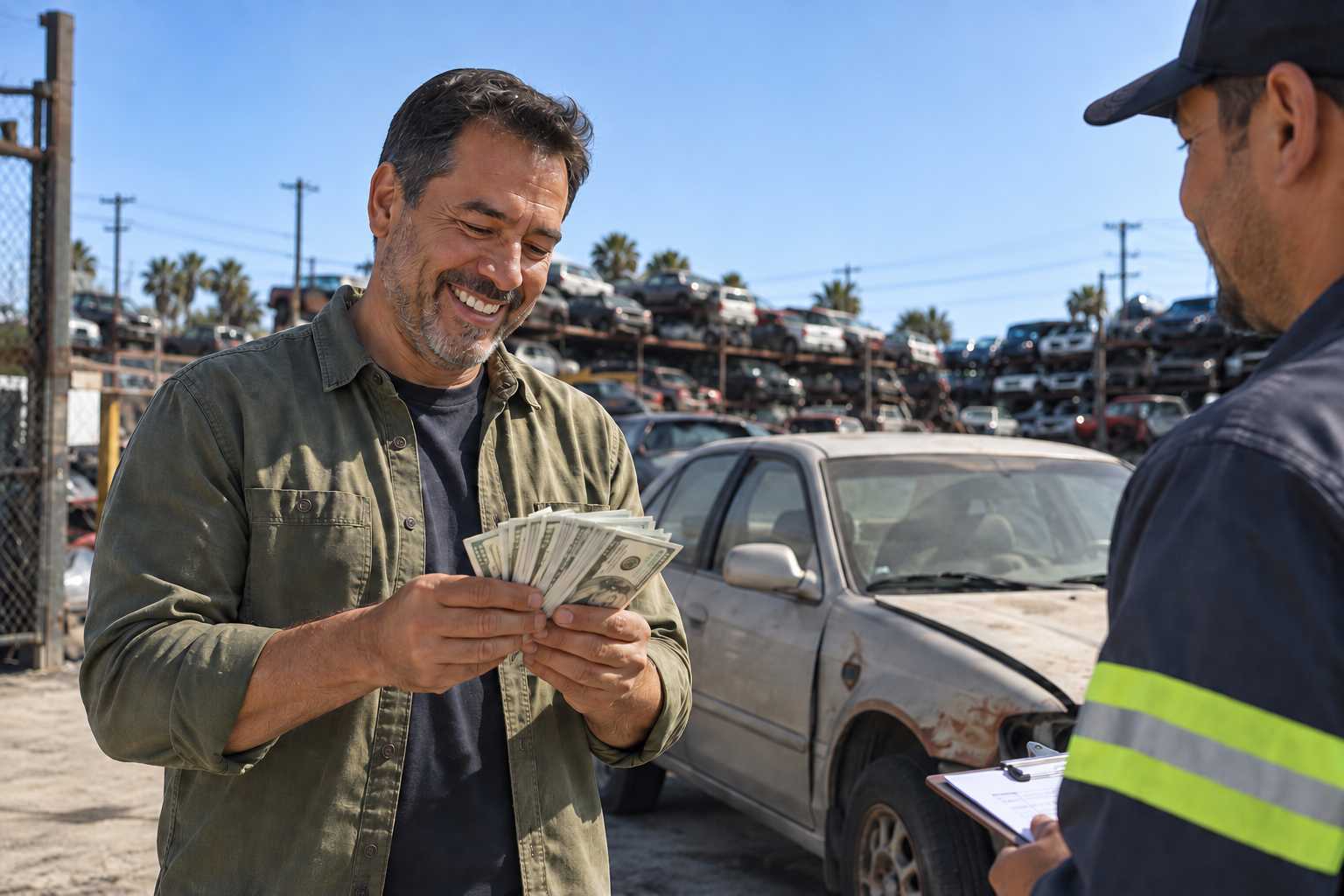
Here is how to do it.
1. Find Out What You Actually Have Before Asking for Quotes
Two junk cars of the same year and model can receive very different offers. That is because a junk vehicle is not valued only by its age, mileage, or what a working version sells for online.
Before contacting buyers, write down:
- Year, make, model, and trim
- Approximate mileage
- Whether it starts
- Whether it drives
- Whether it rolls and steers
- Accident or structural damage
- Whether the engine is present
- Whether the transmission is present
- Whether all four wheels are installed
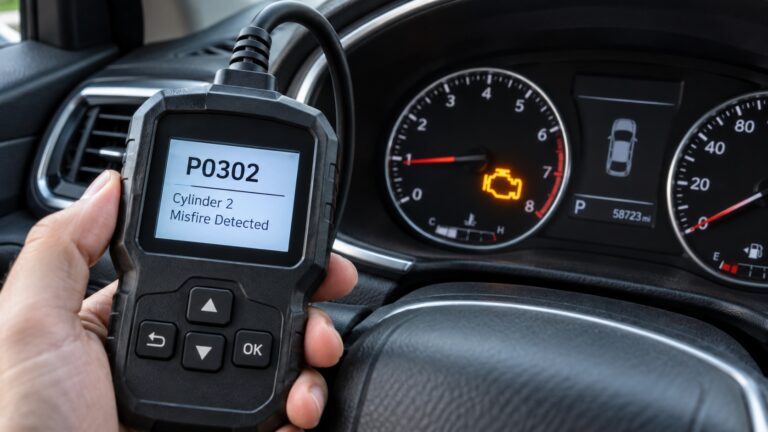
- Whether the catalytic converter is present
- Whether it appears to be the original converter
- Title status
- Lien status
- Registration status
- Exact pickup location and access
This gives every buyer the same information. Hence, when you compare quotes later, you are actually comparing offers for the same vehicle condition.
If your vehicle is clearly at the end of its useful life, see how Cash Cash Cars handles junk cars, trucks, SUVs, vans, and minivans.
2. Do Not Confuse a Working Car’s Value With a Junk Car’s Value
One of the easiest ways to overestimate a junk car is to find a running version of the same model for $3,000 on Facebook Marketplace and assume your non-running one should still be worth close to that amount.
That is not how most dismantlers look at it.
A junk or salvage buyer may be interested in:
- Reusable engine components
- Transmission
- Factory catalytic converter
- Body panels
- Electronics
- Wheels
- Interior components
- Local demand for that particular model
- Scrap and material value
That is why a complete Honda Civic or Toyota Prius may be worth considerably more to one dismantler than an uncommon vehicle whose parts are difficult to resell.
Mileage can still matter, particularly when usable mechanical parts are involved. But once a vehicle is genuinely being valued as junk, completeness, parts demand, and material value can become more important than the odometer reading.
3. The Catalytic Converter Can Have a Major Effect on the Offer
For many junk vehicles, the catalytic converter is one of the first things a buyer will ask about.
California has strict emissions standards, and certain factory catalytic converters can have substantial recycling value. Because of that, a vehicle with its original converter intact may receive a noticeably better offer than the same car with the converter missing or replaced with an aftermarket unit.
That does not mean you should remove it and try to sell it separately.
California places strict restrictions on transactions involving detached catalytic converters and who may legally buy them. So cutting the converter off before selling the car can create both legal and financial problems.
From a value standpoint, leaving an intact OEM converter on the car can also give you stronger negotiating leverage.
4. Keep the Parts That Make the Car Worth Buying
It is tempting to start stripping a junk car before selling it, especially when individual parts appear to have value online.
In many cases, that works against you.
The engine, transmission, catalytic converter, wheels, and other major components help determine whether a dismantler sees the vehicle as a valuable parts car or little more than a shell.
A headlight assembly might be listed online for $200, but that does not mean you will quickly find someone willing to pay that amount. Meanwhile, removing enough components can substantially reduce what a dismantler will pay for the remaining vehicle.
There are some exceptions.
Aftermarket stereo equipment, amplifiers, subwoofers, and other accessories that add little or nothing to the junk buyer’s offer may be worth removing.
A nearly new battery is another example. If you have an older battery available and the buyer does not pay extra for the newer one, keeping the valuable battery may make financial sense.
Premium aftermarket wheels may also be worth keeping, but only if you replace them with wheels that allow the vehicle to roll.
The basic rule is simple: do not strip out the parts that make the car complete and easy for a dismantler to process.
5. Do Not Spend $1,000 Trying to Turn a Junk Car Into a Better Junk Car
If a car is already headed toward a dismantler, expensive repairs rarely produce a good return.
A junkyard is not thinking like a retail used-car buyer. It may have access to used parts, wholesale components, mechanics, and dismantling labor at costs far below what you would pay.
So if you spend $800 fixing a transmission problem, that does not mean the buyer will suddenly offer $800 more.
In most cases, do not spend money on:
- Engine repairs
- Transmission repairs
- Bodywork
- Paint
- New tires
- Cosmetic detailing
- Major electrical repairs
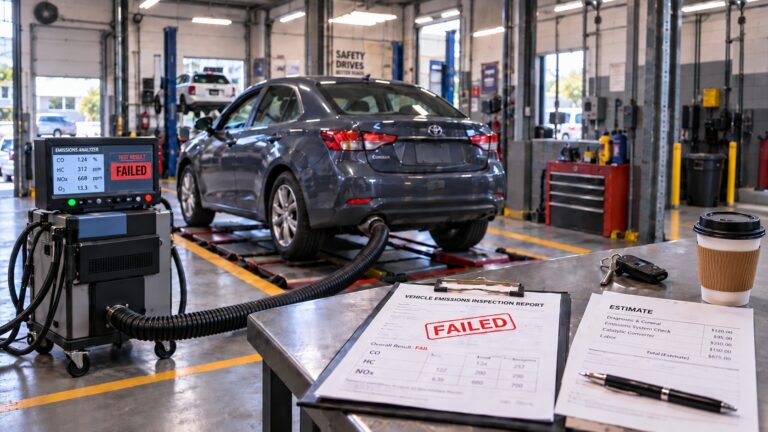
- Expensive smog-related repairs
For a vehicle being transferred for dismantling, spending hundreds of dollars trying to make it roadworthy usually defeats the purpose of selling it as a junk car.
If major repair costs are what pushed you toward selling in the first place, you can also review options for selling a vehicle that needs repairs.
What is worth doing?
Focus on free or inexpensive improvements.
Pump up tires that still hold air.
Make sure the vehicle can roll if possible.
Remove trash and personal belongings.
Find the keys.
Make the pickup area easy to access.
These things do not magically increase the underlying value of the car. However, they remove excuses for a buyer to claim the pickup is unusually difficult or expensive.
6. Get Three or Four Quotes, Not Just One
This may be the simplest way to improve your payout.
Get approximately three or four offers and, where possible, compare different types of buyers.
That can include local licensed dismantlers and larger junk-car buying services that arrange pickup through local operators.
The reason to compare is not simply that one company might offer $50 more.
Different buyers value the same car differently.
A local dismantler may urgently need parts from your exact model. Another buyer may view the vehicle primarily as scrap. A third may have higher transportation costs because its yard is farther from your location.
Hence, there may not be one universal junk-car value.
There is only what different legitimate buyers are willing to pay for your particular vehicle, in its particular condition, at your particular location.
7. Compare the Net Payout, Not the Headline Quote
This is one of the most important parts of learning how to get the most money for your junk car.
Do not write down “$700” and “$550” and automatically assume the first buyer wins.
Ask every buyer:
- Is this quote guaranteed if my description is accurate?
- Is towing completely free, with no deduction from my payment?
- Are there any processing, administrative, pickup, or DMV fees?
- How will I be paid when the vehicle is collected?
- Does using REG 227 instead of the original title change the offer?
- Will the price change if the catalytic converter is aftermarket instead of OEM?
Then compare what you will actually receive.
Suppose Buyer A quotes $700 but later deducts $150 for towing and another $100 because of a paperwork issue.
Your real payout becomes $450.
Buyer B may quote $525 with free towing and no additional deductions.
In that situation, the supposedly lower offer leaves you with $75 more.
That is why the best junk-car deal is usually the highest guaranteed net payout, not the largest number mentioned during the first phone call.
8. Get Your California Paperwork Ready Before Negotiating
Paperwork can influence both how smoothly the sale happens and how much uncertainty the buyer has to deal with.
If you have your California Certificate of Title, find it before requesting pickup.
Check the owners listed on the title and make sure everyone whose signature is required will be available.
If the title is missing, California DMV uses the Application for Replacement or Transfer of Title, REG 227, in qualifying situations. A licensed dismantler may be able to process a vehicle using the appropriate REG 227 paperwork rather than requiring you to wait for a replacement title first.
A lienholder release on REG 227 may require notarization, so a missing title and an unresolved lien should not be treated as the same issue.
If the title itself is the problem, see the Cash Cash Cars guide to selling a car without a title before scheduling pickup.
Check for liens before the truck arrives
An active lien is more serious than a missing title.
If a lender or another legal owner still has an interest in the vehicle, you cannot simply treat the car as entirely yours to dispose of.
Resolve that issue before pickup rather than discovering it after you have already negotiated a price.
9. Selling to a Licensed Dismantler Changes Some California Requirements
California treats vehicles acquired for dismantling differently from ordinary used-car sales.
For example, vehicles transferred for the purpose of being wrecked or dismantled are exempt from the usual smog inspection requirement. Licensed dismantlers also follow special DMV procedures for acquiring and reporting vehicles that will be dismantled.
This is important because spending hundreds of dollars trying to make a junk car pass smog before selling it to a properly licensed dismantler may accomplish nothing financially.
Registration fees and penalties are also handled differently when a licensed dismantler acquires a vehicle specifically for dismantling.
That does not mean every company advertising “cash for junk cars” automatically receives the same treatment.
The buyer’s legal status matters.
That is why CashCashCars.com recommends confirming who is actually acquiring the vehicle before you hand over the title and keys.
10. Verify the Buyer Before You Give Up the Car
A polished website or large online advertisement does not prove that the person collecting your vehicle is the properly licensed buyer you think you hired.
Ask who is actually purchasing the vehicle.
For a California dismantler, ask for the business’s DMV occupational license information and verify it.
Be cautious if someone:
- Will not identify the actual purchasing business
- Refuses to provide paperwork
- Wants the buyer section of the title left blank
- Tries to change the agreed price without a legitimate discrepancy
- Wants the vehicle before payment is settled
- Cannot explain who will acquire the title
- Pressures you to sign incomplete paperwork
- Refuses to provide a receipt
Never intentionally leave the buyer information blank simply because someone says their office will complete it later.
You want the transaction to clearly identify who acquired the vehicle from you.
If a broker or national service arranged the pickup, confirm that the driver’s dispatch information matches the vehicle and the amount you were promised.
11. Use Your Best Real Offer to Negotiate
Once you have three or four legitimate offers, you have something more valuable than a negotiation trick: actual market information.
Suppose your preferred buyer offers $450, while another legitimate company guarantees $550 with free pickup.
Go back to the first company and say something along the lines of:
“I’d rather sell it to you, but I have a guaranteed $550 offer with free towing. If you can match it, I’m ready to schedule the pickup.”
Do not invent a competing offer.
If the buyer asks for proof and discovers you were bluffing, you may lose the deal completely.
Instead, use facts about the vehicle that genuinely support a stronger price:
- OEM catalytic converter is intact
- Engine and transmission are present
- Vehicle is complete
- Car rolls
- Title is available
- No lien is holding up the transaction
- Pickup access is easy
A dismantler already has a valuation range in mind, so do not expect the offer to double simply because you negotiate.
However, an extra $50, $100, or sometimes more may be possible when the vehicle has desirable parts or the buyer wants to secure the deal.
Whatever you agree to, get the final payout confirmed in writing before canceling your backup offers.
12. Location Can Affect How Much Money You Get
Where the vehicle sits can affect the offer more than many sellers realize.
A junk car in Los Angeles may be close to multiple competing dismantlers. That can create more opportunities to compare prices while keeping transportation costs relatively low.
A car located far from the nearest buyer may cost more to retrieve.
The physical pickup situation matters too.
A vehicle parked on a flat driveway that rolls freely may take only a few minutes to load.
A car that is:
- Missing wheels
- Sunk into dirt
- Blocked by another vehicle
- Parked on a steep incline
- Stuck inside a difficult garage
- Unable to roll
may require more equipment and more labor.
So describe the pickup conditions accurately when requesting the quote.
If the buyer already knows what they are coming to collect, there is less room for someone to arrive and suddenly claim that the situation justifies a lower price.
13. Do Not Wait Months Trying to Time Scrap Prices
Scrap-metal prices and local parts demand can influence what dismantlers pay, but most private sellers are unlikely to gain much by trying to time the commodity market.
Waiting also has costs.
A non-running vehicle can develop:
- Flat or deteriorated tires
- Rodent damage
- Rust
- Electrical problems
- Additional mechanical failure
- Storage charges
- Parking problems
- Towing or code-enforcement issues
So unless you have a specific reason to believe a short delay will materially increase the vehicle’s value, waiting months for scrap prices to move can create more risk than reward.
14. How Do I Get the Most Money for My Junk Car?
If that is the question you started with, the answer comes down to several decisions working together.
Do not repair a car that is already economically finished.
Do not strip out the components that make it valuable as a complete vehicle.
Do not accept the first offer.
Do not compare gross quotes without checking fees and deductions.
Do not wait until pickup day to discover a title or lien problem.
And do not hand your vehicle to someone you cannot identify and verify.
Instead, know what you have, prepare the paperwork, get several offers, compare the actual amount you will receive, negotiate with real competing quotes, and get the final payout confirmed before pickup.
A Four-Day Plan to Get the Most Money for Your Junk Car
You can turn everything above into a simple four-day process.
Day 1: Inspect the Vehicle
Check whether the catalytic converter is present and whether it appears to be OEM.
Confirm that the engine and transmission remain in the vehicle.
Check the wheels and tires.
Remove personal belongings.
Take out aftermarket equipment you intend to keep.
If you have a nearly new battery you want to retain, replace it with another usable battery before requesting quotes.
Make sure the vehicle can roll if reasonably possible.
Day 1: Prepare the Paperwork
Find the California title.
Check the names of the registered owners.
Make sure the required owners will be available to sign.
Check for liens.
If the title is missing, determine whether REG 227 can be used for your situation.
Have your VIN, plate number, identification, and vehicle information ready.
Day 2: Collect Three or Four Quotes
Give every buyer the same information.
Ask whether the price is guaranteed.
Confirm that towing is free.
Ask about administrative or pickup fees.
Confirm how you will be paid.
Disclose any title issues.
Tell them whether the catalytic converter is original, aftermarket, or missing if you know.
Describe the pickup location accurately.
Day 2: Negotiate the Best Offer
Take the best genuine offer back to your preferred buyer.
Ask whether they can match or beat it.
Mention the factors that legitimately make the vehicle more valuable or easier to process.
If they improve the price, get the final amount confirmed by text, email, or another written record.
Only then should you cancel the other offers.
Day 3 or 4: Complete the Pickup
When the truck arrives, confirm that the driver is collecting the vehicle for the company you agreed to sell to.
Verify the agreed payout.
Receive the payment according to the arrangement before giving up control of the vehicle.
Complete the transfer paperwork properly.
Do not intentionally leave the buyer information blank.
Take a photo or retain a copy of the signed paperwork.
Get a receipt showing who acquired the vehicle and how much you were paid.
After the Sale: File the Notice of Transfer and Release of Liability
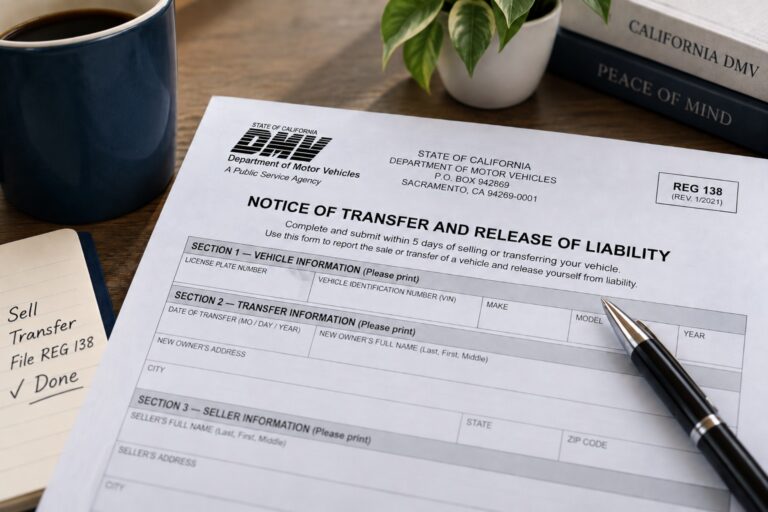
California requires a seller or transferor to notify DMV of the transfer within five calendar days.
Do not simply assume the buyer will take care of everything for you.
File the Notice of Transfer and Release of Liability yourself and keep the confirmation with the rest of your transaction records.
Keep your:
- NRL confirmation
- Bill of sale or receipt
- Photograph or copy of the signed title or transfer paperwork
- Written quote
- Payment record
These records can become important later if a parking ticket, toll notice, or another issue is incorrectly associated with the vehicle after it has left your possession.
So, How Do You Get the Most Money for a Junk Car in California?
You do not get the most money by chasing the largest number someone is willing to say over the phone.
You get it by controlling the things that determine what you actually receive.
Know the condition of the vehicle. Keep its valuable components intact. Avoid repairs that will never pay for themselves. Prepare the California paperwork before negotiating. Get three or four legitimate quotes. Compare the net payout rather than the advertised offer. Verify who is buying the vehicle. Then use your strongest genuine offer to negotiate before locking everything in writing.
That is how to get the most money for your junk car without turning the sale into a gamble over what the tow-truck driver will actually pay when they arrive.
If you are ready to compare what your vehicle may be worth in Los Angeles or surrounding Southern California areas, Cash Cash Cars can review the vehicle’s condition, title situation, pickup access, and other factors that affect the final offer.
Because the best junk-car offer is not necessarily the one with the biggest number at the beginning.
It is the one that leaves the most money in your hand after the vehicle is gone and the transaction is properly completed.