Where Can I Sell My Non-Running Car?
Find where to sell a non-running car in California based on its condition, value, towing needs, paperwork and the type of buyer that fits best.
If your car no longer runs, the biggest mistake is assuming every buyer will value it the same way.
They won’t.
A junkyard may look at the vehicle mainly for its scrap and parts value. An online buyer may see resale or auction value. A mechanic may see a repair opportunity. And a private buyer may be willing to pay more if the car is still structurally clean and only needs a major mechanical repair.
So, where can I sell my non-running car in California?
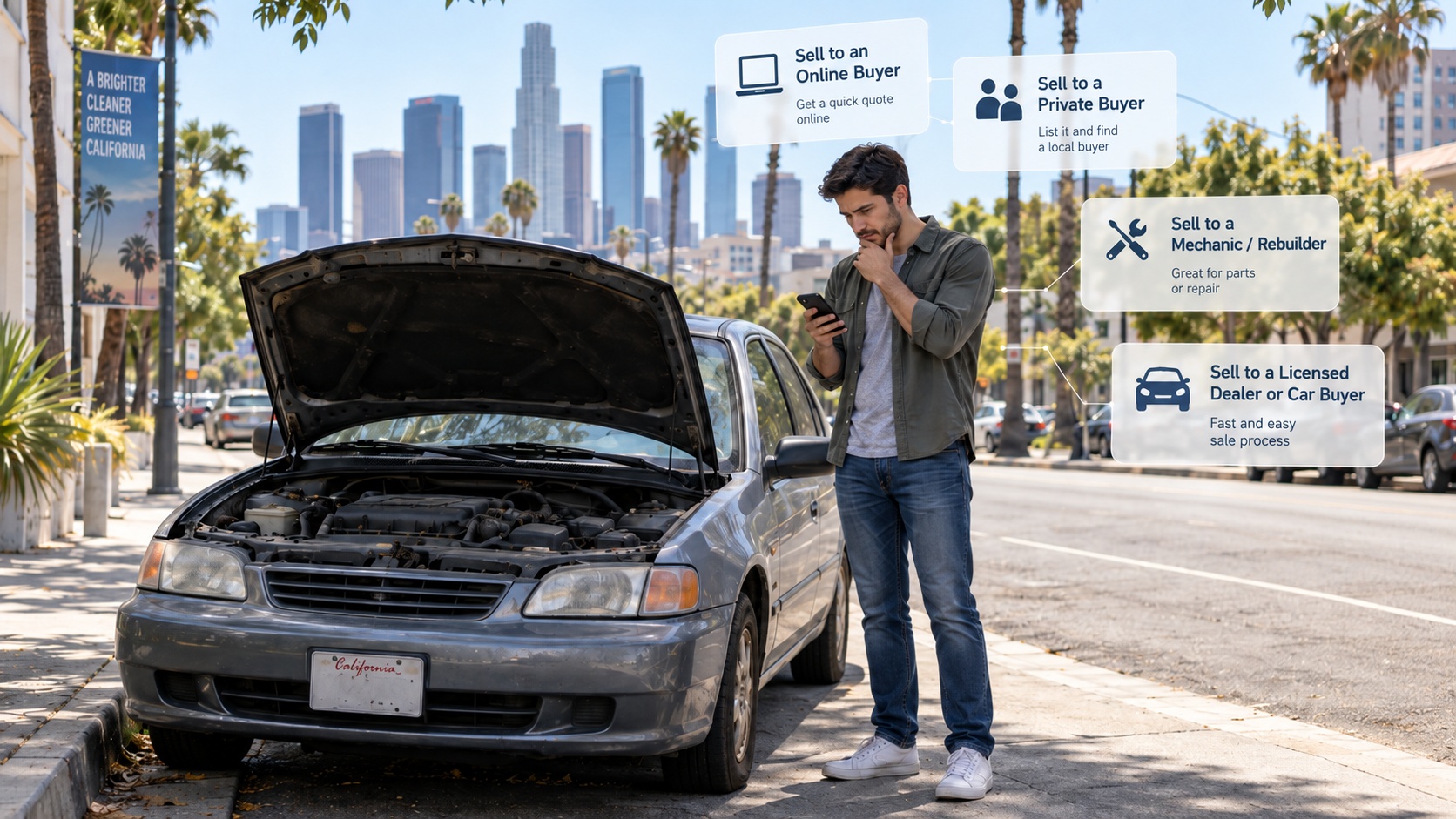
Your main options are:
- Online car buyers
- Licensed dismantlers and junkyards
- Private buyers
- Mechanics and rebuilders
- Salvage-oriented buyers or auctions
- Vehicle donation programs
The best choice depends on why the car does not run, what condition the rest of the vehicle is in, what paperwork you have, whether it can be moved easily, and whether California smog rules affect the transaction.
Start With Why the Car Does Not Run
Before asking who will buy it, figure out what kind of non-running vehicle you actually have.
A car with a seized engine but a clean body is not the same asset as a stripped shell or a vehicle with serious structural damage.
Blown Engine or Failed Transmission
If the engine or transmission is dead but the body, interior, electronics, and other major components are still in good condition, the car may have significant rebuild value.
Your best options are usually:
- A mechanic or rebuilder
- A knowledgeable private buyer
- An online car buyer
- A dismantler as a fallback
A mechanic may pay more because they can install a used engine or transmission and resell the vehicle.
An online buyer may also pay more than a scrap yard because they can route the vehicle into a salvage, parts, or wholesale market.
If this is your situation, it is worth reviewing the dedicated guide on how to sell a non-running car before requesting offers.
If the Car Has Major Collision or Structural Damage
A badly wrecked vehicle appeals to a different type of buyer.
If the frame or structure is seriously damaged, a private buyer may see too much repair risk. But a dismantler, salvage buyer, or auction buyer may still value:
- The engine
- Transmission
- Axles
- Wheels
- Body panels
- Electronics
- Interior components
- Catalytic converter
- Other reusable assemblies
For heavily damaged cars, licensed dismantlers and salvage-oriented buyers generally make more sense than trying to market the vehicle as a project car.
If It Has Electrical or Computer Problems
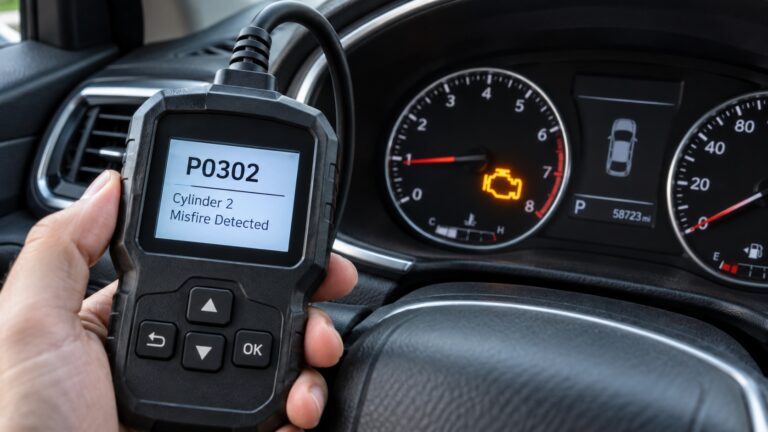
Electrical no-start problems are difficult to value because the actual repair may be uncertain.
One buyer may think the vehicle needs a relatively inexpensive control module. Another may assume the wiring harness is damaged and discount the car heavily.
That uncertainty tends to discourage ordinary private buyers.
For electrical failures, online buyers, make-specific mechanics, and dismantlers are usually better places to start.
The key is to describe the problem accurately.
If nobody has diagnosed the vehicle, do not tell buyers it “just needs an ECU” or “only needs a sensor.” Tell them what the car actually does and does not do.
If Major Parts Are Missing
A stripped or incomplete vehicle is usually better suited to a licensed dismantler.
Missing components such as:
- Engine
- Transmission
- Catalytic converter
- Wheels
- Doors
- Battery
- Major electronics
can drastically reduce rebuild value.
They can also make towing more complicated.
Once a vehicle is missing enough major components, private buyers and general online buyers may no longer be the strongest market. A dismantler who can recover whatever parts and materials remain may be the more realistic option.
1. Online Car Buyers
Online buyers are often the easiest place to start because you can usually submit the VIN, mileage, condition, and location without moving the vehicle.
They are particularly useful when:
- The vehicle does not start
- You do not want to advertise it privately
- You need pickup arranged
- The vehicle still has parts or wholesale value
- You want a quick baseline offer
Online buyers can be especially useful when you are trying to figure out what the car is worth before calling local yards.
But one thing matters:
Find out who is actually buying the vehicle.
Some websites operate as intermediaries or route vehicles to licensed dealers, dismantlers, auctions, or other buyers.
Before pickup, know:
- Who the legal buyer is
- Whose name goes on the ownership paperwork
- Who is paying you
- Who is picking up the car
- Whether towing is actually included
2. Licensed Dismantlers and Junkyards
A dismantler is often the strongest option when the vehicle is no longer realistically worth rebuilding.
That includes cars that are:
- Heavily wrecked
- Stripped
- Missing major parts
- Severely deteriorated
- Better suited for parts than resale
California vehicle dismantlers are regulated businesses and should be properly licensed.
That matters because dismantlers have specific rules for acquiring, reporting, and processing vehicles.
Do not confuse a licensed dismantler with someone who simply owns a tow truck and says they “buy junk cars.”
If a buyer claims to be a dealer or dismantler, verify that the business actually exists and is properly licensed.
3. Private Buyers and Mechanics
If your goal is the highest possible payout, this is often the category with the most upside.
Suppose you have a relatively clean ten-year-old vehicle with a failed engine.
A scrap-focused buyer may see metal, the catalytic converter, and reusable parts.
A mechanic may see:
- A replacement engine
- Several hours of labor
- A repairable vehicle
- A profitable resale
That difference in perspective can create a much higher offer.
Private buyers and mechanics make the most sense when the car is:
- Structurally sound
- Relatively complete
- Still desirable
- Worth repairing
- A popular make or model
- Mainly suffering from one major mechanical problem
The downside is that private sales require more effort and more care with California transfer requirements.
California Smog Rules Matter More With Private Buyers
This is one of the biggest reasons where you sell the car matters.
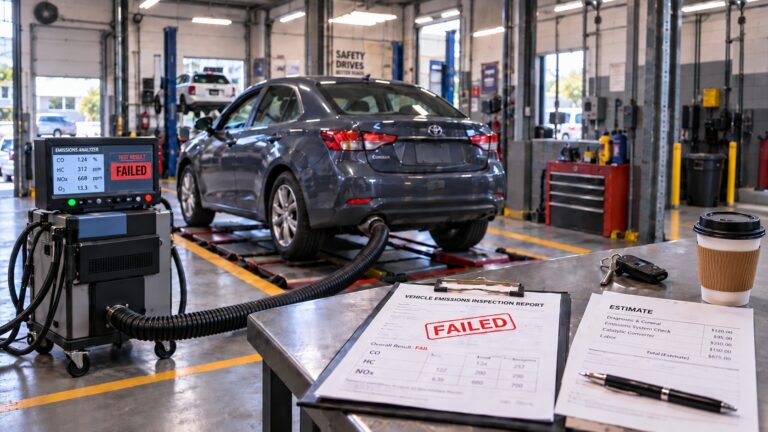
California generally requires a valid Smog Check certification when a vehicle subject to the program changes ownership.
That creates an obvious problem if the car does not run.
A non-running car may be physically unable to complete the test.
This is where sellers sometimes make a dangerous assumption.
Writing:
“SOLD AS IS”
or:
“BUYER RESPONSIBLE FOR SMOG”
does not automatically override California emissions requirements.
There are legitimate exemptions for certain vehicles and certain types of transfers, but you need to determine whether your specific transaction qualifies.
Also, Planned Nonoperation does not automatically eliminate a seller’s change-of-ownership smog responsibility in a private sale.
So if the car cannot complete a required Smog Check, be cautious about assuming a private transaction solves the problem.
Selling through the appropriate licensed commercial or dismantling channel may be much cleaner than trying to shift the responsibility to a private buyer with a handwritten agreement.
What If I Don’t Have the Title?
A lost title does not automatically mean the car cannot be sold.
But there is a major difference between:
“I legally own the car but lost the title.”
and:
“The title is still in someone else’s name.”
If you are the lawful owner but the California title is missing, DMV’s REG 227 process may provide a way to replace or transfer the title depending on the circumstances.
A legitimate buyer familiar with non-running vehicles may be willing to work through that process.
But if the ownership chain is unclear, the situation becomes much more complicated.
You may need:
- Prior-owner signatures
- Lien releases
- Additional DMV documents
- Estate documents
- Other evidence of ownership
Cash Cash Cars also has a separate guide for situations involving a car without a title.
Never assume that a buyer who says “we don’t need any paperwork” is doing you a favor.
A legitimate buyer should care about who owns the vehicle.
Who Pays the Most for a Non-Running Car?
The answer depends on what the buyer plans to do with it.
A Scrap-Oriented Buyer May Value
- Vehicle weight
- Recoverable metal
- Catalytic converter
- Basic parts
- Completeness
A Dismantler May Also Value
- Body panels
- Wheels
- Engine components
- Transmission
- Electronics
- Interior
- Headlights
- Modules
- Doors
- Axles
A Mechanic or Rebuilder May Value
The entire vehicle as a repairable asset.
Their rough calculation may look something like:
Potential resale value – repair cost – labor – risk – desired profit = current purchase value
That is why two buyers can look at the exact same dead car and offer very different amounts.
Make and Model Can Matter a Lot
Some non-running vehicles remain valuable because there is constant demand for their parts.
Popular trucks, commuter cars, SUVs, hybrids, and certain imported models may have stronger parts or rebuild demand than less common vehicles.
A relatively new car with a dead engine can sometimes be worth far more than an older vehicle that still looks reasonably complete.
That is also why selling purely by scrap weight can leave money on the table.
Get Several Quotes Before Deciding
For most non-running cars, comparing three to five offers is worth the effort.
A good mix might include:
- Two online buyers
- One licensed dismantler
- One local mechanic or rebuilder
- A private-market comparison if the vehicle is still worth repairing
Do not compare only the advertised offer.
Compare what you will actually receive after:
- Towing
- Extraction
- Access issues
- Missing wheels
- Storage balances
- Other deductions
The highest headline number is not always the highest final payout.
Is Towing Really Free?
Sometimes yes.
But “free towing” usually assumes the vehicle can be picked up under normal conditions.
A car sitting in an open driveway is easy.
A car may require additional equipment if it is:
- In an underground garage
- Behind a locked gate
- Stuck in park
- Missing keys
- Missing wheels
- Sitting on blocks
- Equipped with frozen brakes
- Located in a narrow alley
- Parked on a steep driveway
- Trapped behind another vehicle
Tell the buyer about these conditions before you accept the quote.
Ask directly:
“Based on the exact condition and location I’ve described, is pickup included without any additional towing or extraction charge?”
That question can save you from a surprise price reduction when the tow truck arrives.
Cars at Tow Yards or Mechanic Shops
Location can also affect where you should sell.
A vehicle sitting at a mechanic shop or tow yard may have:
- Storage fees
- Repair charges
- Towing charges
- A lien or possessory claim
- Restricted access
A buyer cannot necessarily just arrive and remove the vehicle because you gave permission.
Before arranging pickup, confirm:
- Whether the vehicle can legally be released
- Who is owed money
- What must be paid first
- Whether the buyer is willing to deal with that situation
If your non-running car is sitting somewhere other than your property, tell potential buyers immediately.
Red Flags When Choosing a Buyer
A strong offer is worthless if the transaction creates problems afterward.
Be cautious if someone:
- Cuts the agreed price dramatically at pickup even though the condition was disclosed accurately
- Asks you to sign a title with the buyer section blank
- Refuses to identify the purchasing business
- Does not want to verify ownership
- Will not provide a receipt or transaction record
- Wants the vehicle before payment is completed
- Tells you not to report the sale to DMV
- Cannot explain who is legally acquiring the vehicle
Never sign a blank ownership document.
That can create serious problems if the vehicle changes hands again without being properly transferred.
File the Notice of Transfer and Release of Liability Yourself
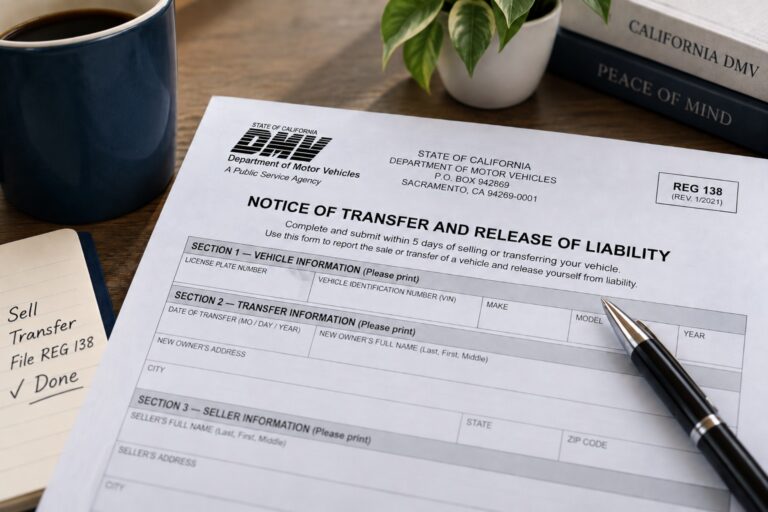
After selling a California vehicle, the seller should file the Notice of Transfer and Release of Liability, REG 138, within five calendar days.
Do this yourself.
Do not rely solely on a buyer saying:
“We handle everything with DMV.”
The NRL is important because it reports that you transferred the vehicle and helps protect you from qualifying liability associated with what happens after the reported sale date.
But it is also important to understand what the NRL does not do.
It does not itself complete the buyer’s title transfer.
It does not automatically remove your name from the DMV ownership record.
The buyer still needs to complete the transfer.
Keep:
- Your sale receipt
- Buyer information
- VIN
- Sale date
- Sale price
- NRL confirmation
together after the vehicle leaves.
So, Where Should I Sell My Non-Running Car?
Here is the simplest way to narrow it down.
| Your Situation | Best Place to Start |
|---|---|
| Clean body, failed engine | Mechanic, rebuilder, private buyer |
| Failed transmission but otherwise good car | Mechanic or online buyer |
| Need a quick sale | Online buyer |
| Want minimal hassle | Online buyer or licensed local buyer |
| Serious collision damage | Salvage buyer or licensed dismantler |
| Missing major parts | Licensed dismantler |
| Lost title but clear ownership | Buyer experienced with title replacement/transfer |
| Vehicle cannot satisfy required smog for a private sale | Licensed commercial or dismantling route may be more practical |
| Difficult towing access | Buyer that confirms pickup logistics upfront |
| Highest possible payout | Compare multiple buyer types |
| Car is essentially a shell | Dismantler or junkyard |
| Want a tax-deduction route instead of cash | Vehicle donation program |
A Better Start-to-Finish Process
If you’re trying to decide where to sell a non-running car in California, use this sequence.
1. Confirm Ownership
Find the title and check whether there is a lien.
If the title is missing, determine what documents you need before agreeing to a sale.
2. Identify the Actual Condition
Know whether the vehicle:
- Starts
- Cranks
- Rolls
- Steers
- Brakes
- Has all four wheels
- Has its original catalytic converter
- Has missing major parts
- Has structural damage
3. Choose Buyers Based on the Problem
Mechanical failure with good structure?
Start with mechanics, rebuilders, and online buyers.
Major collision?
Try salvage-oriented buyers and dismantlers.
Stripped shell?
Start with dismantlers.
4. Get Multiple Offers
Compare at least a few different buyer types.
5. Explain Pickup Conditions
Do not wait until the truck arrives to mention that the vehicle has no wheels or is trapped underground.
6. Verify the Buyer
Know who is purchasing the vehicle and whose information belongs on the transfer documents.
7. Get Paid and Keep Records
Do not release the vehicle without knowing the final payment amount and getting documentation of the sale.
8. File the NRL
Submit your Notice of Transfer and Release of Liability within the required period and save the confirmation.
The Best Buyer Is the One Who Sees the Most Value in Your Car
A non-running car is not automatically a junk car.
A clean vehicle with one major mechanical failure can still have significant rebuild value. A collision-damaged truck may be worth more for its drivetrain than its metal. A stripped shell may genuinely belong with a dismantler.
So instead of asking only:
“Who buys non-running cars?”
ask:
“Which type of buyer can make the most use of the car I actually have?”
That is the better way to decide where to sell.
If you’re in the Los Angeles area and want a straightforward option for selling a vehicle that will not run, you can start with the Sell a Non-Running Car page or review Cash for Cars in Los Angeles for local service information.
Compare buyers, disclose the condition accurately, verify who is taking ownership, and finish your own DMV reporting. That is how you turn a non-running vehicle into a completed sale rather than another problem.