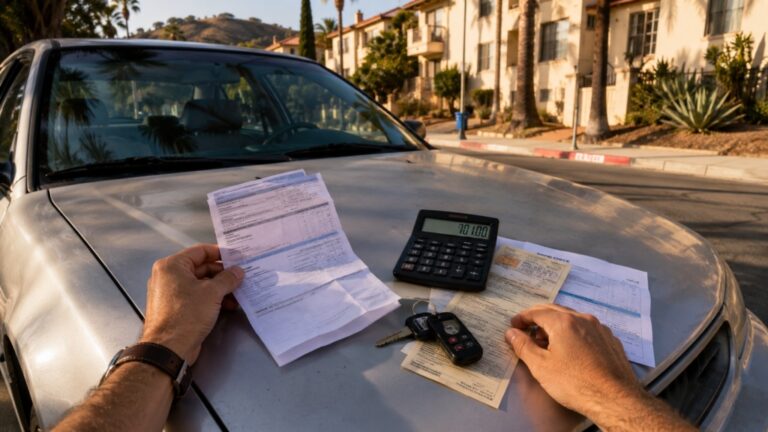
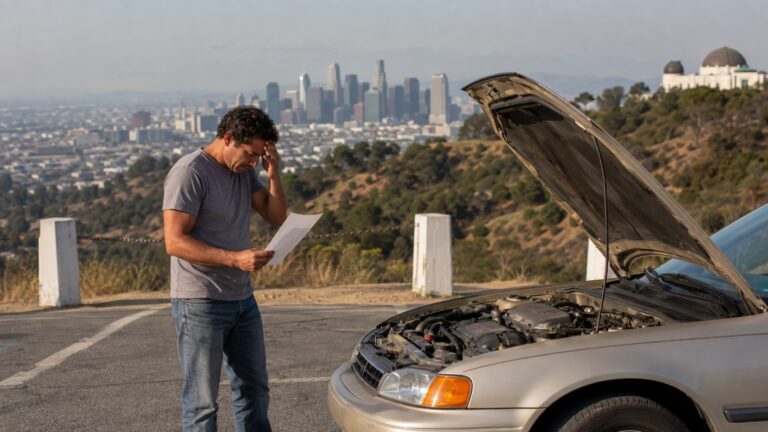
When Does an Old Car Become a Safety Problem Instead of Just an Expensive Car to Maintain?
An old car may still drive normally while rust, worn brakes, steering issues, bad tires, warning lights, or stalling create serious safety risks.
In This Article
A practical look at when an aging car stops being merely expensive or inconvenient and starts becoming a genuine safety concern.
A car can start every morning, drive smoothly through the neighborhood and still have problems serious enough to make you question whether it belongs on the road.
That is what makes this decision difficult. Owners usually notice repair costs first. A warning light comes on, something starts leaking, the steering develops some play, or another shop visit gets added to a growing stack of receipts. But eventually the question changes. It is no longer only about how much the next repair costs. It becomes a question of whether the vehicle can still be trusted when you suddenly need to brake, steer or avoid a collision.
A recent Reddit discussion brought that distinction into focus. The owner described a 2008 vehicle approaching 240,000 miles. It had rust, leaks, an airbag warning light and occasional stalling. The owner had spent years driving inexpensive older cars but was beginning to wonder whether this one had crossed the line into something that should be replaced with a safer vehicle.
For drivers in Los Angeles, that is worth discussing because our cars are constantly being asked to handle freeway speeds, sudden braking, busy intersections, lane changes, pedestrians and unpredictable traffic. Hence, a weakness that barely shows itself during an easy drive can become much more important during the one moment when several vehicle systems have to work together.
A Car Can Drive Fine and Still Be Unsafe
The first mistake is judging an old car entirely by how it feels during normal driving. If it starts, accelerates, stops and goes straight, it is easy to conclude that everything important must still be working.
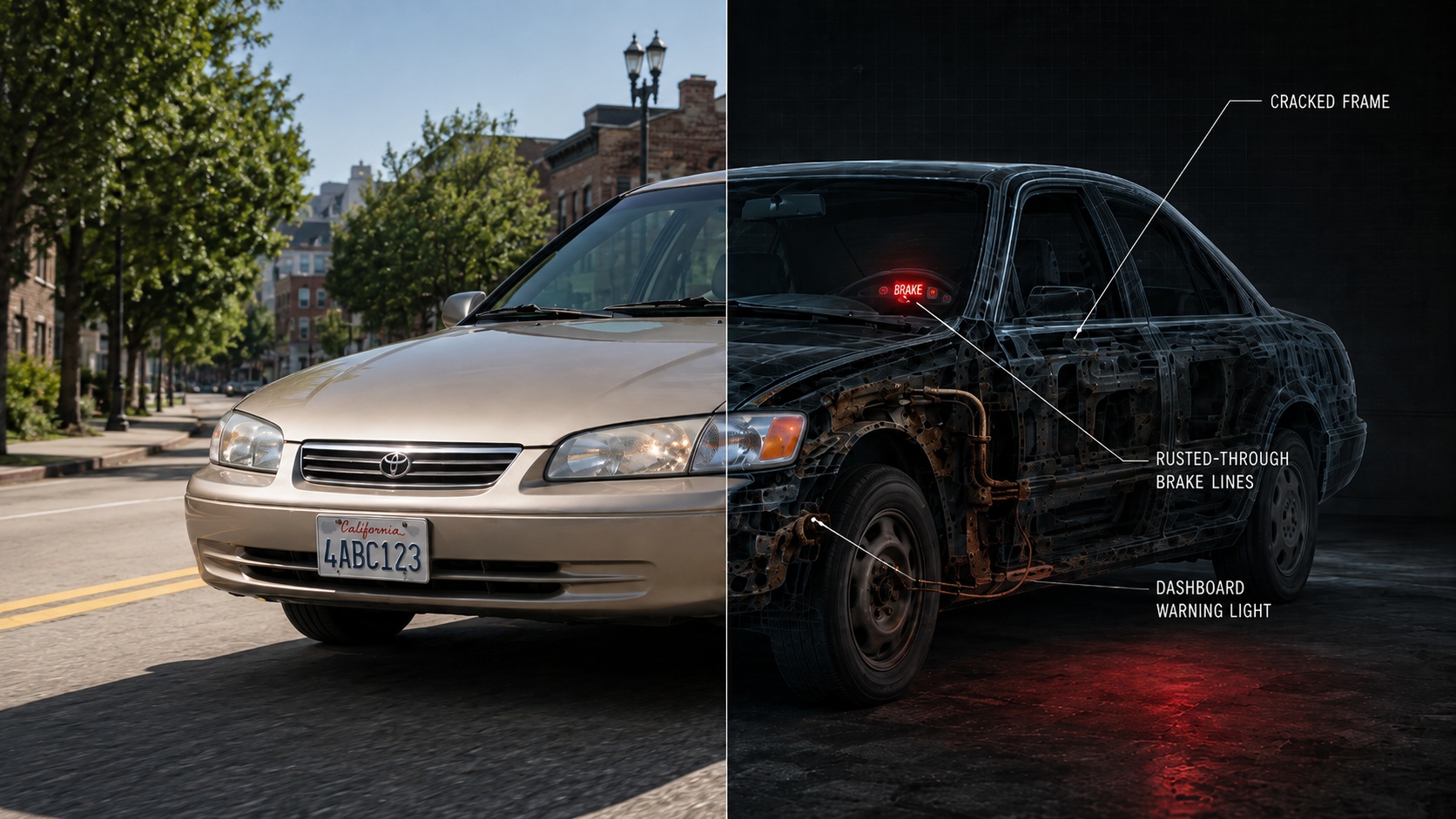
But some of the most serious failures do not behave that way. A badly weakened suspension mounting point can remain intact until the car hits the wrong pothole. An aging tire can keep holding air until its internal structure finally gives way at speed. A weakened brake line can survive hundreds of ordinary stops and fail when maximum pressure is suddenly demanded from it.
That’s why the condition of the systems underneath the car matters more than whether yesterday’s commute happened without incident.
Some Problems Mean Stop Driving
There is an important difference between a problem that needs repair and one that makes continued driving questionable.
- A brake pedal suddenly becoming soft, spongy or sinking farther than normal
- A strong smell of gasoline inside or around the vehicle
- Heavy smoke or steam coming from under the hood
- Violent steering-wheel shaking or severe front-end vibration
- A loud metallic pop, clunk or snap when turning
- Sudden loss of oil pressure
- Exhaust fumes entering the passenger compartment
- Repeated stalling while moving or severe hesitation when entering traffic
The common thread is that these problems can affect your ability to stop, steer, keep the vehicle under control, or remain safely inside it.
Imagine turning left across a busy Los Angeles intersection and discovering halfway through that the engine no longer responds properly. That’s why reliability itself can eventually become a safety feature.
Small Problems Can Become One Big Problem
This is where owners of older cars can get caught. Maybe the tires are getting old. Maybe the steering has some play. Maybe there is rust underneath. Maybe the car stalls occasionally. Maybe the airbag warning light has been glowing for six months.
Look at each problem separately and you can probably find a reason to postpone it. But emergencies do not necessarily involve one system at a time.
| PROBLEM THAT SEEMS MANAGEABLE | WHAT CAN HAPPEN DURING AN EMERGENCY |
|---|---|
| Loose or wandering steering | The car may respond poorly when you suddenly need to swerve. |
| Old or badly worn tires | Available grip may disappear when you brake or turn hard. |
| Weak structural or suspension mounting areas | Sudden loads from braking, potholes or evasive steering can expose the weakness. |
| Intermittent stalling | The engine may quit exactly when acceleration or vehicle control is most important. |
| Airbag or restraint-system fault | A safety system you were counting on may not operate normally during a collision. |
So the question should not always be, “Can I live with this problem?” Sometimes it needs to be, “How many of the systems I depend on in an emergency are already compromised?”
Rust Is Not All the Same
Rust creates another problem because an ugly rusty car and a structurally unsafe rusty car can look surprisingly similar from a distance.
Surface corrosion around non-structural body panels may affect appearance and resale value without necessarily making the car unsafe. Structural corrosion is different.
When substantial rust affects frame rails, subframes, suspension mounting areas, shock towers or other load-bearing parts, you are dealing with metal responsible for carrying forces through the vehicle.
Deep scaling, holes, severe flaking or visibly weakened mounting areas deserve professional attention. Think of it like ice on a lake. A little frost on the surface tells you very little about whether the structure underneath can still carry weight.
Airbag and ABS Lights Are Easy to Ignore for the Wrong Reason
Warning lights for safety systems create a strange psychological problem because the car may continue to feel completely normal.
An SRS or airbag warning means the restraint system has detected a fault. Depending on the vehicle and the specific problem, one or more airbags, sensors, pretensioners or related components may not function normally during a collision.
Likewise, an ABS warning can mean anti-lock functionality is unavailable or impaired even though ordinary braking remains.
Hence, drivers can get used to these lights precisely because the affected systems may only become important during an emergency.
Tires and Suspension Give Their Own Warnings
Old tires deserve more attention than tread depth alone. Cracking, sidewall bulges, unusual wear, vibration and significant age can all matter. A tire can still hold air while its condition has deteriorated considerably.
Suspension and steering components also tend to communicate before complete failure. Clunks, excessive looseness, unusual tire wear, sagging on one side, repeated bouncing, metal-on-metal noises, wandering steering or severe shaking after hitting a bump should not simply become part of the car’s personality.
Repeated Stalling Changes the Safety Equation
An occasional rough idle may begin as a mechanical annoyance. But unpredictable stalling or severe hesitation is different because you cannot choose when it happens.
A car that hesitates while pulling into traffic can leave you exposed in an intersection. A vehicle that stalls while moving may suddenly become substantially harder to steer or stop, depending on how its steering and braking assistance systems are designed.
So if an older car has begun stalling while moving or consistently hesitates when acceleration is needed, the question is no longer simply how irritating the problem has become.
The question is whether you can still trust the car to respond predictably in Los Angeles traffic.
Then Comes the Money Question
Discovering that a car needs safety repairs does not automatically mean selling it.
Sometimes repairing an older vehicle is still the smartest financial decision.
Before spending heavily, compare:
- What all currently known repairs will cost
- What the vehicle will realistically be worth once those repairs are completed
- What other major problems appear likely to come next
- How much safe and reliable driving time the repairs are likely to buy
If a repair genuinely returns the car to safe, dependable condition and gives you another substantial period of useful transportation, spending the money can make sense.
But if repairing the brakes and steering only gets you back to a car with major rust, a slipping transmission, engine trouble or another expensive failure waiting behind them, you may simply be buying time between repair bills.
Past repair bills should not make today’s decision either. If you spent $3,000 on the car last year, that money is already gone. The next repair still has to make sense based on the vehicle’s present condition.
“I Only Drive Locally” Is Not Much of a Safety Plan
Another common justification is that an unsafe car is acceptable because it only travels around the neighborhood.
But local driving involves intersections, pedestrians, children, parked vehicles, frequent braking and constant turns. A serious steering, tire, suspension or braking problem does not become harmless simply because the speed limit is lower.
Owners also fall into other traps:
- “It still drives fine.” Some components can feel normal until they fail.
- “I already spent too much to give up on it.” Previous spending does not make the next repair worthwhile.
- “I’ll fix it next month.” Safety-related deterioration can continue getting worse.
- “It passed an inspection before.” An inspection only reflects the vehicle’s condition at that time.
That’s why safety problems should be evaluated based on what the car is doing now, not on what it successfully did six months ago.
What to Do When the Car Crosses the Line
If you conclude that the vehicle is no longer safe, the first priority is simple: stop using it as ordinary transportation.
- Ground the car when necessary. If the brakes, steering, tires, suspension or structure are seriously compromised, do not squeeze in one more trip down the 405 or the 101 simply because it still starts.
- Decide whether another inspection will actually change your decision. If the overall condition is uncertain, professional inspection can help. If major known problems have already made repair uneconomical, another diagnostic bill may not change much.
- Compare the repair with what you will have afterwards. Consider the car’s post-repair value, expected reliability and what major expense may come next.
- If you sell it, disclose its condition and arrange proper transportation. Do not offer an obviously unsafe vehicle for an ordinary test drive or allow it to be driven away when it should be towed.
- Find out what it is worth as it sits. Cash Cash Cars buys running cars, old cars, damaged cars, clunkers, salvage vehicles, non-running cars and cars that need repairs. You can request an offer for the vehicle in its current condition.
If the vehicle is sold or transferred in California, make sure the paperwork is also completed correctly. Sellers should understand the title-transfer process, Notice of Transfer and Release of Liability requirements, and any applicable smog obligations.
Sources and Reddit Inspiration
- Reddit: First Car Purchase discussion that inspired this article
- California DMV: Notice of Transfer and Release of Liability
- California Bureau of Automotive Repair: Smog Check Requirements