Why a Low-Mileage Old Car Can Need Major Repairs | Cash Cash Cars
A 20-year-old car with only 55,000 miles may look unusually well preserved, but the odometer does not measure aging rubber, deteriorating fluids, hardened seals, short-trip wear, or years spent sitting. The vehicle’s history and first-year repair costs matter more than the mileage alone.
When the Odometer Looks Younger Than the Car
A 20-Year-Old Car With Low Mileage Can Still Have a Very Long Repair List
Mileage measures distance. It does not measure how long the rubber dried, the seals hardened, the fluids absorbed moisture, or the car sat without reaching operating temperature.
There was a post asking whether unusually low mileage could be a warning sign on a car that was more than 20 years old.
It is the kind of question that feels backwards because buyers are trained to fear high mileage and celebrate the opposite. A car with 180,000 miles looks tired before anyone even opens the hood. A car from the same year with 55,000 miles looks preserved, barely used, and somehow protected from the problems that normally come with age.
The lower number feels safer because it suggests the vehicle has spent less of its life being worn out.
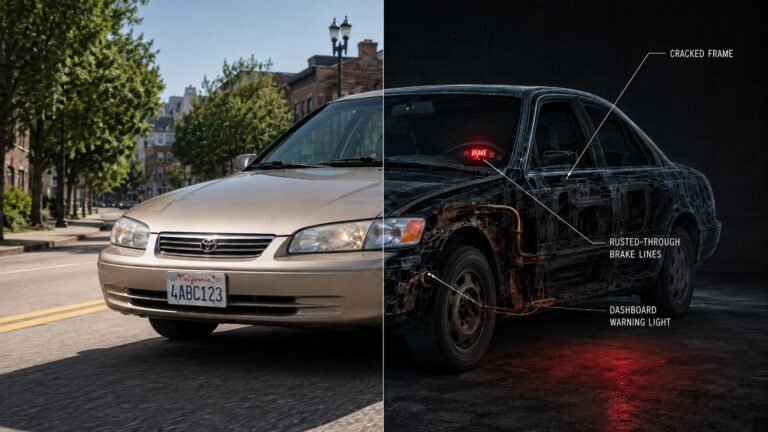
Mileage tells you how far the vehicle travelled, but it does not tell you how long the rubber has been drying, how many years the seals have been hardening, how long moisture has been sitting in the brake fluid, or how much time the car spent parked without reaching operating temperature.
A 20-year-old car with 50,000 miles is still a 20-year-old car, and the odometer only explains one part of what happened to it.
Low mileage is not bad. An unexplained history is.
Some low-mileage old cars really were kept in good garages, serviced by time instead of mileage, and driven often enough to keep the fluids circulating and the mechanical parts moving.
Those cars can be excellent finds because they combine limited use with careful ownership. The issue is that the number on the dashboard does not tell you whether you are looking at that kind of car or one that sat neglected for years.
The mileage has a believable story
- The owner can explain why it stayed low.
- Service records show maintenance by date.
- The car was driven regularly enough to stay exercised.
- Tire dates and inspection findings support the story.
The mileage has a mystery attached
- The seller cannot explain why it was barely driven.
- It sat after overheating or another unresolved problem.
- The service history is missing or inconsistent.
- It changed hands while spending years off the road.
Two vehicles can show the same mileage and have completely different histories. One may have been driven every weekend, warmed up properly, and maintained on schedule. The other may have spent five years in a driveway after the owner stopped using it because of a small mechanical problem.
Both can look clean. Both can start. Both can have an odometer that makes the buyer feel lucky. Their actual condition may be nowhere near the same.
A clean interior can make the mechanical story look better than it is
The steering wheel is not worn. The seats still look firm. The pedals show very little use. The paint may look unusually good for the age.
Those things are genuinely valuable, but they can also make buyers assume the mechanical condition must match the cosmetic condition.
It cannot tell you whether the brake fluid has absorbed moisture for 15 years, whether the tires have deep tread only because they are far beyond a safe age, or whether rubber components have hardened while the car looked pristine.
Rubber, fluids, seals, and tires do not wait for the odometer
These can become brittle, weak, or hardened even when they have barely been used.
Time introduces moisture, contamination, chemical breakdown, and loss of protective properties.
A tire can look almost unused and still be unsafe because of age, cracking, or long periods of sitting.
Drying, corrosion, and a lack of regular circulation can create repairs without adding miles.
A low-mileage owner may look at the maintenance schedule and see that the vehicle has not reached the mileage for coolant service, transmission service, or brake-fluid replacement. If the car travelled only a few thousand miles in several years, they may assume almost nothing is due.
Oil collects moisture and contaminants. Brake fluid absorbs water. Coolant loses protective properties. Fuel degrades. Parts that depend on circulation can suffer simply because the car was not used enough.
Three thousand short-trip miles can be harder than eight thousand highway miles
The way those few miles were accumulated matters too. Some low-mileage cars were driven regularly, but only for short trips.
That sounds easy on the vehicle until you consider how many cold starts happened and how rarely the engine stayed warm for long. Moisture may remain in the exhaust and oil. The battery may never fully recharge. The engine may go through repeated cold cycles without enough longer driving to balance them out.
A car driven 3,000 miles a year in ten-minute trips can have a harder mechanical life than one driven 8,000 miles a year mostly on the highway.
Sitting still creates its own repair list
Brake rotors rust. Calipers seize. Batteries repeatedly discharge. Tires develop flat spots. Rodents damage wiring and insulation. Fuel systems gum up. Air-conditioning seals dry out. Moisture finds its way into electrical connectors or the interior.
The car may still start and move around the block, but that does not mean it is ready to return to daily use without a repair list.
A low-mileage car can idle, move, and look convincing while several age-related repairs are waiting just beyond the test drive.
The first-year cost matters more than the purchase price
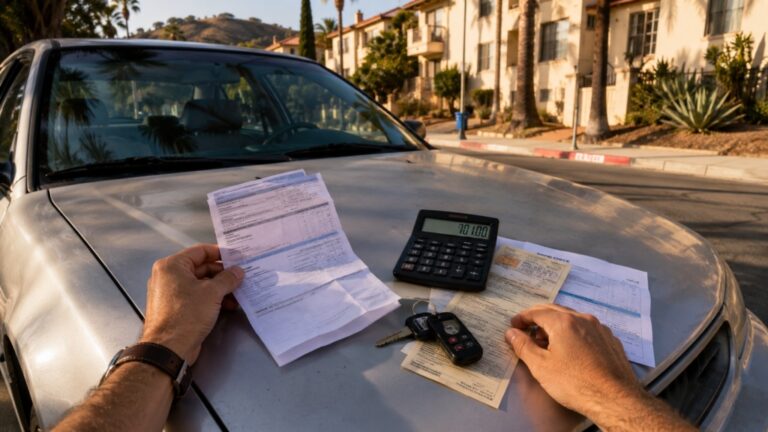
Imagine one 20-year-old car costs $6,000 with 150,000 miles and another costs $9,000 with 60,000 miles. The second one looks like the obvious choice because it appears to have far more life left in it.
But if it immediately needs tires, belts, hoses, fluids, brakes, suspension work, a battery, and repairs caused by storage, the true cost can quickly pass the higher-mileage car.
Higher mileage, but possibly maintained continuously and already sorted for daily use.
Lower mileage, but the first-year repair list may erase the apparent advantage.
The same logic applies to the owner deciding whether to keep one of these vehicles. People often feel obligated to continue repairing an old low-mileage car because the odometer still looks young.
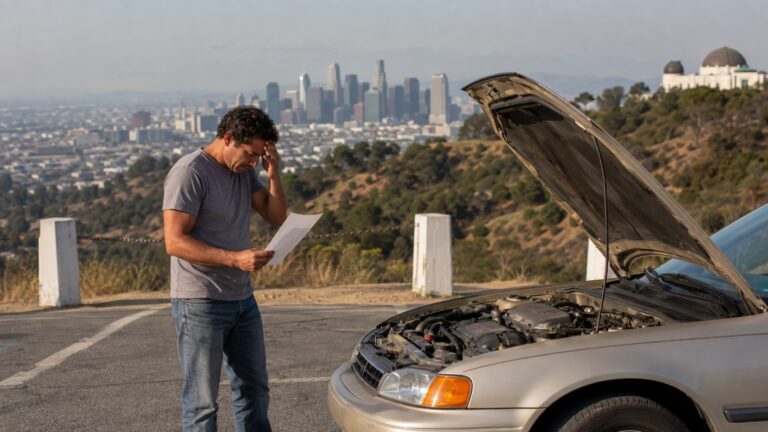
Once several age-related problems start arriving together, the decision is no longer about how many miles are left. It becomes a question of whether the owner wants to keep paying to reverse years of deterioration before the car can be relied on again.
Low mileage should not become a reason to keep overspending
Sometimes the work makes sense. A desirable car with a documented history may be worth preserving. A vehicle with personal importance may be worth more to the owner than its market value.
Sometimes, though, the low odometer becomes the reason someone keeps spending on a car that continues to need one repair after another, even though the actual condition no longer supports that optimism.
If the vehicle has been sitting, has developed several age-related problems, or no longer makes financial sense to return to regular use, a buyer that takes old and unwanted cars as-is can turn it into something useful without requiring every repair to be completed first.
Frequently asked questions
Is low mileage always a good sign on an older car?
No. Low mileage can be positive, but it does not explain how the car was stored, how often it was driven, or whether age-based maintenance was completed.
What parts age even when a car is not driven much?
Belts, hoses, seals, tires, fluids, suspension bushings, engine mounts, batteries, brake components, and electrical connections can all deteriorate with time.
Why can short trips be hard on a low-mileage car?
Repeated cold starts and short trips may prevent the engine, oil, exhaust, and battery from reaching the conditions needed to burn off moisture and recharge fully.
What matters more than the purchase price on an old low-mileage car?
The first-year cost matters more. Buyers should include tires, fluids, belts, hoses, brakes, suspension work, battery replacement, and storage-related repairs.
If the odometer looks young but the repair list does not, compare the as-is value
Low mileage may still help the offer, but it should not force you to complete every age-related repair before deciding what comes next.
Vehicle offers depend on ownership documents, actual condition, location, title status, and other transaction details. This article provides general information and is not a substitute for a professional pre-purchase or mechanical inspection.