When Is a Head Gasket Repair Not Worth It?
A head gasket repair can cost thousands, but that does not always mean an old car is worth fixing. Compare the repair cost, realistic resale value, and current as-is offer before deciding whether to repair the car or let it go.
When the Repair Stops Buying You More Car
When a Head Gasket Turns an Old Car Into Something You Just Need to Offload
The repair can be done. The harder question is whether spending thousands on it makes sense when the owner has already decided to replace the car anyway.
There was a post from the owner of a 2003 Thunderbird convertible who had reached the point where the question was no longer really how to repair the car.
It had been overheating repeatedly, the cooling system had already caused trouble and towing bills, and eventually the mechanic traced the problem to a leaking head gasket.
The repair was expensive enough that the mechanic apparently did not think it made much sense on a car this old. The owner had already decided to buy another vehicle. What remained was the awkward part: what do you actually do with the Thunderbird now?
The decision changes once the owner is already done with the car
If the owner planned to keep the Thunderbird for another five years, spending real money on the engine might still be reasonable. They know the history of the car, they may like driving it, and a successful repair could give them more useful life without taking on another vehicle payment.
But if the replacement car is already happening anyway, the head-gasket repair is no longer buying transportation for the current owner.
That is where people often get trapped. They know the car is difficult to sell in its current condition, so they assume the only way to get rid of it properly is to repair it first.
The increase in selling price may be smaller than the money spent getting the car back to normal.
Repeated overheating creates uncertainty even after the head gasket is fixed
A repaired 2003 Thunderbird is still a 2003 Thunderbird that has already had repeated overheating problems.
A private buyer is not necessarily going to reimburse the seller dollar for dollar for the head-gasket repair. They may still ask whether the cylinder heads were damaged, whether coolant entered the oil, how hot the engine got, whether it was driven while overheating, and what else has already been replaced.
Even after a repair, those questions do not disappear completely.
The car still has value. The likely buyer has changed.
Someone shopping for inexpensive daily transportation generally does not want to begin with a known head-gasket problem. They want a test drive, confidence that the car will make it home, and no major engine diagnosis waiting on day one.
That means the Thunderbird is no longer competing in the same market as a normal running used car. It does not mean it has no value.
Someone who can do the repair personally may value the car very differently.
A buyer who specifically wants this Thunderbird generation may accept the mechanical work.
Body panels, interior, convertible components, wheels, and usable parts retain value.
The whole vehicle can still have a market in its current condition.
Get the three real numbers before authorizing a major repair
The practical question is how much value is still there without another repair, and that number should be found before spending more money.
Use the full realistic estimate, including the possibility of additional findings once the engine is opened.
Estimate what the car will actually sell for after the repair, not an ideal asking price.
Find out what someone will pay today with the diagnosed head-gasket problem disclosed.
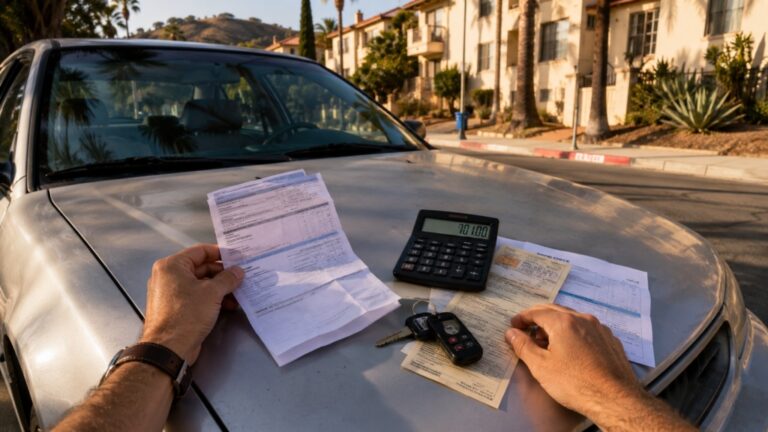
Suppose the head-gasket job costs $3,500. If the Thunderbird is worth $6,500 after repair and somebody is willing to pay $3,000 for it today as-is, fixing it primarily for resale may accomplish very little.
The owner spends $3,500 to gain perhaps $3,500 in selling value, while accepting the risk that the mechanic finds another problem once the engine is opened up.
If the car is worth $8,000 repaired and only $1,500 as-is, the repair may look much more attractive.
The point is not that old cars should never be fixed before sale. It is that the current as-is number and the realistic post-repair number need to exist before the repair decision makes any sense.
The owner is also paying in hassle, not just dollars
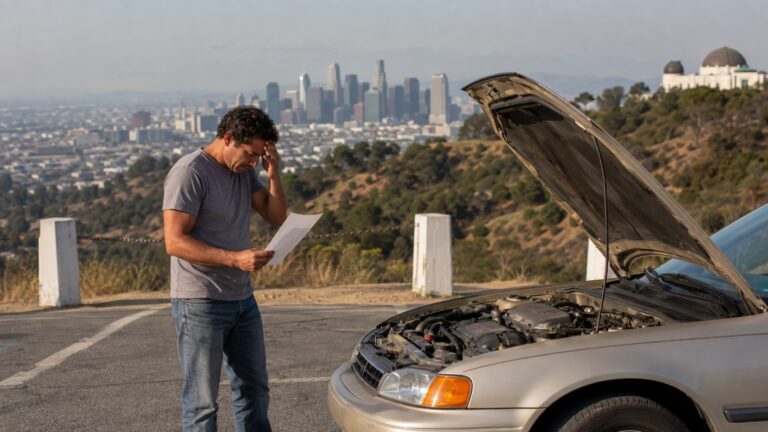
The owner has already been dealing with overheating, towing, cooling-system failures, and the uncertainty of whether the car will make the next trip.
When someone has already decided to replace the vehicle, that hassle becomes part of the reason they want the old one gone.
Trying to squeeze the maximum theoretical value out of it can extend the problem for weeks: repair it, wait for parts, pick it up, make sure it no longer overheats, clean it, advertise it, answer messages, explain the head-gasket history, arrange test drives, and negotiate with people who know the seller has already bought another vehicle.
As-is disclosure can make the sale simpler, not harder
There is no need to soften the diagnosis or pretend the overheating is something minor. The owner can say the car has a diagnosed leaking head gasket, explain what the mechanic found, provide whatever repair history they have, and let buyers value it accordingly.
That will reduce the number of interested buyers, but it also removes the wrong buyers. Someone looking for a cheap commuter probably should walk away. Someone who knows how to repair the engine or who buys vehicles in this condition may still see plenty of value.
Sometimes the clean exit is worth more than the theoretical maximum
For an owner who has already reached the point where they simply want the Thunderbird out of the driveway, a company that buys vehicles needing major repairs can provide an as-is number without requiring the head gasket to be fixed first.
That does not mean taking the first offer or assuming the car has no other market. It means finding out what the clean exit is worth before spending thousands of dollars trying to turn the car back into something the owner has already decided not to keep.
Frequently asked questions
Should I repair a head gasket before selling an old car?
Not automatically. Compare the current as-is value with the realistic value after repair and subtract the full repair cost before deciding.
Does a car with a leaking head gasket still have value?
Yes. The buyer pool changes, but mechanics, project-car buyers, dismantlers, and as-is buyers may still value the body, interior, parts, and repairable vehicle.
Why does repeated overheating make buyers cautious?
Buyers may worry that overheating caused additional engine or cooling-system damage beyond the diagnosed head gasket problem.
What numbers should I know before authorizing the repair?
Know the full repair estimate, the realistic post-repair selling value, and the best current as-is offer. Those three numbers make the decision much clearer.
Before spending thousands to make the car sellable, find out what it is already worth
An as-is number gives you something concrete to compare with the repair estimate, the likely resale price, and the hassle of keeping the project alive.
Vehicle offers depend on ownership documents, actual condition, location, title status, mechanical condition, and other transaction details. This article provides general information and is not a substitute for a professional diagnosis.