How Engine Problems Can Cut a Car’s Value Overnight
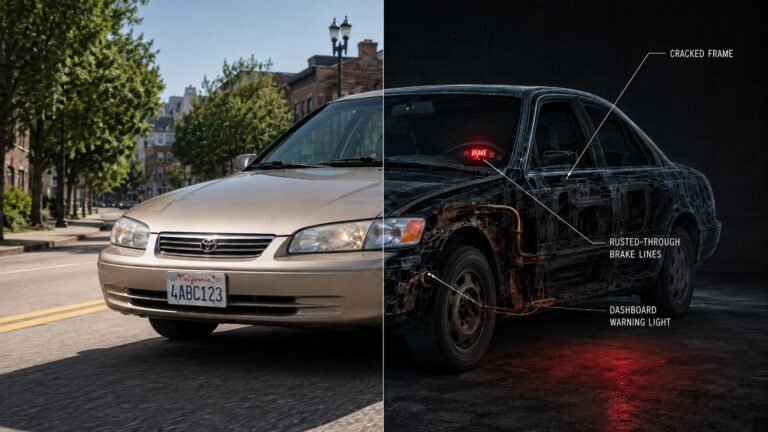
A major engine problem can make normal used-car pricing almost useless overnight. The body, wheels, tires, and interior may still be valuable, but buyers will discount the car heavily until the repair risk and possible engine damage are understood.
When the Unknown Becomes the Most Expensive Part
Your Car Was Worth $4,000 Yesterday. Then the Engine Problem Happened. What Is It Worth Now?
The body, wheels, tires, interior, and most of the vehicle did not disappear overnight. What changed is the amount of uncertainty a buyer now has to price into the car.
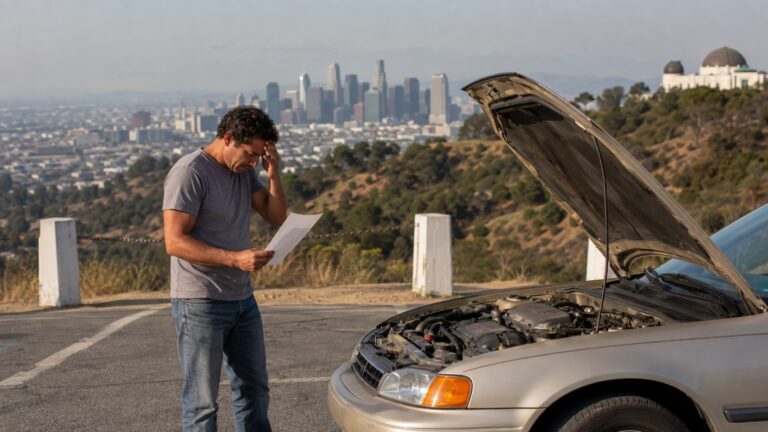
There was a post from the owner of a 2013 BMW X5 35i who suddenly found themselves trying to put a price on a vehicle after the kind of mechanical failure that makes normal used-car values almost useless.
The X5 had about 158,000 miles and was described as clean inside and out apart from some minor rock chips. It had new tires and OEM 20-inch wheels that the owner believed still had meaningful value.
Then the serpentine belt shredded and became wrapped around the crank pulley. The shop would not even start the engine because doing so could risk making the damage worse.
Normal used-car values stop answering the real question
Before the belt failure, the owner could look at comparable X5s, check normal private-party values, and come up with a reasonable selling range.
After the failure, those numbers still tell you something about what the BMW might be worth in normal running condition, but they no longer tell you what someone should pay for this particular BMW today.
The buyer still needs to know what it may cost to get from today's condition back to that running condition.
The buyer is pricing the unknown
If the shop knew for a fact that the belt problem could be repaired for $800 and that the engine had suffered no internal damage, the pricing would be relatively easy.
Take the normal running value, subtract the repair, and leave the buyer enough margin for the inconvenience and risk.
The problem is that the engine has not been started precisely because there is concern that starting it could make matters worse.
Until that uncertainty is removed, every serious offer has to leave room for the expensive outcome.
The wheels, tires, body, and interior still matter
The owner is right to think about the parts that are obviously still valuable. The wheels alone may be worth a meaningful amount. The tires are new. The body is good. The interior is good.
There is a lot of BMW left even if the engine turns out to need serious work.
The body, interior, electronics, drivetrain pieces, wheels, and modules all contribute to value.
Parting out requires storage, tools, time, advertising, buyers, shipping, and eventually a plan for what remains.
Someone willing to spend months dismantling the BMW may recover much more money than someone who wants the complete vehicle gone this week. The buyer of the whole car has to make room in the offer for all that work.
The buyer type changes the value
Lower labor costs can make a risky repair more attractive.
Parts value can matter more than roadworthiness.
A specialist can price the vehicle with a different margin structure.
Someone looking for transportation usually does not want unresolved engine risk.
That is also why generic valuation guides become less useful after a major mechanical event. Actual offers from people willing to take the vehicle in its current condition become a better measure of value.
Removing uncertainty can be worth paying for
There may be a strong case for paying for more diagnosis. If a few hundred dollars proves that the engine itself is fine and the failure is limited to repairable external components, that information could add much more than a few hundred dollars to the car's selling value.
Spending a little to learn what is actually wrong can make sense even when fully repairing the BMW does not.
Compare four numbers before deciding what to do
What will someone pay today with the engine problem unresolved?
What will it cost to reduce the uncertainty?
What does the problem cost if the outcome is minor, and what if it is major?
What would the X5 actually sell for once repaired?
Suppose the BMW would sell for $5,000 in normal working condition. Someone offers $2,500 for it today with the engine problem unresolved. If a mechanic can confidently repair it for $1,000, there may be a clear financial reason to fix it first.
If the owner is looking at several thousand dollars of uncertain engine work to recover only a few thousand dollars of additional selling value, the argument becomes much weaker.
The lowest as-is offer is not automatically the market
Different buyers can value the same problem vehicle very differently. A generic scrapyard may care mostly about weight and easy-to-remove parts. Someone familiar with BMWs may value the complete drivetrain, interior, wheels, and modules more highly.
The real decision is money, time, and risk
The BMW can be diagnosed further. It can be repaired. It can be sold privately as a project. It can be dismantled. Or it can be sold complete to somebody willing to take on the mechanical uncertainty.
Every path produces a different combination of money, time, and risk.
For someone who wants a real number without first paying to turn the BMW back into a normal retail vehicle, a buyer that handles cars needing major mechanical repairs can value the vehicle in the condition it is in now.
Frequently asked questions
Why does a car lose value so quickly after an engine problem?
Because buyers must price the possibility of a much more expensive repair until the exact damage is known.
Does a car with an unresolved engine problem still have value?
Yes. Wheels, tires, body panels, interior, electronics, drivetrain components, and other usable parts can still give the vehicle meaningful value.
Is further diagnosis worth paying for before selling?
Sometimes. If a relatively inexpensive diagnosis can remove major uncertainty and prove the engine is healthy, it may increase the car's market value by more than the diagnostic cost.
What should I compare before deciding whether to repair or sell?
Compare the current as-is offer, diagnosis cost, likely repair range, and realistic running value.
Before guessing what the BMW is worth, get a real number for it in today's condition
An as-is offer gives you something concrete to compare with diagnosis, repair cost, and the value the vehicle might recover if the engine is healthy.
Vehicle offers depend on ownership documents, actual condition, location, title status, mechanical condition, and other transaction details. This article provides general information and is not a substitute for a professional diagnosis.