Dealerships Aren’t Reading Your Mind, They’re Reading A Database
Someone got a CarMax offer on their 2018 Honda Odyssey that came in way lower than they expected. Later that day, they walked into a dealership across the street to check trade-in numbers on a different vehicle. The CarMax offer was still folded up in their pocket. They never mentioned it.
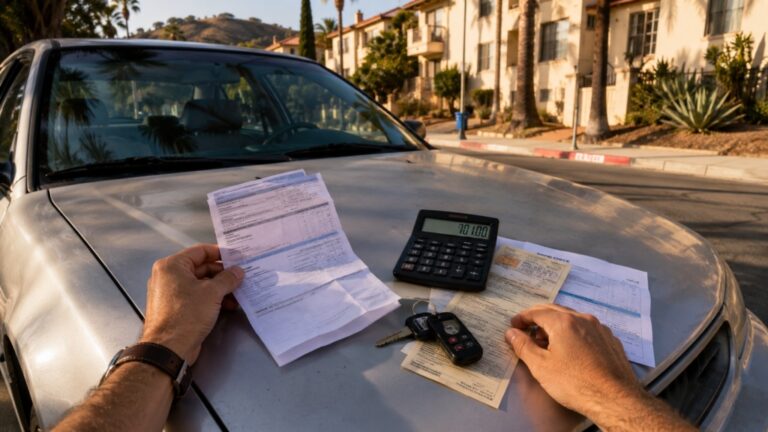
The salesman came back a few minutes later and said he would “match CarMax’s offer,” then wrote down the exact number on paper, with CarMax’s letterhead visible on the printout.
The reaction in the comments was exactly what you would expect. It was a mix of “that’s illegal” and “that’s just how it works now.” Neither one was quite right.
Here’s what’s actually going on, and it’s less of a conspiracy than people assume, but it is genuinely worth knowing about before your next trade-in.
Vehicle valuation data moves between companies more than people realize
Nobody handed this dealership a secret file with your name on it. What actually happened is more mundane and, in its own way, more relevant to know.
- VIN-based valuation databases exist specifically so dealers, auction houses, and online buyers can pull recent offer history on a given vehicle.
- CarMax, being one of the largest used car buyers in the country, is a major contributor to that shared data pool, whether by design or through the auction pipeline their inventory eventually touches.
- A dealer pulling up an offer connected with your VIN is not necessarily accessing your phone or reading your messages. They may be using a vehicle appraisal system built for this purpose.
This isn’t the same thing as your personal information being shared
It is worth separating two things that get conflated in threads like this.
- Your name, contact details, and the fact that you personally requested a CarMax quote were not shared with that dealership.
- What likely got shared, or was independently pulled, is valuation data tied to the vehicle’s VIN, which exists somewhat independently of you as the requester.
- That distinction matters because it changes the actual privacy conversation from “they’re tracking me” to “used vehicle valuations are less private than people assume, VIN-first.”
“We’ll match it” is a tell, not a favor
This is the part actually worth acting on. A dealer volunteering to match an offer you never mentioned isn’t being generous. It’s showing you the floor.
- If they can match it instantly without negotiation, that number was never their best offer to begin with. It was a number they already knew they could hit.
- The real information here is that CarMax’s number wasn’t special. It was simply the first number on the table, and the dealership had room to meet it without blinking.
- It is worth pushing past the match. If they matched instantly, there’s usually more room above that number, not just at it.
What the exact match actually reveals is that nothing about your privacy was uniquely violated here, but something more useful than that was revealed. The number a dealer volunteers to match may not be the end of the negotiation. It’s just the number they knew they could hit without effort. Treat an instant match as a starting point for more negotiation, not a finish line, and know that VIN-based valuation data travels between buyers more freely than people assume.