Why Does a Car Lose So Much Value After an Accident?
A serious accident can turn a $9,000 used car into a much smaller as-is offer even when the engine, interior, and most of the body are still there. Repair costs, hidden structural damage, accident history, and uncertainty all change what buyers are willing to pay.
When the Market Stops Buying Transportation
Why a $9,000 Car Can Become a $1,500 Car After One Accident
The engine, seats, doors, and most of the body may still be there. What disappeared is the certainty that a buyer can simply get in, drive away, and use the car normally.
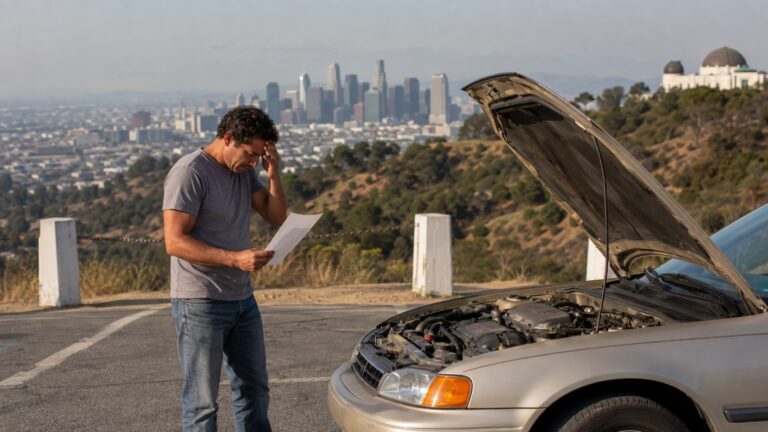
There was a post from a 16-year-old who had crashed his dad's 2016 Chrysler 300 S into a pole and was trying to understand how a vehicle they had previously hoped to sell for around $9,000 could suddenly be getting offers closer to $1,500.
The Chrysler had about 137,000 miles. The airbags had not deployed, and it could apparently still move and turn in one direction, but the impact had bent the area around the wheel badly enough that trying to turn the other way caused grinding and prevented normal steering.
The car still moves but it is not the same market anymore
The fact that the car can still move does not change the basic problem. A vehicle that can roll forward but cannot steer normally because a wheel is contacting damaged structure is not functioning as ordinary transportation.
The next buyer has to assume towing, diagnosis, and repair before they can even use the vehicle in the way the old $9,000 price assumed.
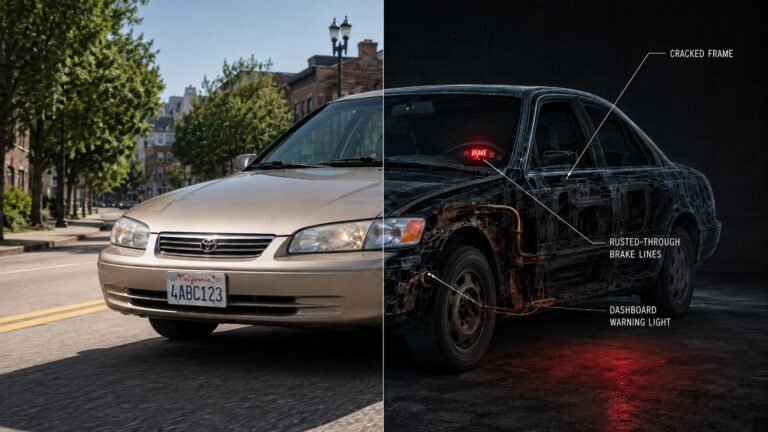
Suspension mounting points, steering components, subframe pieces, control arms, wheel assemblies, and unibody sections can all be damaged without an airbag firing.
The wheel problem matters because it suggests the damage may go beyond cosmetic panels. A dented bumper or fender is easy for buyers to understand. A wheel that cannot travel through its normal steering range raises questions about suspension geometry and structural mounting points.
Uncertainty is what makes damaged-car offers look so severe
The buyer has to account for what they can see and what they may discover after dismantling begins.
A bent bracket, inner structure, or mounting point may only become obvious after parts come off.
The problem may be a replaceable component or something requiring structural correction.
Body work, paint, alignment, towing, measurement, and parts all have to fit inside the buyer's economics.
Significant accident history can follow the vehicle even after repairs are completed properly.
The old $9,000 value belonged to the car before the crash
The market does not value the wrecked Chrysler by starting at $9,000 and subtracting only the parts that visibly broke.
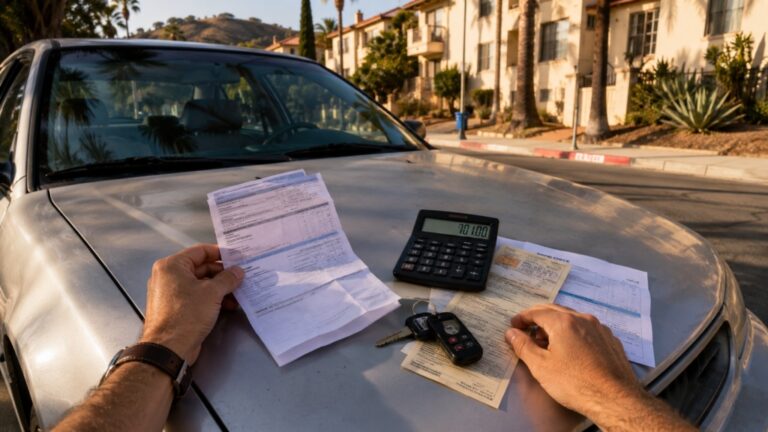
The buyer has to subtract repair labor, replacement components, paint and body work, towing, alignment, structural measurement and correction, storage, risk, and the possibility that the repaired car will still be worth less because of its accident history.
Suppose someone spends $4,000 repairing the Chrysler properly. That does not guarantee the car returns to exactly the same market value it had before the collision.
$1,500 is not automatically the right number either
Different buyers have different economics. A general scrapyard may value the Chrysler one way. A body shop with inexpensive labor and access to used parts may value it much higher.
A dismantler may care about the engine, transmission, doors, wheels, seats, electronics, and other components. Someone who specializes in rebuilding damaged Chrysler vehicles may see a repair opportunity that another buyer does not.
Getting several as-is offers makes sense before deciding what the wreck is actually worth.
Repairing it just to recover the old value can be a trap
The repair needs to be compared with what the vehicle will realistically be worth afterward, not with what everyone remembers it being worth before the crash.
This is what the damaged car can bring today without another repair bill.
This is the amount the owner has to risk to move the car back toward normal use.
If that number is realistic, the repair may create enough additional value to make sense.
If repair estimates reach $6,000 or $7,000 and the finished car will still only be worth something near its previous $9,000 price, the owner is accepting a lot of risk to recover relatively little additional value.
Structural and collision work can involve multiple shops, parts delays, paint matching, alignment, additional discoveries, and insurance or title complications depending on the circumstances.
Parting it out can look better on paper than it feels in real life
The Chrysler may contain several thousand dollars of sellable parts, but extracting that value requires time, tools, storage space, and separate buyers.
The useful comparison is a whole-car offer against a real repair estimate
For someone who wants the damaged Chrysler gone without first coordinating body and structural repairs, a buyer that takes wrecked cars as-is can provide a real whole-car number based on its current condition.
Comparing that number with a proper repair estimate is much more useful than comparing everything with the $9,000 figure from before the pole.
The difference is that before the crash, the buyer was paying for transportation. After the crash, the buyer is paying for a problem they have to solve, and the cost and uncertainty of solving that problem are exactly what turn a $9,000 used car into a much smaller as-is offer.
Frequently asked questions
Why can a car lose so much value after one accident?
After a serious accident, buyers have to account for visible repairs, hidden structural damage, towing, labor, alignment, paint, risk, and lower post-repair resale value.
Does the fact that the car still moves mean the damage is minor?
No. A vehicle may still move while having suspension, steering, subframe, mounting-point, or unibody damage that prevents normal use.
Should I repair a damaged car just to recover its old value?
Not automatically. Compare the current as-is value, full repair cost, and realistic post-repair value before deciding.
Should I accept the first damaged-car offer I get?
No. Different buyers value damaged vehicles differently, so comparing several as-is offers can reveal a wider range.
Before repairing a wreck to chase its old value, find out what the whole car is worth today
A real as-is offer gives you something useful to compare with the repair estimate, the post-repair value, and the time involved in managing collision work.
Vehicle offers depend on ownership documents, actual condition, location, title status, accident history, and other transaction details. This article provides general information and is not a substitute for a professional collision or structural inspection.