Can I Sell My Non-Running Car? A Complete Guide
Learn how to sell a non-running car in California, including smog rules, title paperwork, towing, pricing, and DMV requirements.
A car does not have to run to have value, and it does not have to be repaired before you can find someone willing to buy it.
So, if you are asking “Can I sell my non-running car in California?”, the short answer is yes. You can sell a vehicle with a blown engine, failed transmission, electrical problems, accident damage, or another issue that leaves it unable to drive.
The more important question is how you sell it.
California’s title, smog, ownership, and release-of-liability requirements do not simply disappear because a vehicle will not start. And because a dead car normally has to be towed away, you also need to think about access, pickup, payment, and who is actually taking possession of it.
Here is how to handle it.
Why Do Cars Become Non-Running?
Sometimes the answer is obvious. Other times, a car becomes a non-runner after several smaller problems pile up.
Engine failure is one of the biggest reasons. Severe overheating, oil starvation, internal damage, or a failed timing component can turn an otherwise usable vehicle into a repair project overnight.
Transmission failure can do much the same thing. The engine may still start perfectly, but if the transmission can no longer send power to the wheels, the car is not going anywhere.
Electrical failures are another increasingly common problem. Modern cars rely on computers, sensors, modules, and extensive wiring. A bad starter or alternator might be relatively straightforward. A damaged wiring harness or electronic control module can become an expensive diagnostic rabbit hole.
Then there are cars that simply sit too long. Fuel deteriorates. Batteries die. Tires lose air and deteriorate. Brakes can seize. Rodents can damage wiring. Hence, a vehicle that ran when it was parked may be considerably harder to revive a year or two later.
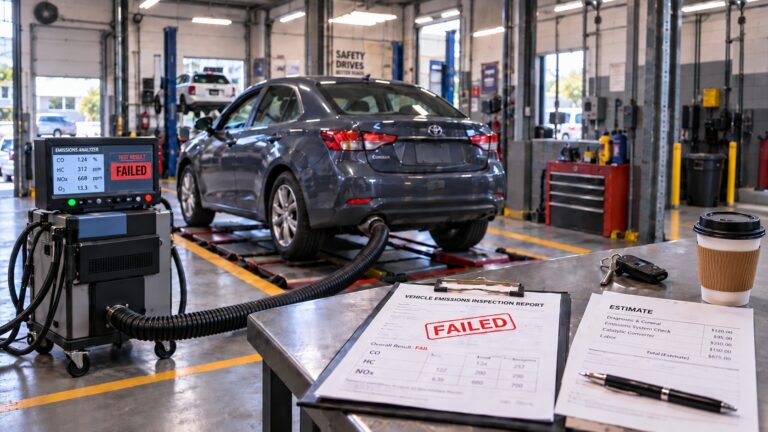
California adds another possibility: emissions problems. A car with emissions-related faults may fail its required Smog Check, and repairs involving emissions systems or compliant replacement parts can become expensive.
That’s why a non-running car is not necessarily a worthless car. It may still have a usable engine or transmission, valuable body and interior components, an original catalytic converter, recyclable metals, or value to someone looking for a project vehicle.
Can You Sell a Non-Running Car in California?
Yes. You can sell a non-running car in California without repairing the mechanical problem first.
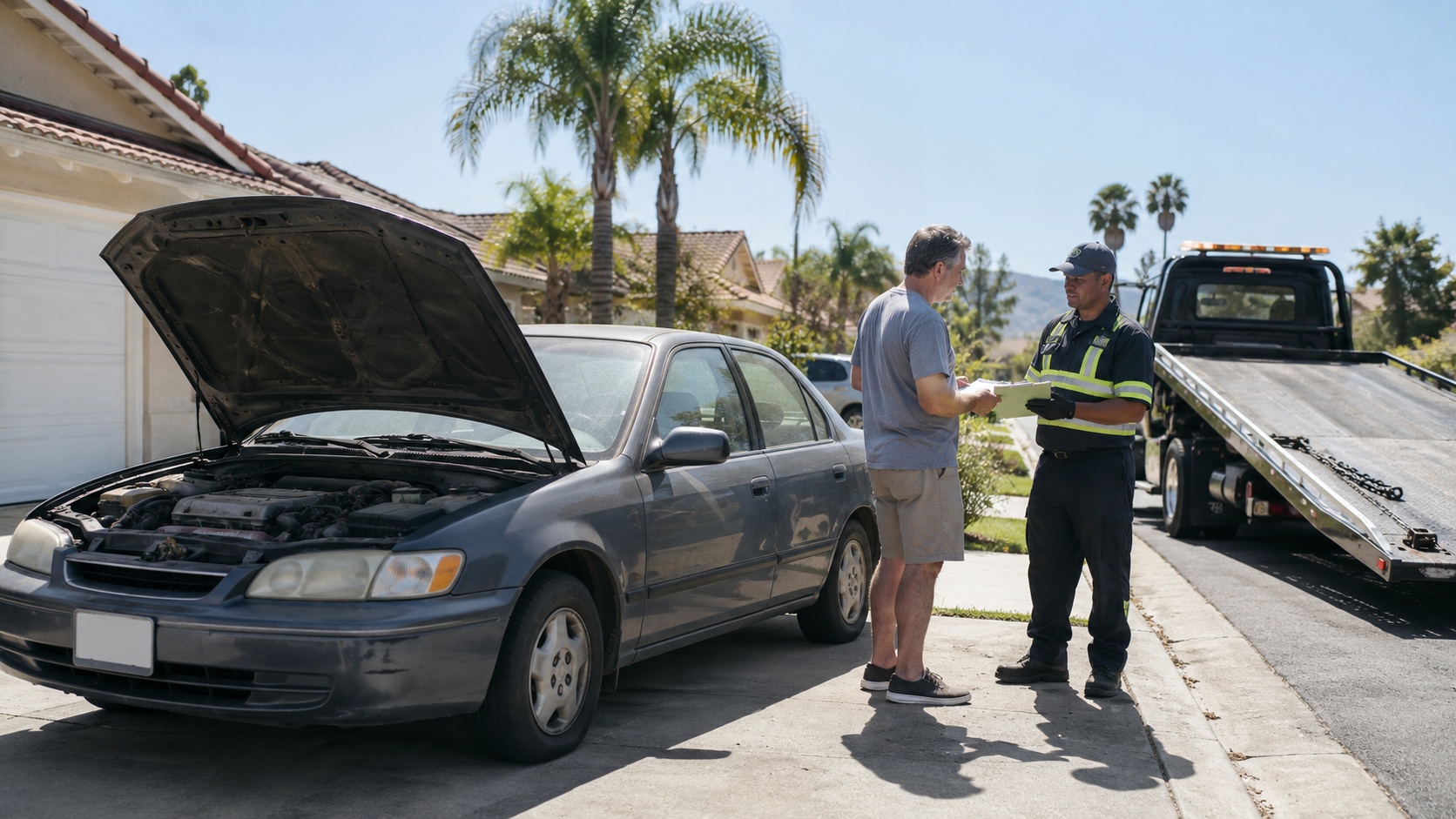
Being mechanically inoperable does not, by itself, prevent ownership from being transferred.
However, the condition of the vehicle and the type of buyer matter.
A private-party sale can create complications because California generally requires a Smog Check when an applicable vehicle changes ownership. According to the California Bureau of Automotive Repair, a vehicle being sold privately generally must have passed its Smog Check within the previous 90 days unless an exemption applies.
You can review the state’s current California Smog Check requirements before arranging a private sale.
There are exemptions for certain vehicles, including gasoline, hybrid and alternative-fuel vehicles four model years old or newer for change-of-ownership purposes, gasoline vehicles from model year 1975 or earlier, certain older diesel vehicles, and electric vehicles.
That distinction matters. If you are wondering “Can you sell a car that doesn’t run?”, the answer is yes, but the correct paperwork path depends partly on the vehicle and who is buying it.
For a closer look at the selling process itself, see Cash Cash Cars’ guide to selling a non-running car.
Private Buyer vs. Dealer vs. Dismantler
There is no single best buyer for every dead car.
Private Buyer
A private sale may produce the highest price if the car is desirable as a project. Think classics, enthusiast vehicles, popular trucks, or models with strong parts and rebuilding demand.
But it also puts more responsibility on you.
California’s normal title-transfer and applicable smog requirements still need to be satisfied. Describing the vehicle as “as-is” does not substitute for complying with state transfer or emissions requirements.
So private selling usually makes the most sense when the additional potential payout justifies the extra work.
Licensed Dealer
A dealer may make sense for a relatively new, complete vehicle with a clean history that happens to have a major mechanical problem.
The advantage is that you are dealing with an automotive business rather than trying to find an individual willing to buy and tow a dead vehicle.
Licensed Dismantler or Junk-Car Buyer
If the car has reached the end of its useful road life, a licensed dismantler or established junk-car buyer can often be the simpler route.
This is particularly true when the car has catastrophic mechanical damage and its remaining value is primarily in parts, recyclable materials, or scrap rather than its ability to return to the road.
What Is a Non-Running Car Actually Worth?
Do not automatically price a dead car as if it were simply a running car minus the repair estimate.
Once a vehicle cannot be driven or test-driven, buyers start looking at a different set of numbers.
The engine and transmission can be particularly important. If the car does not start because of an electrical problem but still contains a desirable engine and transmission, those components may preserve a considerable amount of its value.
The catalytic converter can matter too. Original converters contain valuable metals, while a missing converter can reduce what a dismantler or recycler is willing to pay.
Completeness also counts. Four wheels, intact body panels, electronics, seats, glass, battery, engine, transmission, and other usable components give the buyer more potential value than a stripped shell.
Year, make, model, mileage, title status, accident history, local parts demand, vehicle weight, and pickup difficulty can all influence the final offer.
That means two equally “dead” cars can receive dramatically different offers.
Should You Repair It Before Selling?
This is where owners often lose money.
Suppose your car would be worth around $4,000 in normal running condition, but you are quoted $2,500 for a transmission. Even if the repair works perfectly, you have committed more than half of the vehicle’s potential value just to make it marketable again.
And the transmission may not be the last problem.
A vehicle that has sat for two years might also need tires, a battery, brake work, fluids, fuel-system repairs, and emissions work. Hence, fixing the problem that originally parked the car does not necessarily make the whole vehicle reliable again.
A useful starting point is the 50% rule: if a necessary repair approaches or exceeds half the realistic post-repair value of the car, compare an as-is sale before authorizing the work.
It is not a California legal rule. It is simply a practical financial test.
What If I Don’t Have the Title?
A lost title does not automatically kill the sale.
California DMV says that when a California title is missing, the Application for Replacement or Transfer of Title, REG 227, may be required as part of the transfer process. The exact requirements can change when a lienholder is still shown on the record.
You can review the DMV’s California title transfer requirements before completing the sale.
That’s why “I lost my pink slip” and “the car is not legally in my name” are two very different problems.
If the title simply disappeared, there may be a straightforward replacement or transfer path. But if the paperwork shows another owner, a lender, or an incomplete chain of previous sales, resolve the ownership issue before arranging pickup.
If this is part of your situation, Cash Cash Cars also explains the options for selling a car without a title.
What About Expired Registration or PNO?
A non-running car often ends up with expired registration simply because the owner stopped using it.
California’s Planned Nonoperation program is designed for vehicles that will not be driven, towed, stored, or parked on public roads or highways during the registration year. DMV currently allows PNO filings up to 60 days before registration expires and, with penalties, up to 90 days after expiration.
You can review the DMV’s Planned Nonoperation rules if the car has been sitting unused.
But there is an important distinction:
PNO status should not be treated as an automatic substitute for checking the vehicle’s change-of-ownership smog requirements.
California handles nonoperation status and change-of-ownership emissions requirements under separate rules. Hence, if your non-running car is being sold privately, check whether a Smog Check or an exemption applies to that specific vehicle.
What If There’s Still a Lien?
A lien can be much more serious than a missing title.
If DMV records show a lienholder, that party’s legal interest generally has to be properly released as part of the transfer. DMV lists lien-release documentation among the forms that may be needed during a California title transfer.
So do not promise a buyer clear ownership until you know exactly what the lender or lienholder requires.
The same type of problem can arise when a vehicle is stuck at a repair, towing, or storage facility and money is owed. California DMV notes that qualifying businesses that have repaired, towed, or stored a vehicle may use the state’s lien-sale process when the owner does not pay for those services.
Hence, if your non-running vehicle is already sitting somewhere that is charging storage, deal with that issue before assuming another buyer can simply arrive and tow the car away.
Selling a Non-Running Car From a Mechanic, Tow Yard, or Garage
Not every dead car is conveniently sitting in an open driveway.
A car at a mechanic’s shop may have outstanding diagnostic, repair, or storage charges. Before accepting an offer, ask the shop exactly what must be paid or authorized before it will release the vehicle.
A tow or storage yard creates an even stronger reason to act quickly because storage charges can continue accumulating. Get the exact release amount directly from the facility instead of estimating it.
An underground or apartment garage creates a different problem: access. A normal flatbed may not fit through a low-clearance structure, and a car with locked steering, flat tires, missing wheels, or seized brakes may require different recovery equipment.
Tell the buyer all of this before pickup is scheduled.
Don’t Let the Tow Truck Leave Until the Transaction Is Clear
For a non-running car, pickup is part of the sale rather than an afterthought.
Before the vehicle leaves, confirm the agreed price and payment method. Make sure the buyer information is completed accurately on the transfer paperwork. Keep copies or photographs of the documents you sign, and get documentation showing who took possession of the vehicle and when.
Be especially cautious if someone wants you to sign a title while leaving the buyer information blank.
You want a clear paper trail connecting the vehicle, buyer, sale date, and transfer.
And if the car cannot roll, has missing wheels, or is trapped somewhere difficult to access, disclose that when requesting the quote rather than when the truck arrives.
How to Sell a Non-Running Car Step by Step
Start with the paperwork. Find the California title and check whether a lienholder appears on it. If the title is missing, determine whether REG 227 applies to your situation.
Then document the vehicle accurately. Record the VIN, mileage if available, make, model, year, mechanical problem, missing parts, title status, registration status, and pickup location. Take photographs.
Next, compare several offers. Do not assume the first person willing to tow the car away is offering fair value. Compare the net amount you actually receive, including any pickup or towing costs.
Before pickup, remove your belongings and old personal documents. If you have personalized or special-interest plates, check California DMV’s requirements for retaining or transferring them.
At pickup, verify the buyer, confirm payment, complete the appropriate ownership documents, and keep your own records of the transaction.
Then comes one of the most important steps of all:
File the California Notice of Transfer and Release of Liability, or NRL.
California DMV requires the seller to submit an NRL within five calendar days after selling or transferring the vehicle.
The DMV’s Notice of Transfer and Release of Liability page also explains an important point that many sellers misunderstand: submitting the NRL does not itself complete the title transfer. The new owner still has to complete the transfer requirements.
Once DMV receives the properly completed notice, responsibility for qualifying parking violations, traffic violations, and civil liability arising after the reported sale date generally shifts to the subsequent purchaser.
Save your NRL confirmation, bill of sale, pickup documentation, and other transaction records.
6 Mistakes to Avoid When Selling a Car That Doesn’t Run
1. Failing to file the NRL.
Selling the car and watching it disappear on a tow truck is not the end of your California paperwork. File the NRL promptly and keep the confirmation.
2. Signing incomplete transfer paperwork.
Do not hand over a signed title with important buyer information left blank. Know who is acquiring the vehicle.
3. Assuming “as-is” eliminates California requirements.
“As-is” describes the condition of the sale. It does not automatically eliminate applicable DMV or smog requirements.
4. Assuming PNO automatically eliminates smog requirements.
PNO deals with keeping a vehicle off public roads and its registration status. Change-of-ownership smog requirements have their own rules and exemptions.
5. Spending thousands trying to rescue a low-value car.
Get an as-is offer before approving a major engine, transmission, electrical, or emissions repair. At least then you will know what you are comparing.
6. Ignoring a car that is accumulating storage charges.
When a vehicle is at a mechanic, impound facility, or storage yard, waiting can change the economics of the entire sale. Find out exactly what is accruing and act accordingly.
So, Can I Sell My Non-Running Car?
Yes.
If you have been wondering “Can I sell my non-running car?”, California does not require you to make a mechanically dead vehicle run simply because you want to sell it.
Likewise, if you are asking “Can you sell a non-running car?” or “Can you sell a car that doesn’t run?”, the mechanical failure itself usually is not the main obstacle.
The important parts are proving ownership, handling any lien correctly, complying with the applicable California transfer and smog rules, being honest about the vehicle’s condition and pickup access, getting paid under clear terms, and filing your Notice of Transfer and Release of Liability after the sale.
A dead engine is one problem. It should not turn into a paperwork, towing, and liability problem too.
If repairing the vehicle no longer makes financial sense, you can also request an offer from Cash Cash Cars based on the car’s year, make, model, condition, title status, and location.