A $25 Salvage Auction Bid Isn’t The Actual Price, The Real Number Lives In The Fees
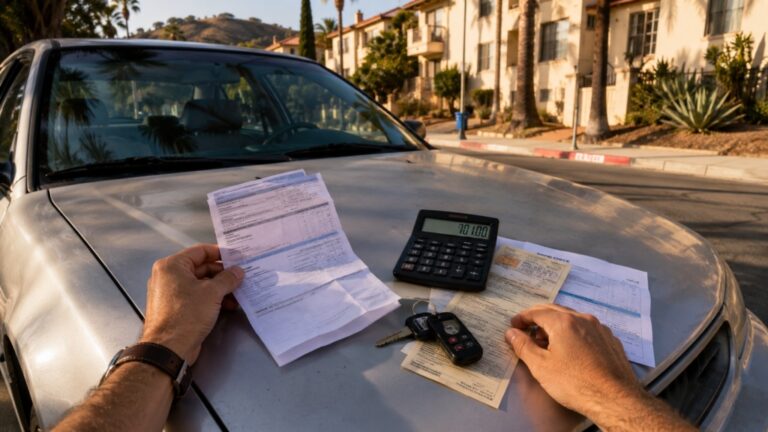
Someone got curious about buying a salvage car for parts and found a local salvage auction site where bidding started at $25. They started doing the math, only to find doc fees, auction fees, and buyer fees adding up to around $800, on top of whatever the winning bid ended up being.
The reaction was predictable. People felt like the $25 headline number was basically bait, that the real cost got hidden until the very end of the process.
The more useful way to look at it is that the $25 was never meant to be the final price. It’s an opening bid, and the fee structure is where salvage auctions actually make their money, which is worth understanding before you ever place a bid. Here’s how that structure actually works, and what it means for anyone getting into salvage vehicles.
The bid number and the purchase number are two different things
This confusion trips up almost everyone new to salvage auctions.
- The bid is what you’re offering for the vehicle itself.
- The fees are the cost of using the platform, processing the title paperwork, and running the auction, regardless of how low the winning bid ends up being.
- A $25 winning bid with $800 in fees means the car cost around $825, not $25. Neither number alone tells the real story.
Fixed fees mean cheap cars get proportionally more expensive
This is the part that catches people off guard the most.
- If the fee structure is largely fixed regardless of the winning bid, a $25 car and a $2,500 car might carry a very similar fee total.
- That means the $25 car is dramatically more expensive as a percentage of its own price than the $2,500 one.
- Salvage auctions are usually a much better deal on higher-value vehicles for exactly this reason, even though the cheap listings are what catch everyone’s eye first.
The “buy now” button adds a layer most people don’t understand going in
The confusion about what happens if nobody else bids is a completely reasonable one, and it’s worth getting a straight answer on before bidding at all.
- Some platforms let a “buy now” price bypass the bidding process entirely, sometimes at a different fee structure than a standard win.
- Whether fees change depending on how the sale closes varies by platform and needs to be confirmed directly, not assumed.
- This is exactly the kind of detail worth calling the auction house about before bidding, not something to find out after winning.
Simply put, the $25 bid was never hiding anything. It just was never the actual number to begin with. Salvage auctions run on fees layered on top of the bid, and those fees hit cheap vehicles the hardest as a percentage of total cost. Before bidding on anything, get the full fee schedule in writing, and do the math on total cost, not headline bid, especially on lower-priced vehicles where the fees can end up being the majority of what you pay.