How We Determine What Your Junk Car Is Worth?
How We Determine What Your Junk Car Is Worth
Inside the Valuation Process
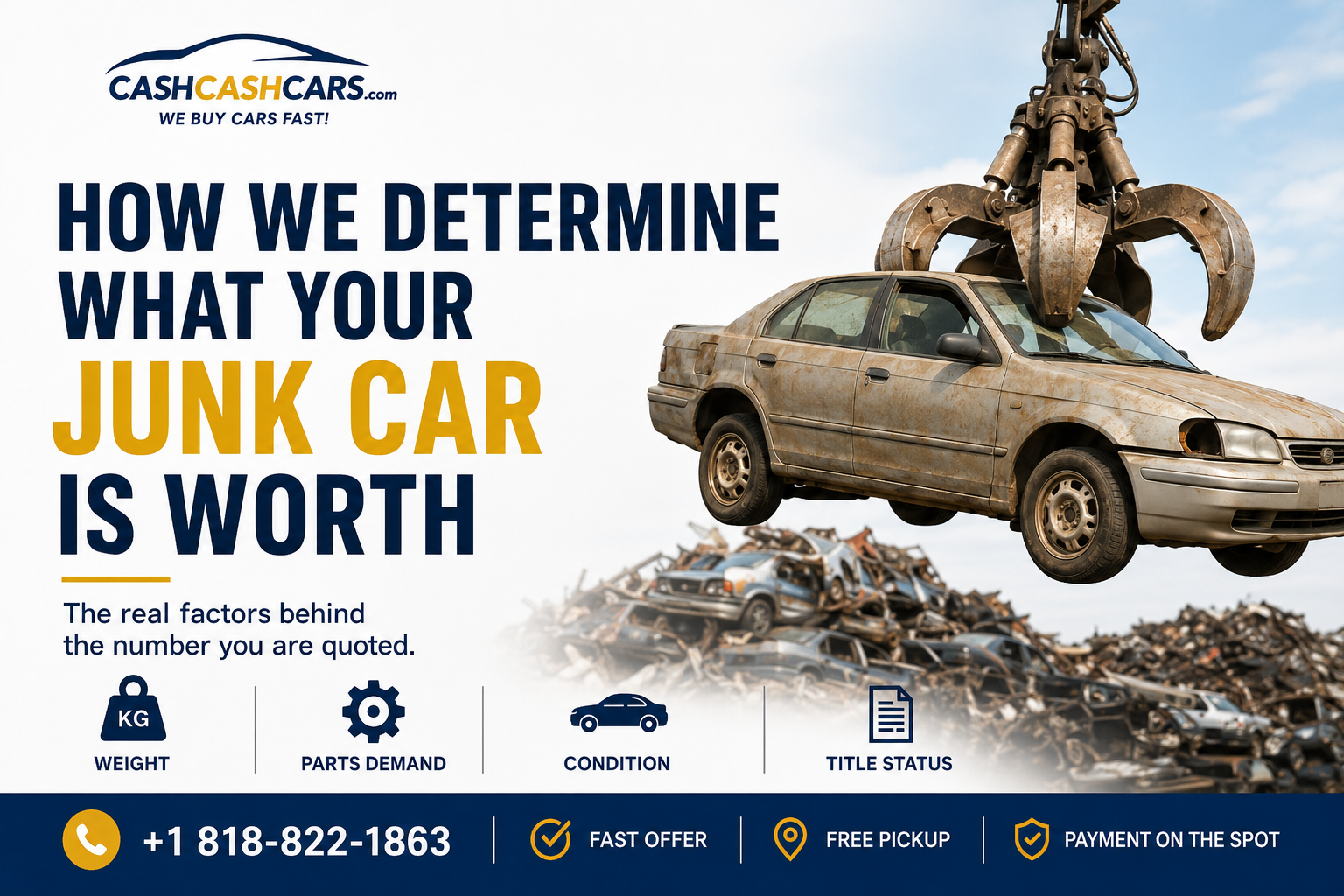
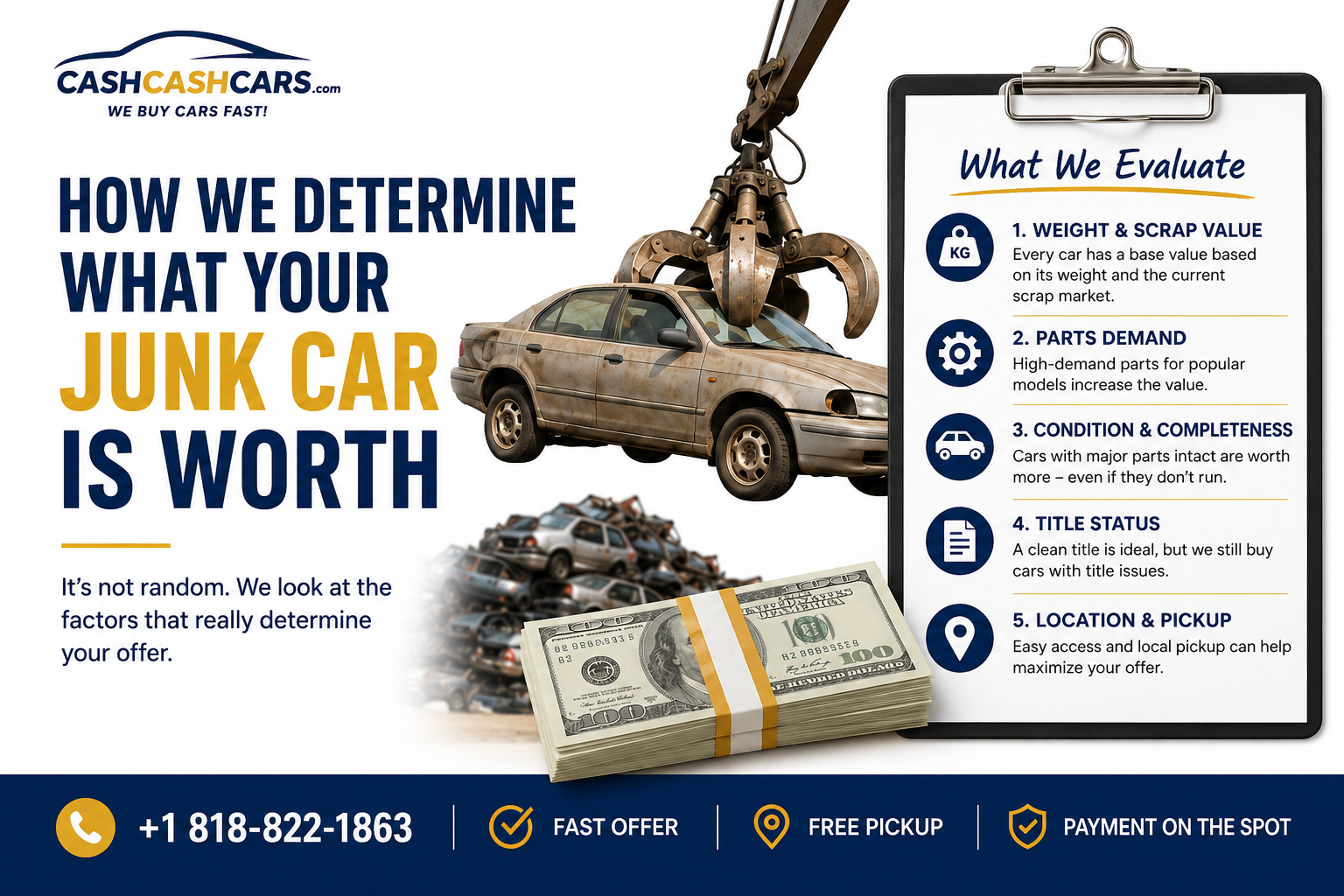
Junk car offers can look random from the outside. They are not. A small group of measurable factors decides whether a vehicle is mainly worth its scrap metal or substantially more because of its usable parts.
One car may receive a relatively low quote while another receives far more, even when the two vehicles do not look dramatically different in a driveway. Once you understand the factors behind the calculation, an offer stops feeling like a guess and becomes easier to evaluate.
Weight and scrap metal value
At the floor, every vehicle has a scrap value based on its weight in steel, aluminum, and other metals, priced against the current scrap market. This is the baseline: the amount a vehicle can be worth even when little else about it is reusable.
Bigger vehicles such as trucks, SUVs, and full-size sedans often have a higher scrap floor than compact cars simply because they contain more metal. Weight does not determine the complete offer, but it establishes the starting point.
A complete vehicle with desirable components can be worth more than the raw metal alone. That is why two cars of similar weight can receive very different offers.
Parts demand
Above the scrap floor, the real driver is whether the vehicle’s components are worth more individually than the car is worth as a whole. A ten-year-old vehicle from a high-volume model line may have strong parts demand because many similar vehicles are still on the road and their owners need affordable used components.
An alternator, door assembly, transmission, wheel, control module, or interior component may be useful to another owner. A rare or low-production model can go either way: fewer people may be searching for its parts, but the parts that do sell can sometimes command more per piece.
Condition and completeness
Whether the vehicle runs and drives matters, but often not as much as owners assume. Many buyers in this market specialize in vehicles that do not run at all. What can move the number more is completeness.
Is the engine still installed? Is the transmission present? Are the catalytic converter and wiring harness intact? Is the interior whole or stripped? A vehicle that is missing high-value parts is worth less because the buyer is receiving only a partial car.
Cash Cash Cars also evaluates non-running vehicles and vehicles with missing parts.
Damage type
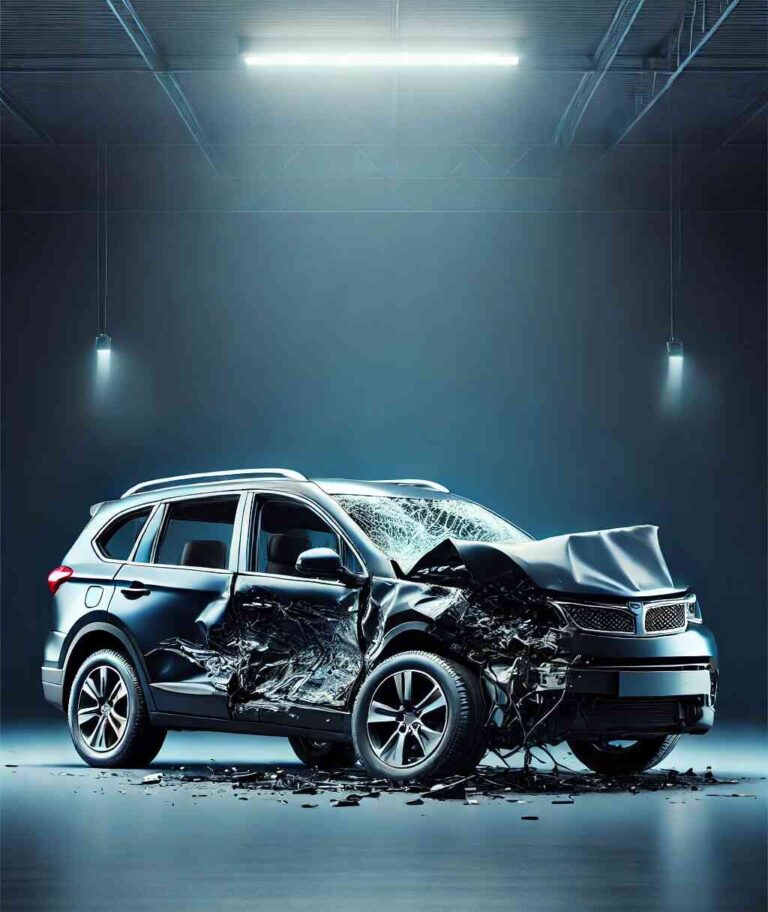
Not all damage costs the same amount of value. Cosmetic damage such as dents, faded paint, or a cracked bumper may have a limited effect when the underlying metal and major components remain useful.
Frame damage, flood exposure, and fire damage usually matter more because they can compromise components that might otherwise be resold. Severe damage can turn a vehicle from a parts opportunity into a mostly scrap-metal transaction.
For related vehicle conditions, see the pages for wrecked cars and salvage vehicles.
Title status
A clean title in the seller’s name is the simplest case. A salvage title, which is common after an insurance total loss, does not automatically disqualify a vehicle. Buyers that regularly handle salvage vehicles can still evaluate it, although the title status may affect the offer and the required process.
No title at all is the most complicated situation. Many states provide a duplicate-title or lost-title process, and some transactions may be possible with other proof of ownership depending on applicable law and buyer requirements. The title issue should be raised before an offer is finalized rather than after pickup arrangements begin.
Read the separate guide about how to sell a car without a title.
Location and towing
Pickup may be included in the transaction, but where the vehicle is located still matters to the logistics. A car sitting in an easy-access driveway is simpler to move than one at the back of a property, on a steep grade, inside a restricted garage, or somewhere a flatbed cannot easily reach.
This detail may not dominate the offer, but it is part of the calculation rather than an afterthought. Accurate pickup information helps avoid a revised quote or a failed collection attempt.
Why this matters for you
Understanding the valuation process is not about justifying a low offer. It helps you distinguish a careful evaluation from a lazy one. You also know exactly what to mention upfront: title status, whether the vehicle runs, what parts are missing, the type of damage, and how the car can be reached.
When the buyer has the right details from the beginning, the initial quote is more likely to reflect the vehicle that will actually be collected rather than an incomplete description that must be revised later.
Frequently asked questions
Is a non-running car still worth money?
Yes. A non-running vehicle can still have value in its metal, intact components, reusable parts, and complete major assemblies. Running condition matters, but it is not the only factor.
Which missing parts reduce a junk car offer the most?
Missing high-value or essential components such as the engine, transmission, catalytic converter, wiring harness, or major body and interior parts can reduce the value because the buyer is receiving an incomplete vehicle.
Can a salvage-title vehicle be sold to a junk car buyer?
A salvage title does not automatically prevent a sale. Buyers that regularly handle salvage vehicles can evaluate them, although the title status and the vehicle’s condition can affect the offer and required paperwork.
Does the vehicle’s location affect its junk car value?
Location can affect towing logistics. A vehicle that is easy for a tow truck or flatbed to reach generally costs less to remove than one in a restricted, steep, remote, or difficult-access location.
Get an offer based on the vehicle you actually have
Share the year, make, model, mileage, title status, running condition, missing parts, damage, and pickup location so the evaluation starts with accurate information.
Vehicle offers depend on the vehicle’s actual condition, ownership documentation, location, market demand, and other transaction details.